Food safety
Can Dogs Eat Canned Green Beans? Read the Label
Yes, plain no-salt canned green beans can be an occasional extra for a dog when compatible with its individual diet. AKC specifically includes canned green beans among suitable forms and recommends a no-salt product. Its separate green-bean guidance warns that many cans contain added salt. Read the actual label rather than assuming all canned vegetables are equivalent, and do not apply this advice to a dressed side dish or casserole.
By Matt GarnettUpdated November 13, 20264 min read3 sources
Choose the can by its contents
AKC’s fruit-and-vegetable guidance permits plain green beans in several forms, including canned, and specifies no-salt canned beans. Its dedicated green-bean article also warns about canned products with added salt. Read those statements together: the intended option is an identified plain product, not automatic approval of every can on a shelf.
Check the ingredients before deciding to share. A front label, photograph, or familiar package color cannot substitute for that check. If a sauce, seasoning mix, or another ingredient makes the preparation uncertain, leave it for the human meal and choose a familiar permitted reward instead. Keep the label when asking the veterinarian about a particular product.
Prepare a manageable portion outside the container
Take any permitted beans out of the can and put the container safely away before the dog approaches. Keep lids and packaging out of reach during preparation and cleanup. Offer a small manageable portion in the usual feeding area rather than letting the dog investigate the open package or kitchen waste.
Supervise eating and stop if the dog coughs, gags, or has difficulty managing a piece. Ask your veterinarian about texture if the dog has dental or swallowing problems. Non-toxic food advice cannot establish that every shape or serving method suits every animal, and there is no need to insist on a snack the dog does not want.
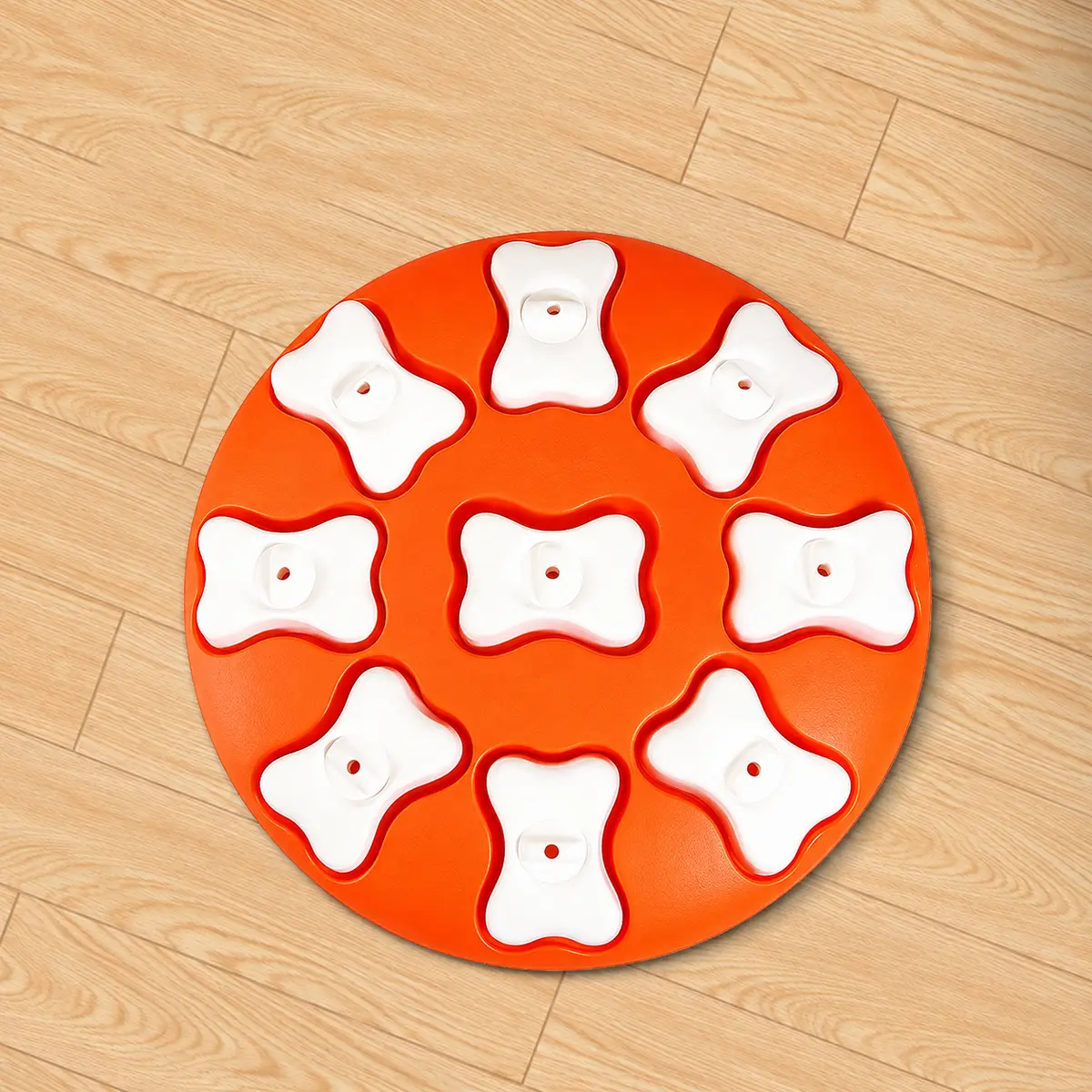
Spreading a few safe pieces across a snuffle mat or packing them into a puzzle toy turns a small treat into a few minutes of sniffing work.
A holiday casserole needs its own ingredient check
AKC’s green-bean article distinguishes plain beans from human recipes and advises against added butter, garlic, or garlic salt. Preparing a vegetable does not make every completed dish suitable for a dog. Save a plain permitted portion before finishing the family recipe, rather than trying to pick beans out of it afterward.
During Thanksgiving or another gathering, have one person manage any dog treats and tell guests what is permitted. Clear plates promptly and put leftovers behind a closed barrier. If the dog reaches a mixed dish, save the recipe and packaging and tell the veterinarian about all ingredients, not only the green beans visible on the plate.
Do not turn beans into an improvised weight-loss diet
AKC describes green beans as a low-calorie treat, but also warns that treats should not become the foundation of the diet. Do not replace a substantial part of normal meals with canned beans to make the dog feel full. A vegetable’s calorie content does not tell you how to preserve the complete nutrient balance.
VCA’s feeding guidance emphasizes appropriate complete nutrition. Ask the veterinarian about a weight concern and bring the usual food details and a record of household extras. Include rewards from training, snacks from children, and food offered by other caregivers. That information supports an individual assessment rather than an unmeasured substitution based on a generic food list.
Check individual restrictions before changing the routine
Discuss canned green beans before adding them during a prescribed diet, a food trial, or an illness affecting normal eating. Show the actual label and explain what you hope the snack will do. A suitable optional food for one dog may not fit another’s medical restrictions or the purpose of a carefully controlled diet.
If the extra is approved, introduce it modestly without several other unfamiliar foods at once. Stop and contact the clinic about vomiting, diarrhea, appetite changes, or unusual behavior afterward. Record the timing, preparation, and other foods involved; symptoms do not establish a diagnosis or prove that a particular ingredient caused the change.
Describe an accidental exposure accurately
After a raid, note what is missing, the time, and your dog’s weight in pounds. Keep the can, recipe, and any remaining food. Contact the veterinarian about an uncertain dish, swallowed packaging, or symptoms, and follow their directions. Marked weakness, collapse, trouble breathing, or repeated vomiting needs prompt veterinary attention; do not use home vomiting remedies or human medication.
This page is general information, not veterinary advice, and it cannot replace an examination by the vet who knows your pet.
Common questions
Are all canned green beans appropriate for dogs?
No. AKC recommends plain no-salt canned beans and warns that many canned products contain added salt. Check the full ingredient list rather than treating the vegetable name as approval of every preparation.
Can I pick beans out of a casserole for my dog?
Do not assume removing the visible beans removes the other ingredients. Use a plain portion set aside before finishing the dish, or choose a known permitted reward when the recipe is uncertain.
Can canned beans replace meals to help weight loss?
Do not improvise a weight-loss diet by replacing regular food with beans. Discuss appropriate complete nutrition and all household extras with the veterinarian so the plan fits your individual dog.
What if my dog develops diarrhea after trying them?
Stop the extra and contact your veterinarian for advice, particularly if symptoms repeat or accompany appetite or behavior changes. Record the product, timing, amount, and other recent foods instead of assuming a diagnosis.
Sources we checked
This guide is general information, not veterinary advice. If your pet is unwell or injured, contact your veterinarian.