Food safety
Can Dogs Eat Butternut Squash? Yes, Cooked and Plain
Yes, dogs can eat butternut squash, as long as it is cooked, plain, and served without the skin or seeds. The AKC calls squash safe for dogs once seeds, skin and rind are removed, and notes butternut is one of the best kinds to share, with vitamin C, beta-carotene and fiber. Steamed or roasted flesh is easiest to digest. Leave out butter, salt, brown sugar, garlic and onion, which turn a healthy vegetable into a problem, and keep portions small.
By Matt GarnettUpdated November 13, 20264 min read3 sources
Why butternut squash suits most dogs
Butternut squash is low in fat, moderate in calories and full of fiber, potassium, vitamin C and beta-carotene, the orange pigment the body turns into vitamin A. The AKC singles out butternut as rich in vitamin C, and its soft, sweet flesh is something most dogs eat happily.
The fiber can help keep stools regular, and because it is filling for few calories, a spoonful can bulk out a treat for a dog watching its weight. Like any vegetable, it is an extra on top of a complete dog food, not a replacement for it.
The parts to keep away from your dog
The skin is thick and tough, and dogs cannot digest it well, so large pieces can cause vomiting or, if swallowed in strips, an obstruction. The seeds and stringy pulp are also hard on the gut. The AKC advises removing seeds, skin and rind and throwing them where your dog cannot reach.
Seasoning is the other trap. Holiday and restaurant squash is often roasted with butter, maple syrup, brown sugar, salt, garlic or onion. Garlic and onion damage a dog's red blood cells, and rich, buttery dishes can trigger stomach upset or pancreatitis, so only share squash you cooked plain.
How to prepare butternut squash for a dog
Peel the squash, scoop out the seeds and pulp, and cut the flesh into cubes. Steam or roast them with no oil until they are soft enough to mash with a fork, then let them cool. Mash the cubes or cut them to a size your dog cannot gulp whole.
Plain canned or frozen butternut squash puree works too, as long as the label lists squash alone. Avoid soups, which usually contain onion, garlic, cream and stock. Raw squash is hard to chew and digest, so it is best served cooked.
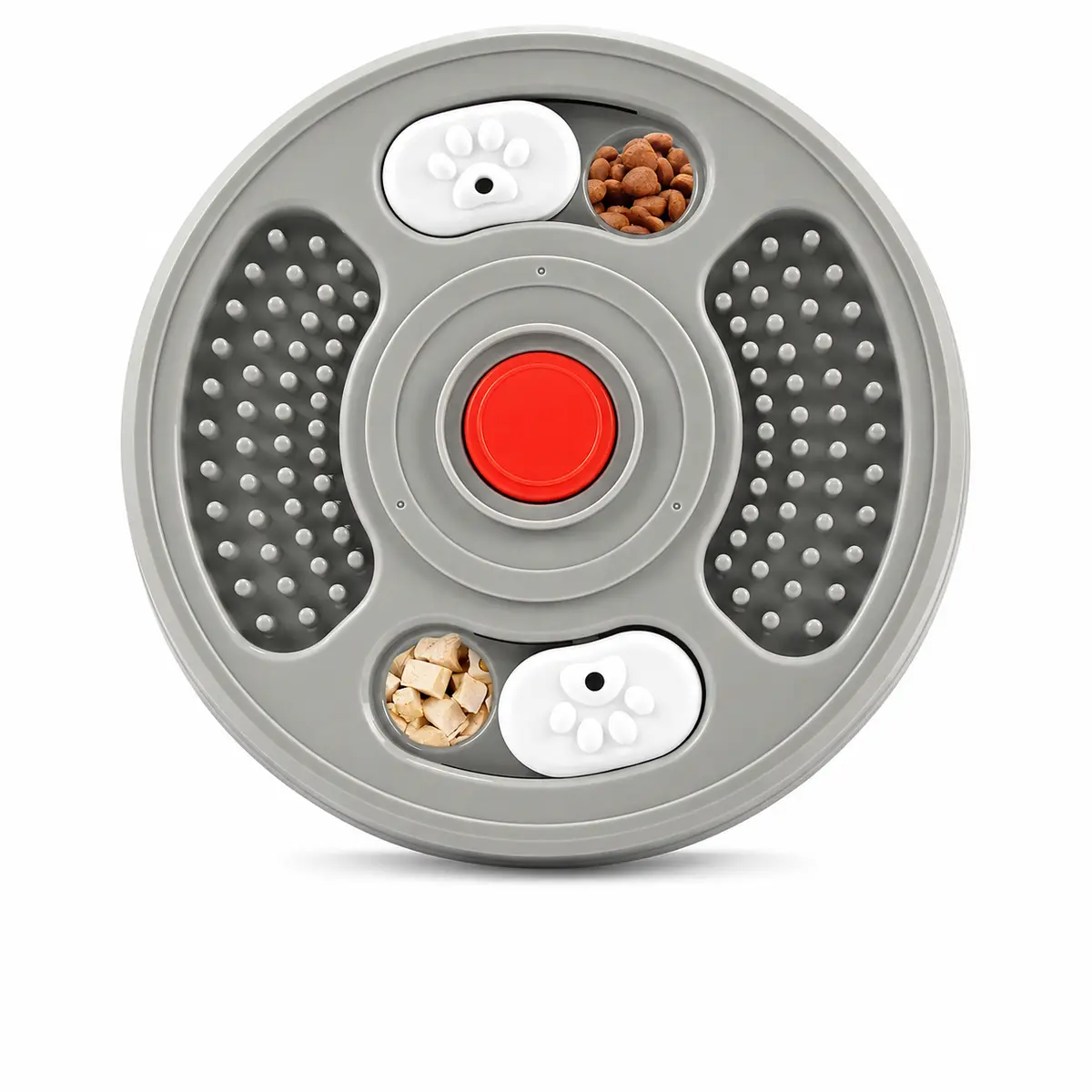
For dogs that gulp anything new, a slow feeder bowl or a lick mat keeps portions small and eating slow.
How much butternut squash by weight
Keep it to a treat-sized portion a few times a week. As a rough guide: under 20 lb, one to two teaspoons of mashed squash; 20 to 50 lb, one to two tablespoons; over 50 lb, two to three tablespoons. Treats should stay a small part of what your dog eats in a day.
Start with half that amount the first time and check the stool the next day. Too much fiber at once can cause gas or loose stools. If your dog has diabetes, kidney disease or is on a prescription diet, ask your vet before adding it.
Puppies and butternut squash
Puppies can try a little plain, cooked, mashed butternut squash once they are eating solid puppy food well. Their stomachs are small and sensitive, so start with half a teaspoon and make sure the texture is soft and smooth, with no chunks that could lodge in a small throat.
Growing puppies need their nutrients balanced for growth, so squash should stay an occasional taste. Store the whole squash and any peelings well away from teething puppies, who will happily chew a rind and swallow pieces of it.
Signs it disagreed with your dog and when to call a vet
Most dogs handle squash well. Too much can cause gas, a soft stool or vomiting within a few hours, and these usually settle within a day once you stop. Offer water and go back to your dog's normal food.
Call your vet if vomiting is repeated, diarrhea lasts more than a day, your dog seems lethargic or has a painful belly, or if your dog ate squash skin or a large chunk and is retching, straining or off food. Call straight away if the squash was cooked with garlic, onion or a lot of butter.
Other vegetables to try
Plain canned pumpkin, cooked sweet potato and cooked carrots are close relatives in texture and taste. The ASPCA also lists carrots, green beans and broccoli among snacks you can share, cut into small pieces to avoid choking.
Rotate a few plain, cooked vegetables rather than relying on one, and keep each serving small. A frozen spoonful of squash or pumpkin puree in a puzzle toy makes a good slow-licking treat on a hot day.
This page is general information, not veterinary advice, and it cannot replace an examination by the vet who knows your pet.
Common questions
Can dogs eat raw butternut squash?
Raw butternut squash is very hard and difficult to digest, and chunks can be a choking risk. It is not toxic, but cooking it until soft makes it far safer and easier on the stomach.
Can dogs eat butternut squash skin?
It is best not to give it. The skin is tough and poorly digested, and large pieces can cause vomiting or a blockage. Peel the squash and throw the skin away where your dog cannot reach it.
Can dogs eat butternut squash seeds?
Remove them. The AKC advises taking out the seeds along with the skin and rind before sharing squash. The seeds and stringy pulp are hard to digest and can upset a dog's stomach.
Is butternut squash good for dogs with diarrhea?
Some owners use plain squash or pumpkin for its fiber, but it is not a treatment. A dog with diarrhea lasting more than a day, or with vomiting or lethargy, needs your vet.
Can dogs eat butternut squash every day?
A small spoonful daily is unlikely to harm a healthy dog, but it is better as an occasional treat. Daily extras add calories and fiber that can unbalance a complete diet over time.
Sources we checked
This guide is general information, not veterinary advice. If your pet is unwell or injured, contact your veterinarian.