Food safety
Can Dogs Eat Bread? Plain Bread Yes, Raw Dough No
Yes, dogs can eat a little plain white or whole wheat bread, but some breads and raw dough can poison them. Raw yeast dough keeps rising in the stomach and produces alcohol, raisin bread can cause kidney failure, and garlic bread can damage red blood cells. Plain bread itself is just filler: safe in small pieces for dogs without a wheat allergy, but not nutritious. If your dog ate raw dough, raisin bread or garlic bread, call your vet now.
By Matt GarnettUpdated November 13, 20264 min read2 sources
Why plain bread is safe but not useful
Plain white and whole wheat bread contain nothing toxic to dogs. The AKC describes bread as essentially a filler food: mostly carbohydrate, with little of the protein or fat dogs need. A small piece will not harm a healthy dog, but regular bread adds calories that can lead to weight gain.
Dogs with a wheat allergy or sensitivity should not have it. If your dog has itchy skin, ear problems or recurring stomach trouble, ask your vet before sharing bread or other wheat foods.
Warning: raw dough, raisins, garlic and xylitol
Raw yeast dough is an emergency. The ASPCA explains that dough keeps rising in the warm stomach, which can cause painful bloating that may twist into a life-threatening condition, and the fermenting yeast produces alcohol. Signs include a swollen belly, retching, weakness, an unsteady walk and, in severe cases, seizures or collapse.
Some baked breads are dangerous too. Raisin and cinnamon raisin bread can cause kidney failure, garlic bread can damage red blood cells, and some sugar-free breads and spreads contain xylitol. If your dog ate any of these, call your vet, ASPCA Animal Poison Control at (888) 426-4435 or Pet Poison Helpline at (855) 764-7661 now; a fee may apply.
What to do if your dog ate bread or dough
If your dog ate a slice of plain bread, there is usually nothing to do except watch for an upset stomach and keep fresh water available. A whole loaf may cause bloating, vomiting or diarrhea in a small dog, so call your vet if your dog seems uncomfortable.
For raw dough, raisin bread, garlic bread or anything with xylitol, do not wait for symptoms. Call straight away with the product, the amount and your dog's weight. Do not make your dog vomit at home unless a vet tells you to.
How much plain bread a dog can have
Keep bread as an occasional treat inside the 10% treat allowance. As a guide: a fingernail-sized piece for dogs under 20 lb, a quarter of a slice for dogs of 20 to 50 lb, and up to half a slice for dogs over 50 lb, plain, with no butter, spread or seeds.
Bread is not a good way to settle an upset stomach. The AKC suggests a call to your vet, who may recommend a bland diet, is the better route than reaching for toast.
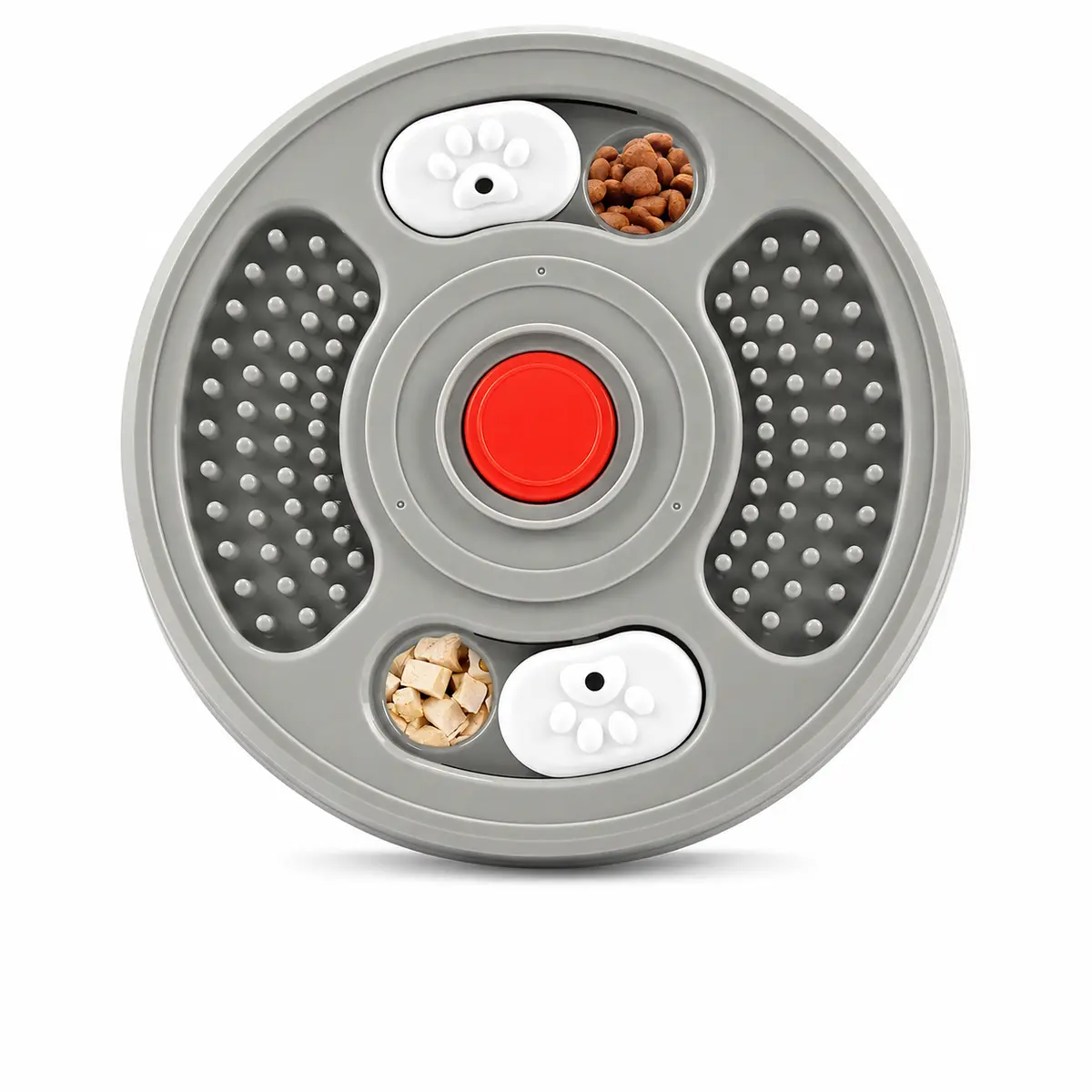
For dogs that gulp anything new, a slow feeder bowl or a lick mat keeps portions small and eating slow.
Can puppies eat bread?
A weaned puppy can taste a tiny piece of plain bread, but it fills a small stomach without adding nutrition, so there is little reason to give it. A puppy's diet should be almost entirely a complete puppy food.
Puppies are also the most likely to steal rising dough from the counter or raisin bread from a lunchbox. Keep dough covered and out of reach, and call your vet straight away if a puppy eats any.
Signs bread disagreed with your dog, and when to call the vet
Plain bread can cause mild gas, vomiting or soft stool within a few hours, which usually passes. After raw dough, watch for a bloated, hard belly, unproductive retching, drooling, wobbliness or lethargy, which can start within an hour.
After raisin bread, vomiting may come within hours, with reduced urination and lethargy over the next one to three days. After garlic bread, pale gums, weakness and dark urine can take two to five days. Any of these signs means your dog needs to be seen by a vet today.
Better snacks than bread
If you want to give your dog something to chew on, carrot coins, cucumber slices and green beans are lower in calories and carry more vitamins than bread. A few pieces of plain cooked chicken make a better high-value reward for training.
Choose treats made for dogs when you can, and keep all extras under about 10% of daily calories. Ask your vet about treats if your dog has allergies or a weight problem.
This page is general information, not veterinary advice, and it cannot replace an examination by the vet who knows your pet.
Common questions
Can dogs eat raw bread dough?
No. Raw yeast dough rises in the stomach and produces alcohol, which can cause dangerous bloating and alcohol poisoning. Call your vet or a poison helpline immediately if your dog ate any.
Can dogs eat garlic bread?
No. Garlic is toxic to dogs and can damage their red blood cells, and garlic bread is also buttery and salty. Call your vet if your dog ate a significant amount.
Can dogs eat banana bread?
It is best avoided. Banana bread is high in sugar and fat, and many recipes add raisins, chocolate chips, macadamia nuts or xylitol, all of which can harm dogs. Check the ingredients and call if any are present.
Can dogs eat toast?
Plain toast with nothing on it is fine in a small piece. Butter, jam, peanut butter with xylitol and chocolate spreads are not. Toast is not a remedy for an upset stomach; call your vet instead.
Can dogs eat bread every day?
It is not a good habit. Bread adds empty calories that can lead to weight gain. A small piece now and then is fine for a healthy dog, but nutritious treats are a better daily choice.
Sources we checked
This guide is general information, not veterinary advice. If your pet is unwell or injured, contact your veterinarian.