Food safety
Can Dogs Eat Bell Peppers? Yes, Any Color, Plain
Yes, dogs can eat bell peppers. Red, yellow, orange and green peppers are all non-toxic, crunchy and low in calories, and red ones carry the most vitamins. Take out the seeds and stem first, serve them plain, and keep the portion small, since some dogs find the skin hard to digest. Hot peppers such as jalapenos are a different matter, and so are stuffed peppers cooked with onion or garlic.
By Matt GarnettUpdated November 13, 20264 min read2 sources
Why bell peppers are safe
Bell peppers are mostly water, with vitamin C, vitamin A, some B6 and antioxidants. The AKC describes them as non-toxic and safe for most dogs in moderation, and notes that red peppers are the most nutrient-dense of the colors because they are the most ripe.
Unlike hot peppers, bell peppers contain almost no capsaicin, the compound that makes chilies burn. That is why a sweet red pepper can be a treat while a jalapeno is not. Some dogs simply do not like the taste, which is fine; there is nothing they miss out on.
Peppers to avoid
Never give a dog spicy peppers: jalapenos, chili peppers, cayenne, hot sauce or chili flakes. Capsaicin irritates the mouth, stomach and gut, and the usual result is drooling, pawing at the mouth, vomiting or diarrhea.
Also skip peppers cooked into dishes for people. Stuffed peppers, fajita mix and stir-fries usually contain onion or garlic, and the ASPCA warns that those Allium foods can damage a dog's red blood cells. Pickled peppers and jarred roasted peppers carry salt and vinegar.
How to prepare bell peppers
Wash the pepper, cut off the stem and pull out the seeds and the white ribs, which can upset the stomach. Slice the flesh into strips or dice it small: about blueberry-size for a 10 lb dog, and finger-size strips for large breeds.
Raw peppers are fine for dogs that chew well. For dogs that gulp, or that tend to get gassy, steaming the pieces for a few minutes or blending them into a puree makes the skin easier to digest. Do not cook them in oil, butter or seasoning.
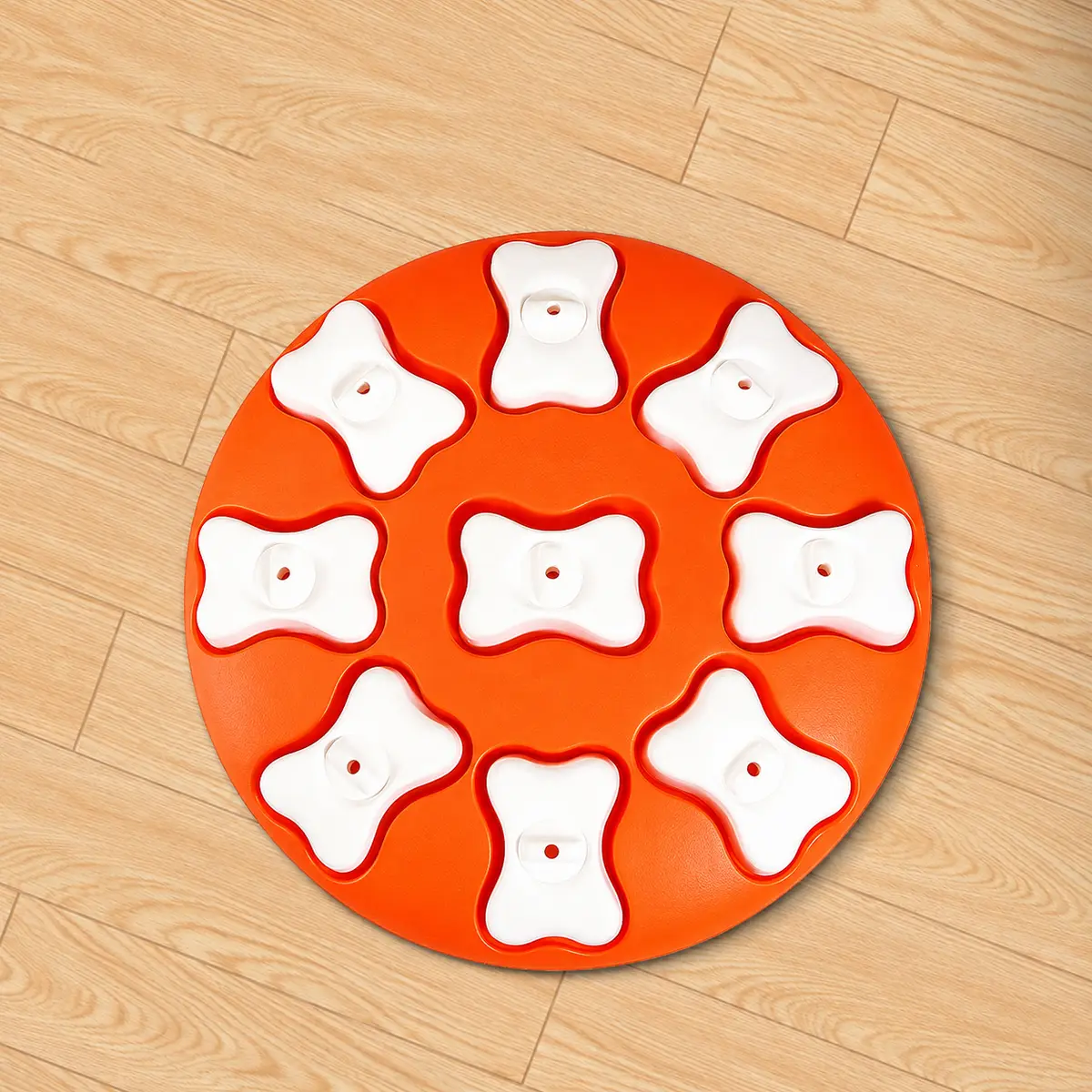
Spreading a few safe pieces across a snuffle mat or packing them into a puzzle toy turns a small treat into a few minutes of sniffing work.
How much bell pepper by dog weight
The AKC's guide is less than a quarter of a pepper at a time for small dogs and less than half a pepper for large dogs. In practice: under 20 lb, two or three small pieces; 20 to 50 lb, a few strips; over 50 lb, up to half a pepper.
Introduce it slowly. Offer a piece or two the first time and wait a day to see how your dog's stomach handles it. Peppers are low in calories, but they still count toward the 10 percent of daily food that treats should not exceed.
Bell peppers for puppies
A weaned puppy can try a small piece of soft, steamed bell pepper. The skin is tougher than it looks, so cook it lightly or chop it finely for young puppies, and give it on a day when nothing else in the diet is new.
Puppies grow best on a complete puppy food, so vegetables like peppers should stay an occasional, small reward. If a puppy gets soft stool after trying pepper, skip it for a couple of weeks and try a smaller piece.
Signs pepper disagreed with your dog
Too much bell pepper can cause gas, an upset stomach, vomiting or diarrhea within a few hours. That usually settles on its own within a day if you stop the peppers and keep the regular diet the same.
If your dog got into a hot pepper and is drooling heavily, pawing at its mouth or vomiting more than once, call your vet. If your dog ate a pepper dish with onion or garlic, call your vet or ASPCA Animal Poison Control at (888) 426-4435 for advice; a fee may apply.
Other crunchy vegetables to try
If your dog enjoys the crunch, try cucumber slices, carrot coins or green beans. All three are low in calories, easy to portion and not toxic to dogs. Serve them plain and cut to a size your dog cannot swallow whole.
Keep onions, garlic, leeks and chives off the list, whether raw, cooked or powdered. They are the vegetables most likely to be hiding in a dish you might otherwise share.
This page is general information, not veterinary advice, and it cannot replace an examination by the vet who knows your pet.
Common questions
Can dogs eat green bell peppers?
Yes. Green peppers are simply less ripe than red, yellow or orange ones and are a little more bitter. They are safe in small amounts, though some dogs find them harder on the stomach than red peppers.
Can dogs eat bell pepper seeds?
Remove them. The seeds and white ribs are not toxic, but they are bitter and can upset the stomach. Taking them out along with the stem only takes a moment.
Can dogs eat cooked bell peppers?
Yes, if they are cooked plain by steaming or roasting without oil, salt or seasoning. Avoid peppers cooked with onion or garlic, as in fajitas, stir-fries and most stuffed pepper recipes.
Can dogs eat jalapenos?
No. Jalapenos and other hot peppers contain capsaicin, which irritates a dog's mouth and gut and can cause drooling, vomiting and diarrhea. Keep salsa, hot sauce and spicy snacks away from your dog.
Can dogs eat mini sweet peppers?
Yes. Mini sweet peppers are small bell peppers and follow the same rules. Cut off the stem, scoop out the seeds and slice them into rings or strips before sharing.
Sources we checked
This guide is general information, not veterinary advice. If your pet is unwell or injured, contact your veterinarian.