Food safety
Can Dogs Eat Banana Peels? No — They Can Cause a Blockage
No, dogs should not eat banana peels. The peel is not poisonous, but it is tough and fibrous, and the American Kennel Club warns that it is hard to digest and can cause stomach upset or, in some cases, an intestinal blockage. Small dogs and dogs that swallow without chewing are most at risk. The soft banana inside is a fine occasional treat once peeled. Here is what to do if your dog ate a peel, which signs mean a vet visit, and how to share banana safely.
By Matt GarnettUpdated November 13, 20265 min read2 sources
Why banana peels are risky for dogs
Banana peel is not on any poison-control list, and nothing in it is toxic to dogs. The problem is its texture. The AKC notes that peels are hard for dogs to digest and can cause stomach discomfort or, in some cases, a blockage in the intestine, which is why it says to always remove the peel before offering banana.
A dog's gut is built to break down meat and soft foods, not dense, stringy plant fiber. A peel tends to pass through largely intact, and a whole one swallowed in a few gulps can bunch up. Conventional bananas may also carry pesticide residue on the outside of the skin.
My dog ate a banana peel: what to do
First, work out how much was eaten and when. A small strip of peel in a large dog is unlikely to cause more than a soft stool. A whole peel, or several, in a dog under 20 lb is more concerning. Do not try to make your dog vomit unless a vet tells you to.
Offer water and their normal meal, and watch closely for the next 24 to 48 hours, including whether stool is passing normally. If your dog ate a peel from the trash, check whether anything else went with it, such as coffee grounds, bones or chocolate wrappers, and tell your vet.
Signs of a blockage and when to call a vet
Mild upset looks like gas, a gurgling stomach, one episode of vomiting or loose stool. Signs of a possible blockage are repeated vomiting, especially after drinking, a refusal to eat, a tense or painful belly, straining without passing stool, restlessness or lethargy. These can appear within hours or a day or two later.
Call your vet the same day if you see any blockage signs, or if a small dog swallowed a whole peel. A blockage can become an emergency, and early X-rays or other checks give the most options. Go to an emergency clinic if your dog is collapsing, cannot keep water down or has a swollen belly.
How to serve banana safely
Peel the banana completely and throw the skin in a lidded trash can. Slice the fruit into coins, then cut those into pieces sized for your dog, so that a gulper cannot choke on a chunk. Mashed banana can be spread on a lick mat or stuffed into a rubber toy.
For a summer treat, the AKC suggests frozen banana. Freeze peeled slices on a tray, then give one or two at a time. Skip banana bread, banana pudding and banana chips, which often contain added sugar, fat, nuts, raisins or chocolate.
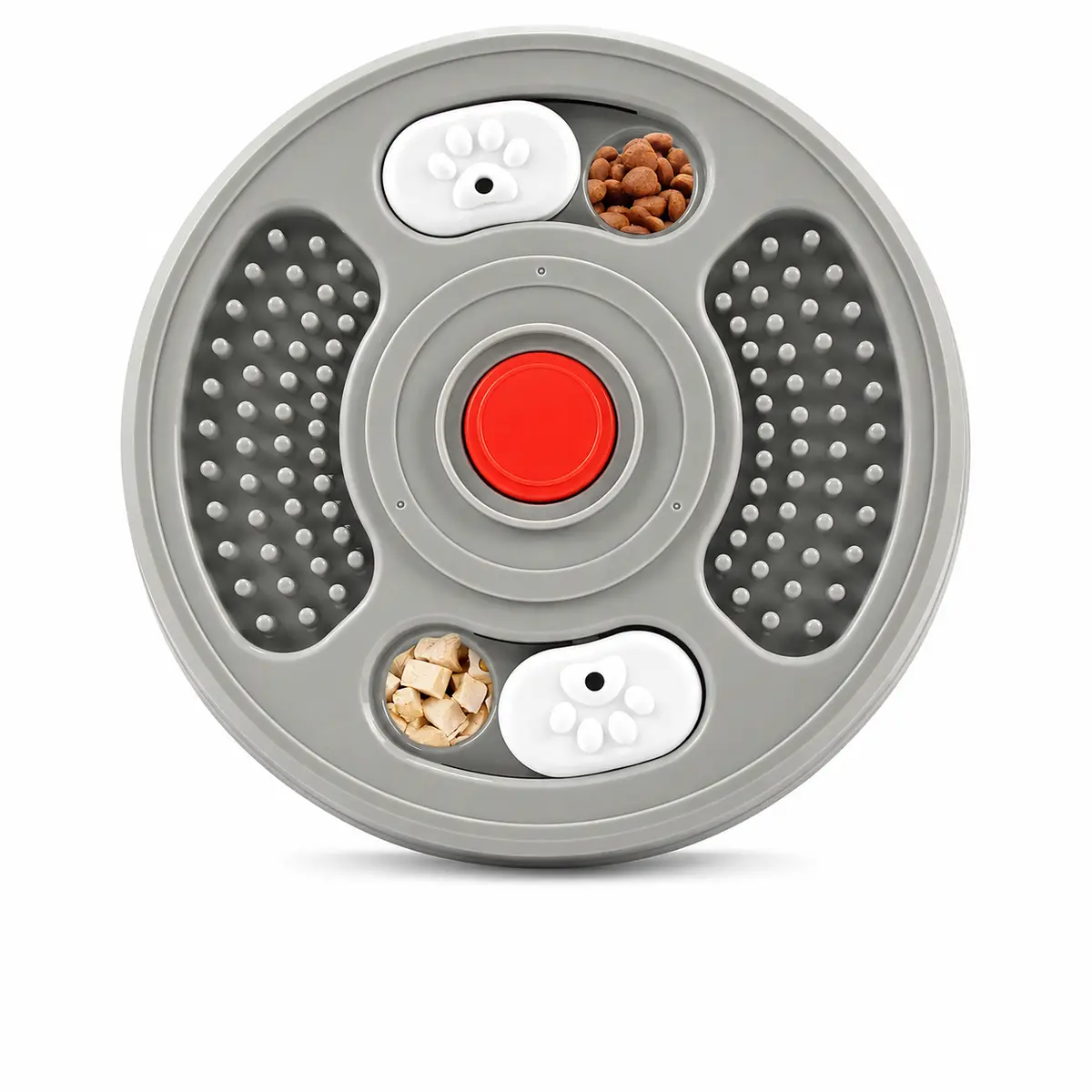
For dogs that gulp anything new, a slow feeder bowl or a lick mat keeps portions small and eating slow.
How much banana by weight
Bananas are high in natural sugar, so the AKC recommends keeping them an occasional treat that makes up a small share of daily calories. A guide: dogs under 20 lb can have one or two thin slices; dogs of 20 to 50 lb can have about a quarter of a banana; dogs over 50 lb can have up to half.
Give banana a few times a week rather than daily. Too much can loosen stools or, in some dogs, cause constipation. Dogs with diabetes, obesity or kidney disease should have fruit only with their vet's approval.
Puppies and banana peels
Puppies are the most likely to steal a peel, because they explore with their mouths, and their small intestines are the most easily blocked. Keep peels out of reach and empty the trash regularly. If a puppy swallows a whole peel, call your vet for advice rather than waiting.
Peeled banana is fine for puppies in very small amounts once they are on solid food, such as a single thin slice cut into quarters. Watch for loose stool afterward, and keep most of their diet to puppy food made for growth.
Other fruits and what to avoid
Other good fruit choices for dogs include peeled apple slices without seeds or core, blueberries, strawberries and seedless watermelon without the rind. Like banana peel, the tough parts of fruit, such as rinds, cores, pits and stems, are where most problems start.
Grapes, raisins and currants can cause kidney injury, and cherry, peach and plum pits are both a choking risk and a source of cyanide-forming compounds. If your dog eats any of those, call your vet or ASPCA Animal Poison Control at (888) 426-4435; a fee may apply.
This page is general information, not veterinary advice, and it cannot replace an examination by the vet who knows your pet.
Common questions
Are banana peels toxic to dogs?
No, banana peels are not toxic. They are hard to digest, though, and can cause vomiting, diarrhea or an intestinal blockage, particularly in small dogs or dogs that swallow a whole peel quickly.
How long does it take a dog to pass a banana peel?
Many dogs pass small amounts of peel within a day or two. If your dog has not passed stool normally within 48 hours, or is vomiting or off food at any point, call your vet rather than waiting.
Can a banana peel make a dog throw up?
Yes. A peel can irritate the stomach and cause one or two episodes of vomiting. Repeated vomiting, or vomiting with a painful belly or refusal to eat, can signal a blockage and needs a vet the same day.
Can dogs eat cooked or blended banana peel?
Cooking or blending makes the peel softer, but there is no benefit to feeding it and the fiber can still upset the stomach. The peeled fruit gives your dog everything worth having from a banana.
Can dogs eat bananas every day?
Small amounts of peeled banana a few times a week suit most dogs better than daily servings, because of the sugar. Keep portions to the weight guide above and treat banana as a snack, not part of meals.
Sources we checked
This guide is general information, not veterinary advice. If your pet is unwell or injured, contact your veterinarian.