Food safety
Can Dogs Eat Applesauce? Yes, If It's Plain and Unsweetened
Yes, dogs can eat applesauce, as long as it is plain and unsweetened, with apples (and perhaps water or vitamin C) as the only ingredients. It is cooked, smooth and seedless, so the choking and seed risks of whole apples disappear. The problem is the jar: many brands add sugar or corn syrup, some "no sugar added" versions use sweeteners, and spiced or pie-style sauces can carry nutmeg. Here is how to read the label, how much to give, and what to watch for.
By Matt GarnettUpdated November 13, 20265 min read2 sources
Why plain applesauce is safe for dogs
Apples are a fruit the American Kennel Club lists as safe for dogs, and applesauce is simply apples cooked down and pureed. Cooking softens the fruit and the straining removes the core, stem and seeds, which are the parts of a whole apple that cause trouble. What is left is mostly water, natural fruit sugar and soluble fiber.
The AKC specifically says plain applesauce is fine for dogs, provided you choose an unsweetened version and serve it in moderation. Being smooth, it suits older dogs with sore teeth.
How to serve applesauce
The simplest way is a spoonful on top of your dog's regular food or offered from a spoon. For a summer treat, the AKC suggests freezing plain applesauce in an ice cube tray; for a small dog, use a mini tray or fill each cube only a third of the way so the portion stays small.
You can also make it yourself: peel and core two apples, chop them, simmer with a splash of water until soft, then mash and cool. Add nothing else, not even cinnamon. It keeps four or five days in the fridge.
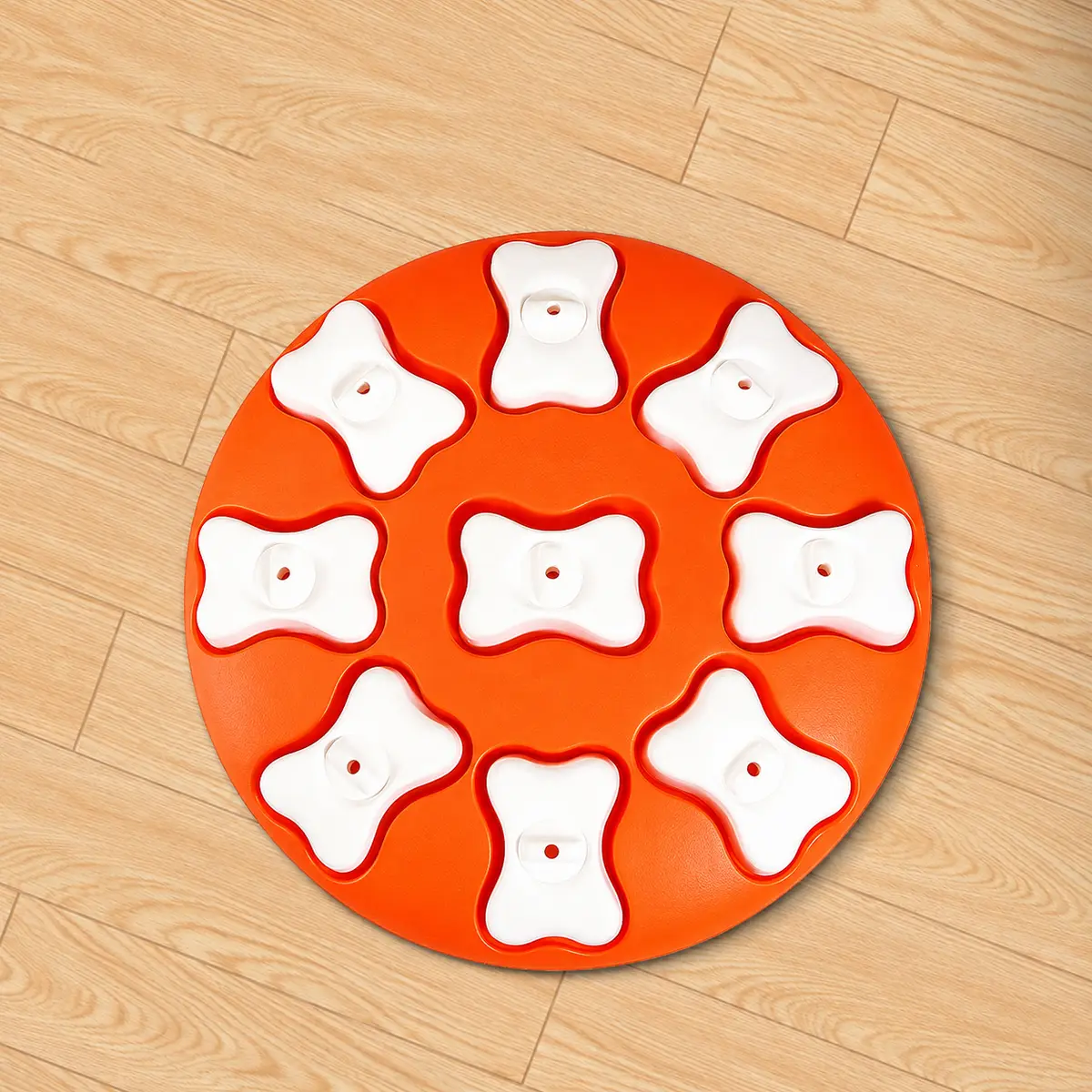
Spreading a few safe pieces across a snuffle mat or packing them into a puzzle toy turns a small treat into a few minutes of sniffing work.
How much applesauce by weight
Applesauce is a treat, not a meal, so keep it small next to a complete dog food. As a guide: dogs under 20 lb can have one to two teaspoons; dogs of 20 to 50 lb can have about one tablespoon; dogs over 50 lb can have up to two tablespoons. That amount once a day at most, and preferably a few times a week, is plenty.
Too much at once tends to show up as soft stool or diarrhea within a day. If your dog is overweight, diabetic or on a prescription diet for the gut or kidneys, ask your vet before adding fruit, since even unsweetened applesauce carries natural sugar.
Applesauce for puppies
Puppies can try a little plain applesauce once they are eating solid food well, typically from around eight weeks. Start with no more than half a teaspoon for a small-breed puppy and a teaspoon for a large-breed puppy, then wait a day to see how their stool looks.
A puppy's diet needs to come almost entirely from puppy food, which is balanced for growth in a way fruit cannot be. Keep applesauce an occasional lick, such as during nail trims.
Signs applesauce disagreed with your dog
Mild reactions are the usual story: loose stool, gas or a gurgling stomach several hours after a larger serving. These typically pass within 24 hours if you stop the applesauce and keep feeding their normal food with plenty of water. A true allergy to apples is uncommon but can show as itching or hives.
If the jar listed xylitol, call your vet or ASPCA Animal Poison Control at (888) 426-4435 right away, even if your dog seems fine, as signs such as vomiting, weakness, wobbling or seizures can follow. A fee may apply. See a vet the same day for repeated vomiting, bloody diarrhea or a dog that will not eat.
Common questions
Can dogs eat cinnamon applesauce?
Cinnamon itself is not toxic to dogs, but cinnamon applesauce is usually sweetened and some spiced blends include nutmeg. A lick will not hurt, but for a regular treat stick to plain, unsweetened applesauce with no added spices.
Can applesauce help a dog with diarrhea or constipation?
Applesauce is not a treatment for either. Its fiber and sugar can loosen stools in some dogs. If diarrhea lasts more than a day, or your dog is straining without passing stool, speak to your vet rather than adjusting their diet yourself.
Can dogs eat Mott's applesauce?
Only the unsweetened varieties. Check the ingredient list on the specific jar or pouch: it should list apples and water, perhaps vitamin C, and no added sugar, corn syrup, xylitol or other fruit juices such as grape.
Can dogs eat applesauce every day?
A teaspoon or two of plain applesauce most days is unlikely to harm a healthy dog, but there is little reason to feed it daily. A few times a week keeps the sugar and calories down while still giving them a treat they enjoy.
Can I give my dog frozen applesauce?
Yes. Freeze plain, unsweetened applesauce in small ice cube trays or a lick mat for a cooling summer snack. Keep each frozen portion within the serving size for your dog's weight, and supervise so they lick rather than gulp it.
Sources we checked
This guide is general information, not veterinary advice. If your pet is unwell or injured, contact your veterinarian.