Food safety
Can Dogs Eat Almonds? No — Here's Why to Avoid Them
No, it is best not to give your dog almonds. Almonds are not poisonous the way macadamia nuts are, but dogs digest them poorly, they can lodge in the throat or gut, and their high fat content can upset the stomach. Salted and flavored almonds add more risk. If your dog grabbed one or two, there is usually no need to panic, but here is what to watch for and when to call your vet.
By Matt GarnettUpdated November 13, 20264 min read3 sources
Why almonds are a bad idea for dogs
The AKC answers this one with a clear no. Almonds are not as toxic as some nuts, but dogs have trouble digesting them, and eating them commonly brings vomiting, diarrhea, gas, loss of appetite and lethargy. The ASPCA groups almonds with other nuts as foods that are high in fats and oils that can cause stomach upset and possibly pancreatitis.
Shape is the other problem. An almond is hard, smooth and about the size of a small dog's esophagus, and dogs tend to swallow nuts whole. That makes almonds a choking risk and a cause of blockages in the esophagus, stomach or intestines, especially in small breeds.
Flavored almonds and almond products
Salted, smoked, barbecue, wasabi and other flavored almonds are worse. Salt in large amounts can lead to serious illness, and seasonings can irritate the stomach or contain garlic and onion powder. Chocolate-covered almonds add chocolate, which is toxic to dogs.
Mixed nuts and trail mix are the biggest worry because they can contain macadamia nuts, raisins or chocolate. If your dog ate a mix that might include any of those, call your vet, ASPCA Animal Poison Control at (888) 426-4435 or Pet Poison Helpline at (855) 764-7661 right away; a fee may apply. Almond butter and almond flour baked goods are also high in fat and can contain xylitol, so check labels.
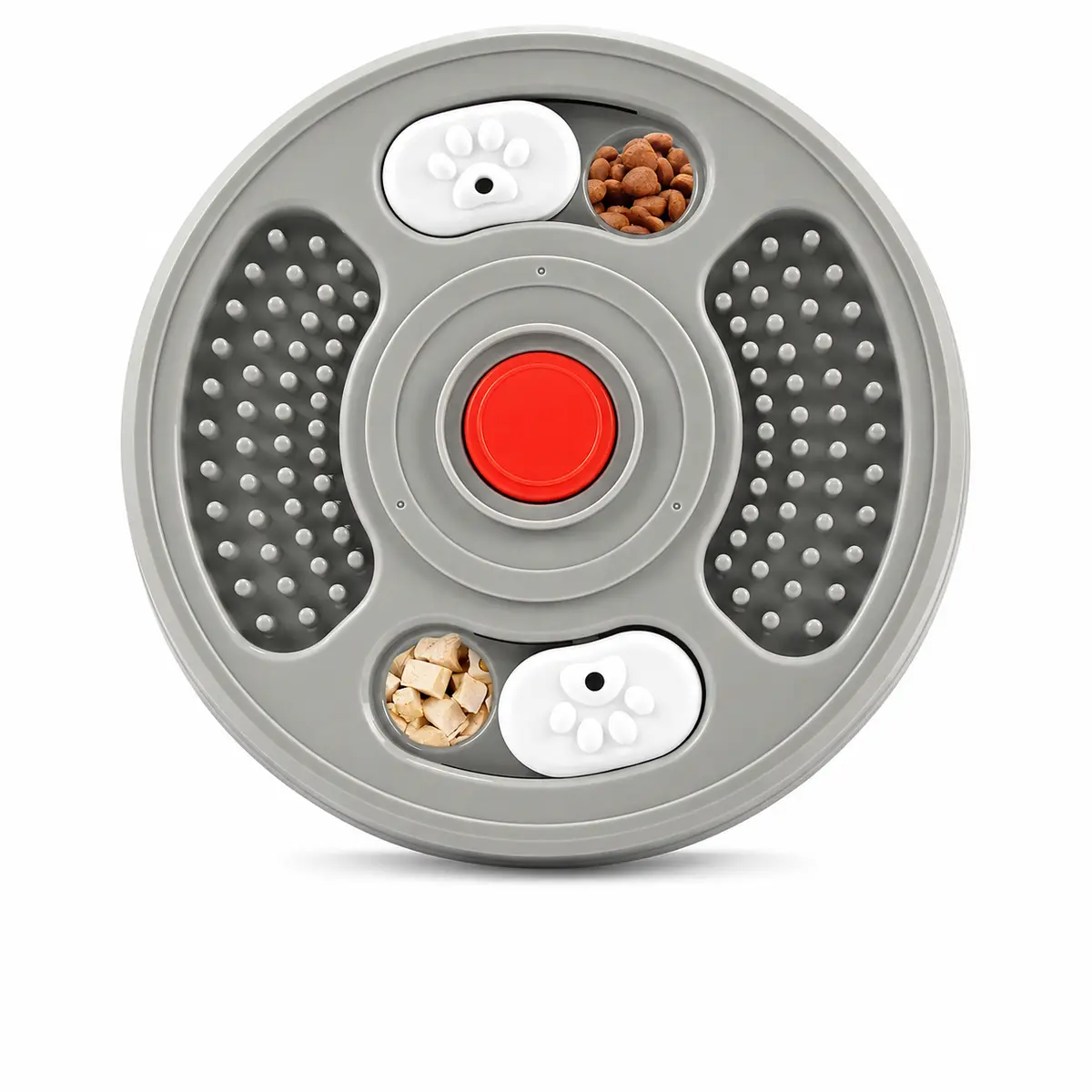
For dogs that gulp anything new, a slow feeder bowl or a lick mat keeps portions small and eating slow.
What to do if your dog ate almonds
If your dog ate one or two plain almonds, the AKC advice is not to panic: keep a close eye on your dog for the next day or two and watch for signs of stomach upset or a blockage. Offer water and keep meals normal and plain.
If your dog ate more than a few, ate a whole bag, or is a small dog under 20 lb, call your vet or an emergency clinic for advice. Have ready your dog's weight, roughly how many almonds were eaten, whether they were salted or flavored, and when it happened.
Signs of a blockage or a bad reaction
Mild upset usually shows as vomiting, diarrhea or gas within a few hours and settles within a day. A blockage looks different: repeated vomiting, retching with nothing coming up, drooling, a painful or swollen belly, straining without passing stool, or a dog that refuses food and seems flat.
Call your vet the same day for any of those. A dog that is choking, gagging or struggling to breathe after eating nuts needs an emergency clinic now. A hunched back, repeated vomiting and belly pain after a big fatty snack also need to be seen promptly.
Puppies and small dogs
Puppies and toy breeds are the most likely to choke on an almond or to have one stick on the way down, because their airways and intestines are narrow. Keep nut bowls, snack bags and trail mix well out of reach, including in backpacks and purses left on the floor.
A small dog also reaches an upsetting amount of fat with only a handful of nuts. If a puppy or small dog has eaten almonds, call your vet for advice sooner rather than later.
Better crunchy treats to give instead
If your dog loves a crunch, there are safer choices. The ASPCA lists carrots, green beans, apple slices without the core or seeds, and air-popped plain popcorn as foods you can share in small pieces. Plain, unsalted peanuts, shelled, are acceptable in very small numbers for most dogs.
A dog-specific dental chew or a frozen carrot stick gives the same satisfying chew with far less fat and no blockage risk from a hard nut.
This page is general information, not veterinary advice, and it cannot replace an examination by the vet who knows your pet.
Common questions
Are almonds toxic to dogs?
Almonds are not considered toxic in the way macadamia nuts are, but they are still unsafe. Dogs digest them poorly, they can cause blockages, and their fat can upset the stomach. The AKC recommends not feeding them.
My dog ate one almond. Should I worry?
One plain almond is unlikely to cause serious harm in most dogs. Watch for vomiting, diarrhea, drooling or signs of discomfort over the next day, and call your vet if any appear or if your dog is very small.
Can dogs have almond milk?
A small lick of plain, unsweetened almond milk is not toxic, but it offers dogs nothing useful and can upset the stomach. Sweetened or flavored almond milks add sugar and sometimes xylitol, so they should be avoided.
Can dogs eat almond butter?
Almond butter is not recommended. It is high in fat, and some nut butters contain xylitol, which is dangerous for dogs. If you want a spread for a chew toy, a small amount of plain, xylitol-free peanut butter is a more common choice.
Can dogs eat almond flour treats?
Some dog treat recipes use almond flour, and small amounts in a baked treat are generally less risky than whole nuts. Keep portions small, avoid recipes with sugar, chocolate or xylitol, and stop if your dog's stomach reacts.
Sources we checked
This guide is general information, not veterinary advice. If your pet is unwell or injured, contact your veterinarian.