Food safety
Can Dogs Eat Almond Butter? A Little, If It's Xylitol-Free
Yes, in small amounts: dogs can have a lick of plain almond butter, as long as the label lists no xylitol and little or no added salt or sugar. Almonds are not toxic to dogs the way macadamia nuts are, and grinding them into butter removes the choking risk of whole nuts. But almond butter is very high in fat, and the American Kennel Club notes that the fat in nuts can contribute to obesity and pancreatic problems. Here is how much, and which jars to skip.
By Matt GarnettUpdated November 13, 20264 min read3 sources
Why plain almond butter is not toxic
Sweet almonds sold for food are not poisonous to dogs. The AKC's guidance on nuts lists almonds as a choking hazard rather than a toxic nut, and that risk largely disappears once they are ground smooth into butter.
What remains is fat. The ASPCA notes that almonds, pecans and walnuts carry high levels of fat that can cause vomiting, diarrhea and potentially pancreatitis. A spoonful of almond butter is calorie-dense, so it takes up a big share of a small dog's daily allowance.
Check the label for xylitol
Some nut butters, especially reduced-sugar, keto or protein varieties, are sweetened with xylitol, sometimes listed as birch sugar. The ASPCA warns that xylitol can cause a dangerous drop in blood sugar and, depending on the amount, liver damage, with signs such as vomiting, lethargy, wobbling and seizures.
Read the ingredient list every time you buy a new jar. The safest almond butter for a dog contains almonds, perhaps a little salt, and nothing else. Skip honey-roasted, chocolate, cinnamon-sugar and maple versions, and blends with macadamia, which the AKC describes as very toxic to dogs.
How to serve almond butter
Smear a thin layer inside a rubber chew toy or on a lick mat, or offer a little from a spoon. Thick globs can stick to the roof of a dog's mouth, so spread it thinly, and freeze a stuffed toy for a longer-lasting treat.
Almond butter is also handy for hiding a pill, but ask your vet first if the medicine should be given with or without food. Store jars where your dog cannot reach them, as a dog that chews open a jar can eat far more fat than is safe.
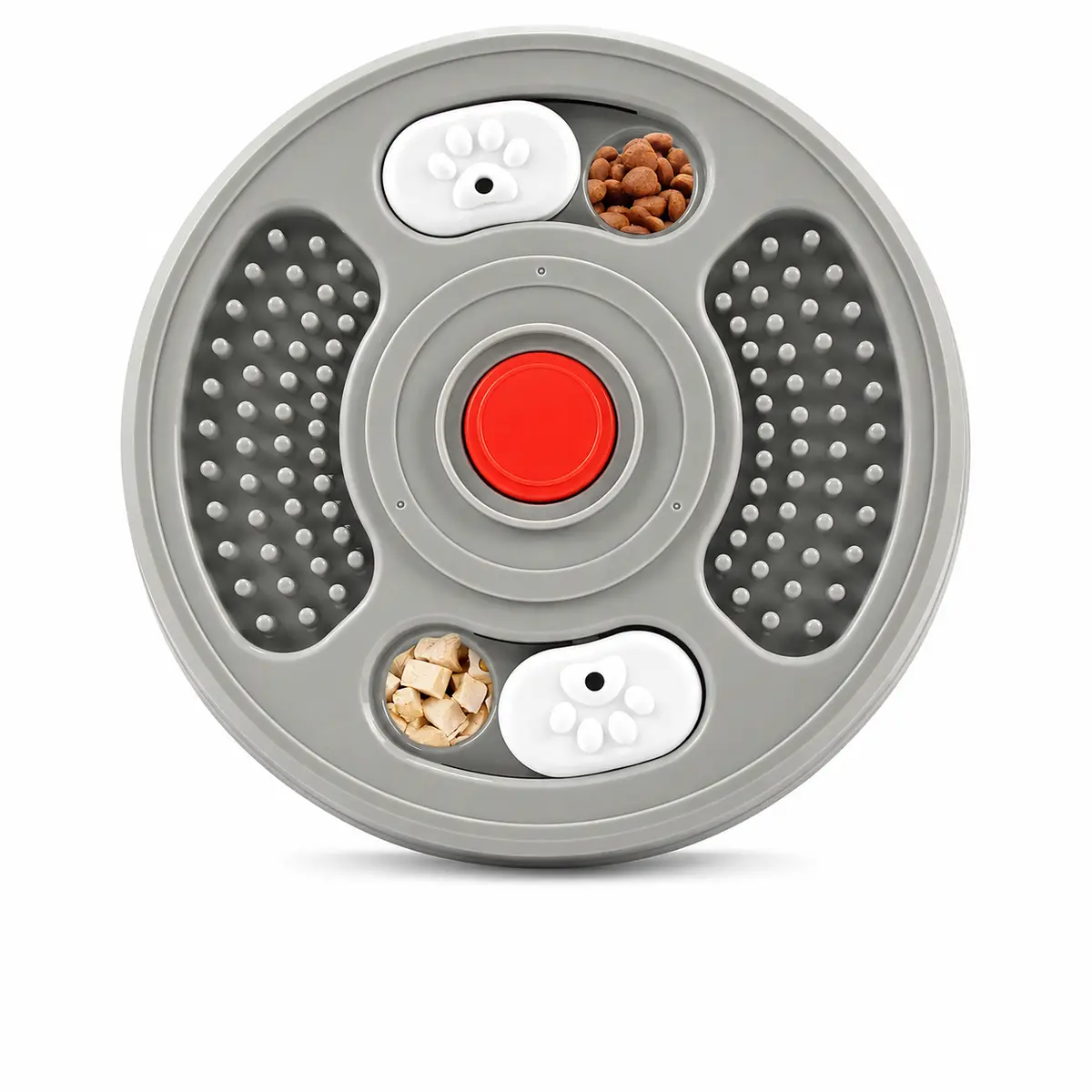
For dogs that gulp anything new, a slow feeder bowl or a lick mat keeps portions small and eating slow.
How much almond butter by weight
Keep almond butter to a lick-sized portion. A guide: up to half a teaspoon for dogs under 20 lb; up to one teaspoon for dogs of 20 to 50 lb; up to two teaspoons for dogs over 50 lb. A few times a week is plenty.
The AKC's guidance is to keep treats within 10 percent of daily calories, and nut butters use up that allowance fast. Dogs that are overweight, have had pancreatitis, or have a sensitive stomach should skip almond butter, or have it only with their vet's approval.
Almond butter and puppies
Puppies can have a tiny smear of plain, xylitol-free almond butter once they are on solid food, for example a thin layer inside a puppy chew toy to keep them busy. Start with a fingertip amount and watch for loose stool.
Puppies have small stomachs and need nutrients balanced for growth, so keep fatty treats rare. Puppies are also more likely to get into a dropped jar or open pantry, so store nut butters up high.
Signs almond butter disagreed with your dog
Too much almond butter usually shows as vomiting, soft or greasy stool or gas within a few hours to a day. A dog that ate a whole jar may vomit more than once. Some dogs have nut allergies, which can show as itching, hives or facial swelling.
Call your vet the same day for repeated vomiting, a painful belly, refusing food or lethargy, which can point to pancreatitis after a fatty treat. If the jar contained xylitol, call your vet, ASPCA Animal Poison Control at (888) 426-4435 or Pet Poison Helpline at (855) 764-7661 straight away; a fee may apply.
Other nut butters and alternatives
Plain, unsalted peanut butter without xylitol is the most common choice, and the AKC lists it as an occasional treat. Cashew butter is similar. Avoid any nut butter that contains macadamia, chocolate or xylitol.
For a lower-fat lickable treat, try a spoonful of plain canned pumpkin or plain yogurt for dogs that tolerate dairy, spread on a lick mat and frozen.
This page is general information, not veterinary advice, and it cannot replace an examination by the vet who knows your pet.
Common questions
Is almond butter safe for dogs?
Plain almond butter with no xylitol is safe for most dogs in small amounts. It is high in fat, so keep it to a lick a few times a week, and check every new jar's label for xylitol or birch sugar.
Is almond butter better than peanut butter for dogs?
Neither is clearly better. Both are high in fat and both can contain xylitol in some brands. Choose whichever plain, unsalted, xylitol-free option your dog tolerates and keep portions small.
Can dogs eat almonds?
Whole almonds are not toxic, but the AKC lists them as a choking hazard, and they are high in fat. Salted or flavored almonds are worse. Almond butter, spread thinly, avoids the choking risk.
My dog ate a whole jar of almond butter. What should I do?
Check the label for xylitol first; if it is there, call your vet or poison control straight away. If not, watch for vomiting, diarrhea or belly pain and call your vet, as that much fat can trigger pancreatitis.
Can dogs eat almond butter every day?
Daily almond butter adds a lot of fat and calories and can lead to weight gain. A thin smear a few times a week is a safer pattern, and dogs prone to pancreatitis should skip it.
Sources we checked
This guide is general information, not veterinary advice. If your pet is unwell or injured, contact your veterinarian.