Food safety
Can Dogs Eat Acorn Squash? Plain Cooked Flesh
Yes, dogs can have plain cooked acorn squash as an occasional extra when it suits their individual diet. Pet Poison Helpline lists this winter squash as pet safe and recommends cooking it without oils or seasonings, with the seeds and rind removed. The ASPCA also identifies acorn squash as non-toxic to dogs. That supports a modest portion of prepared flesh, rather than a whole squash or an unknown casserole.
By Matt GarnettUpdated November 13, 20264 min read4 sources
The evidence concerns the squash itself
Pet Poison Helpline specifically includes acorn squash among suitable winter squash for pets. Its preparation advice matters: use the cooked flesh, leaving out oils and seasonings. The ASPCA’s plant database separately records the identified squash as non-toxic. Neither reference makes every dish carrying the same name appropriate for a dog.
Start by establishing what you have. A whole vegetable, a bag of unseasoned pieces, and a ready-made side dish require different checks. If the recipe is uncertain, set it aside and choose a familiar permitted reward. A dog does not need to try the vegetable simply because the household is serving it.
Remove the tough parts before preparing a snack
Pet Poison Helpline advises removing winter-squash rind and seeds, which can present choking or intestinal-obstruction concerns. Separate the flesh during preparation, and put discarded parts where the dog cannot retrieve them. Do not leave the waste on an accessible cutting board while concentrating on the portion you intend to share.
After cooking the plain flesh, let it cool and prepare a manageable small piece for the individual dog. Stay nearby while it eats. Ask the veterinarian about suitable textures if the dog has a swallowing or dental problem; a food’s non-toxic classification does not settle those separate questions.
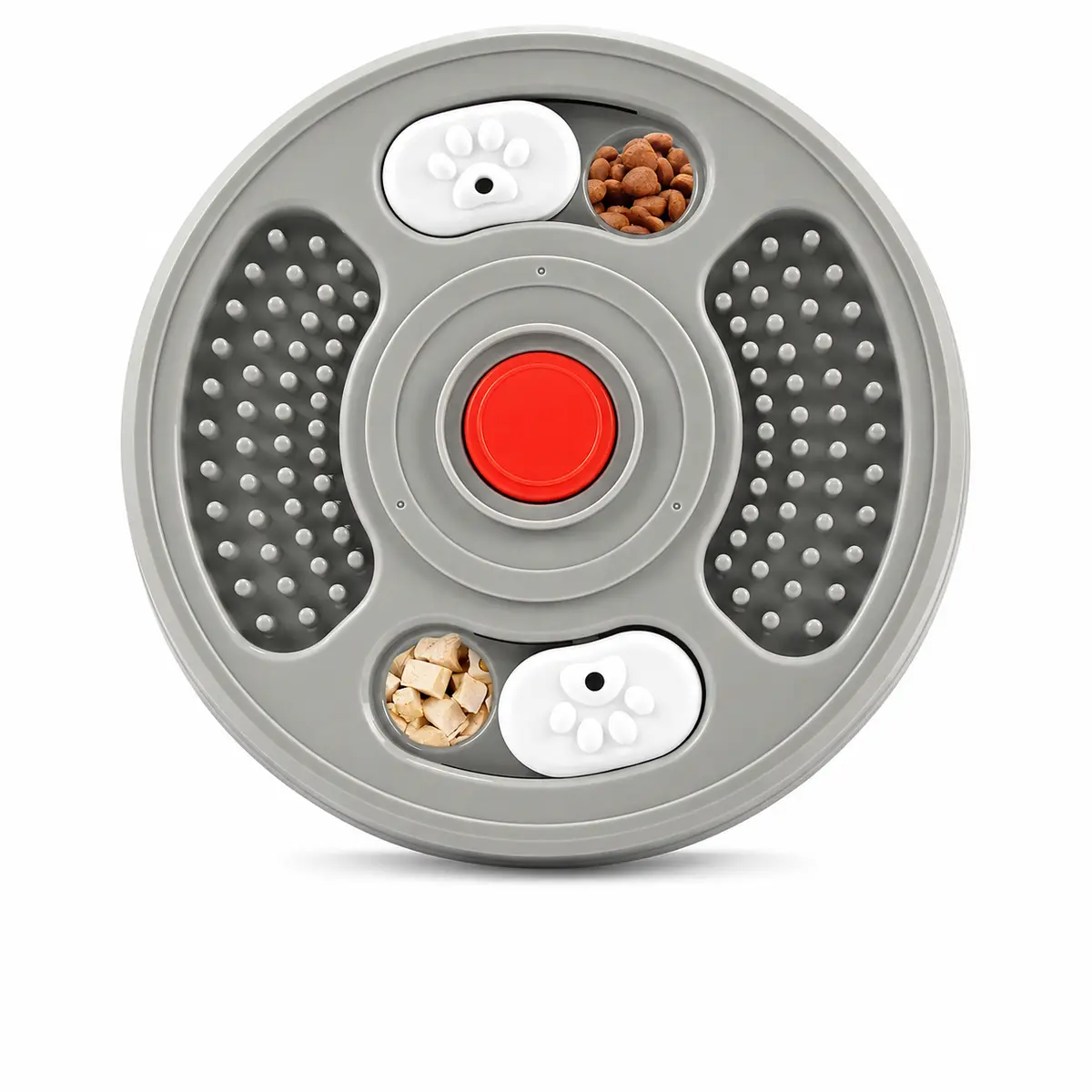
For dogs that gulp anything new, a slow feeder bowl or a lick mat keeps portions small and eating slow.
Account for extras alongside the regular diet
AKC advises keeping treats within a small share of daily calories, including the extras used for training. Count squash together with other rewards and table food rather than treating each as a separate allowance. Discuss the total with your veterinarian if the dog’s weight or usual intake has become uncertain.
VCA’s general feeding guidance emphasizes an appropriate complete diet. Do not replace meals with squash or assemble a homemade diet from a list of permitted vegetables. Puppies need nutrition suitable for growth, and dogs with prescribed diets may have restrictions that make an otherwise acceptable extra unsuitable for their particular routine.
Make the decision around the individual dog
Ask before adding squash during a food trial, a prescribed diet, or a period of digestive illness. Explain the exact preparation and what else the dog eats. This gives the veterinarian a useful basis for advice instead of a broad question about whether every dog can tolerate the same snack.
If the extra is permitted, avoid introducing several unfamiliar foods at once. Stop offering it if vomiting, diarrhea, a loss of appetite, or unusual behavior follows, and contact the clinic. Record the timing and the other foods involved. Symptoms alone do not establish that squash caused a problem or identify a diagnosis.
Treat swallowed rind or an unknown dish as a separate incident
Call the veterinarian if the dog swallows tough discarded parts or gets into a dish with uncertain ingredients. Describe what may be missing, when access occurred, and the dog’s weight in pounds. Repeated vomiting, apparent abdominal pain, marked weakness, or trouble breathing warrants prompt veterinary attention. Do not try home vomiting remedies or give human medication.
This page is general information, not veterinary advice, and it cannot replace an examination by the vet who knows your pet.
Common questions
Can dogs eat acorn squash rind?
Remove the rind before sharing squash. Pet Poison Helpline warns that tough squash parts can present choking or obstruction concerns. After an accidental ingestion, describe the size and amount to the veterinarian.
Can dogs eat acorn squash seeds?
Pet Poison Helpline advises leaving the seeds out of a pet’s serving. Discard them securely during preparation rather than allowing the dog to explore the cutting board or kitchen waste afterward.
Can I share a seasoned squash side dish?
Check the complete recipe rather than applying plain-squash advice to it. Save an unseasoned portion before preparing the family dish, or use a familiar permitted reward when the ingredients are uncertain.
Should squash replace some of my dog’s regular meals?
Do not substitute squash for an appropriate complete diet without veterinary guidance. Treat advice does not provide a balanced feeding plan, and individual calorie needs and medical restrictions still apply.
Sources we checked
This guide is general information, not veterinary advice. If your pet is unwell or injured, contact your veterinarian.