Health & vet care
Dog Hind Leg Weakness: When to Seek Veterinary Care
Hind leg weakness in a dog can reflect a painful limb problem, spinal or nerve disease, or an illness affecting the whole body; the appearance alone cannot identify the cause. Contact your veterinarian promptly about new weakness. Sudden inability to stand or walk, rapidly worsening movement, severe discomfort, or difficulty urinating needs immediate veterinary advice because some spinal conditions are time-sensitive.
By Matt GarnettUpdated November 11, 20264 min read4 sources
Sudden loss of walking needs an immediate call
The American College of Veterinary Surgeons describes disc rupture as a surgical emergency that can progress from pain and a wobbly hind end to loss of leg movement and difficulty emptying the bladder. This is one possible explanation for hind limb dysfunction, not a diagnosis established by seeing the dog struggle.
Call an emergency veterinarian immediately if your dog suddenly cannot stand or walk, or its movement is worsening quickly. Tell the team about pain, an injury, and any change in urination. Ask how to move and transport the dog while minimizing further strain. Do not make it walk repeatedly to demonstrate the problem or wait until morning to see whether sudden loss of function improves on its own.
Explain what weakness looks like in your dog
VCA describes weakness as difficulty getting up, slow or unsteady movement, shaky muscles, and sometimes fainting or collapse. Weakness can be persistent or occur in episodes. Cornell’s lameness guidance also notes that pain and weakness can overlap in how a dog moves, so the description matters.
Tell the veterinarian whether one leg or both seem affected, whether the dog can rise, and whether its toes scrape or its legs cross. Explain what you saw before the problem, how quickly it developed, and whether it comes and goes. If a safe short recording already exists, it may help. Do not recreate a difficult movement to obtain video, and do not delay an urgent call while trying to capture the best angle.
Several body systems may need consideration
Cornell describes orthopedic and neurologic systems as the two main areas assessed during a lameness examination. Problems involving joints, bones, muscles, nerves, or the spinal cord can change hind limb use. More than one problem can occur at the same time, particularly in an older dog.
VCA also explains that generalized weakness can accompany heart disease, anemia, metabolic disturbances, and other conditions. A dog appearing weak behind does not automatically have arthritis or a slipped disc. Report changes in appetite, drinking, activity, bowel habits, or alertness alongside the movement problem. This broader history can help the clinician decide whether the investigation should extend beyond the legs and back, rather than focusing only on the most visible sign.
Gradual weakness is still worth investigating
Cornell describes degenerative myelopathy as one cause of progressive weakness and loss of coordination, often beginning in the hind limbs. Difficulty rising, scuffed nails, and muscle loss can occur. Those signs also overlap with other conditions, so recognizing them at home cannot establish this particular disease.
The university explains that diagnosis involves excluding other possible spinal disorders, and that a genetic risk result does not guarantee a dog will develop the disease. Do not make a major care decision based on breed, age, or a genetic result alone. Ask the veterinarian what the current examination shows, which alternatives need consideration, and what further testing would change. A gradually developing problem deserves care even when there has been no dramatic emergency episode.
The examination guides tests and treatment choices
Cornell describes observing movement and examining limbs, joints, and the spine to localize a problem. Depending on findings, testing may include imaging or laboratory work, with referral for more complex cases. VCA notes that blood and urine screening can help investigate whole-body causes of weakness.
Ask the clinician what each recommended test is intended to clarify and whether urgent referral is needed. Explain any practical limits on transport or home care so the team can plan with you. Do not test pain perception by pinching toes, manipulate the back, or start exercises based on a suspected diagnosis. Those decisions require a professional assessment, and an inappropriate home test may cause distress without telling you what is wrong.
Plan safe support and reassessment after diagnosis
Care depends on the cause and severity. ACVS discusses both medical and surgical approaches for selected disc patients, while Cornell’s degenerative myelopathy guidance describes tailored mobility support and rehabilitation. These different examples show why the same exercise routine, harness, or rest period cannot be prescribed for every weak dog.
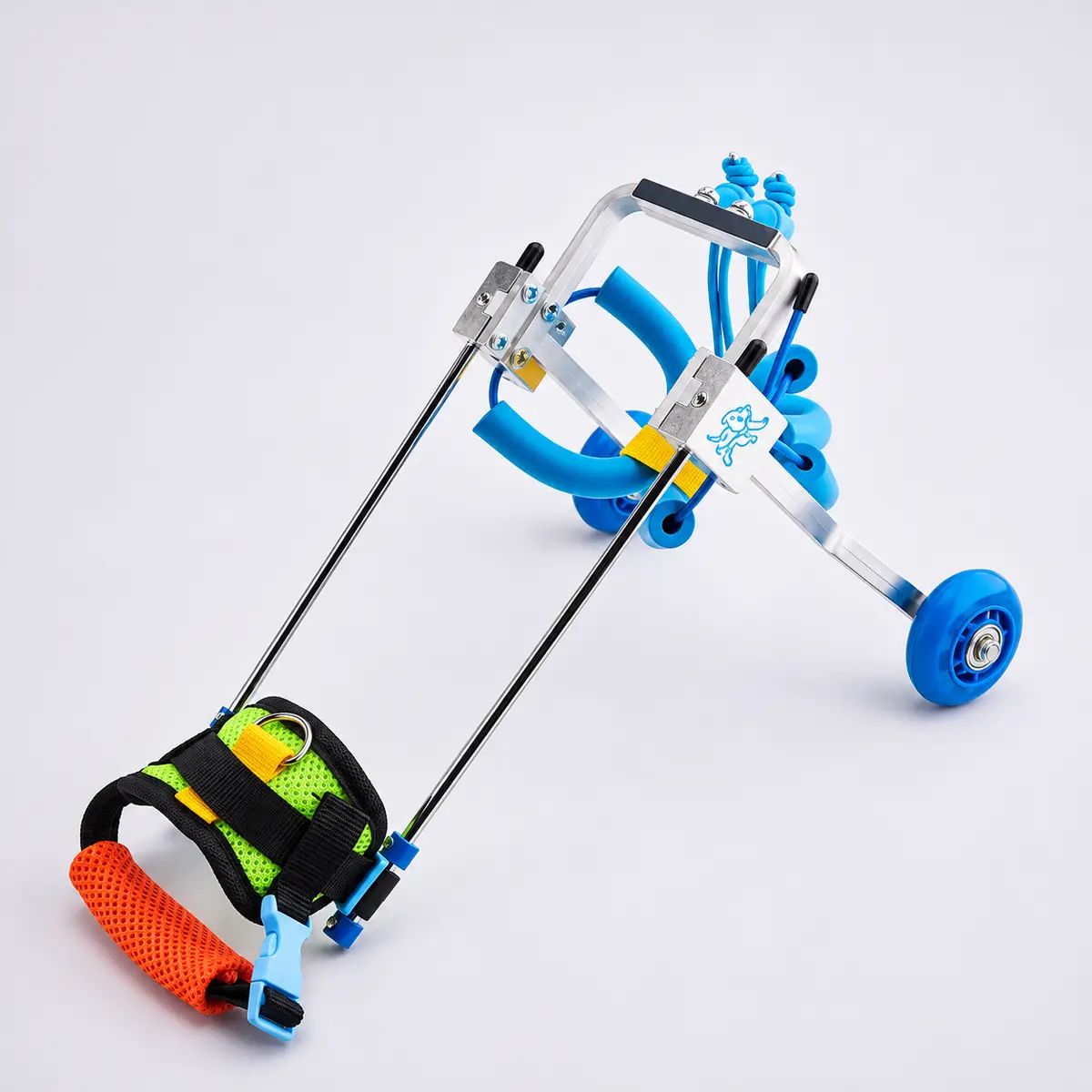
Before leaving the appointment, ask about permitted movement, assistance with toileting, comfortable rest, and the next assessment. Confirm which changes require an emergency return and whom to call after hours. Tell the team if you cannot safely lift the dog or if prescribed support is difficult to use. If your vet recommends mobility aids or a softer place to rest, you can browse dog wheelchairs and orthopedic dog beds. Do not give another pet’s medicine or a human pain reliever, and do not change an existing prescription without veterinary direction.
This page is general information, not veterinary advice, and it cannot replace an examination by the vet who knows your pet.
Common questions
Are weak back legs always arthritis in an older dog?
No. Cornell describes both orthopedic and neurologic causes of altered movement, and VCA discusses wider illnesses that can cause weakness. Age alone does not identify the cause or replace an examination.
My dog suddenly cannot use its back legs. Can I wait?
Contact an emergency veterinarian immediately. ACVS describes spinal disc rupture as time-sensitive, with outcome influenced by the function remaining when the dog is assessed. Ask the clinic how to transport your dog safely.
Does a genetic result prove degenerative myelopathy is causing weakness?
No. Cornell says genetic predisposition does not guarantee clinical disease and that other spinal disorders need consideration. Ask your veterinarian to interpret the result alongside the current examination and any recommended tests.
Sources we checked
This guide is general information, not veterinary advice. If your pet is unwell or injured, contact your veterinarian.