






Care & how-to
Why Do Cats Purr? Contentment, Comfort and Pain
Cats purr mostly to communicate, and most of the time it means a relaxed, content cat. But purring is not a reliable happiness meter. VCA points out that cats also purr when they are stressed, unwell or in pain, possibly as a way to soothe themselves. Reading the rest of the body, and noticing changes in when your cat purrs, tells you which kind of purr you are hearing.
By Matt GarnettUpdated November 14, 20264 min read3 sources
The happy purr
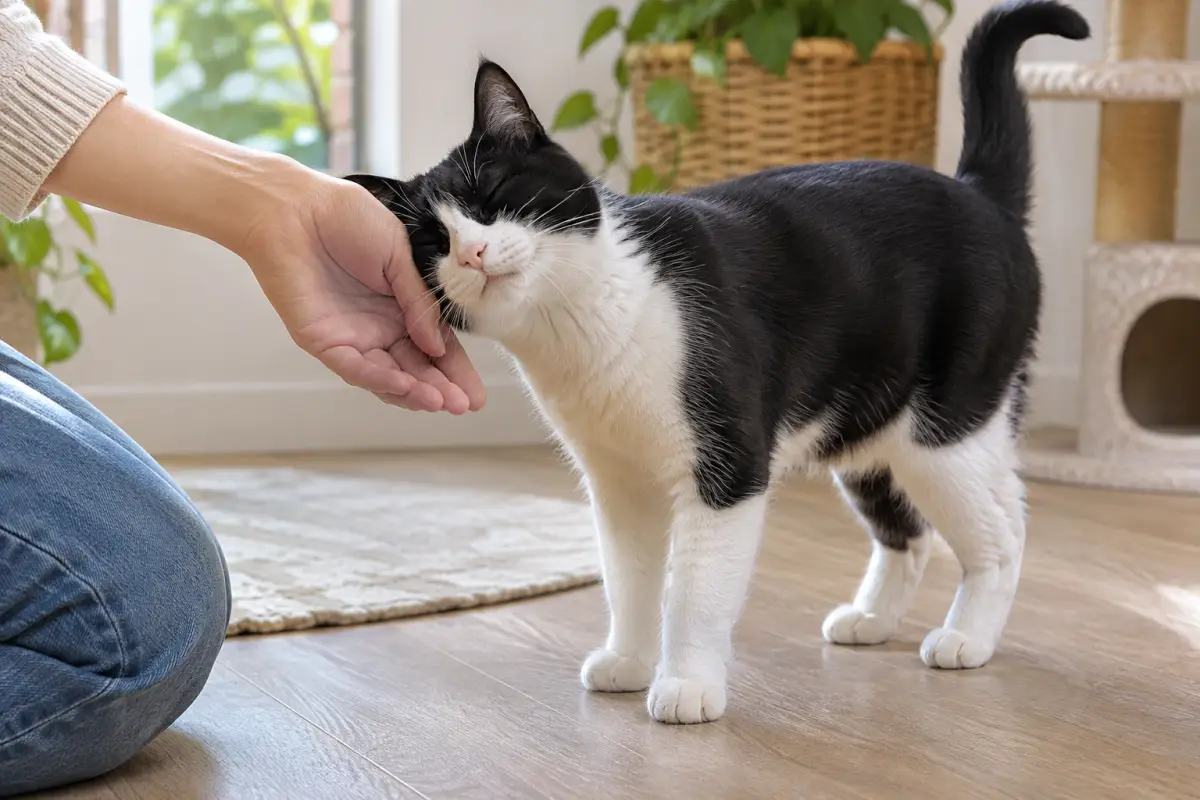
The purr most owners know comes when a cat is curled on a lap, being stroked, kneading a blanket or settling down to sleep. The body is loose, the eyes may be half-closed or slowly blinking, and the tail is relaxed. In this setting purring is a sign of comfort and of trust in the person or place, and many cats purr more around the people they know best.
Purring begins very early. Kittens purr while nursing, and their mother purrs back, which may help keep the litter close and calm. Many adult cats seem to carry the habit into the situations that feel most like that: warmth, softness, food and a familiar person.
Purring to ask for something
Some cats purr to get what they want, most often food. Owners often notice a slightly different, more insistent purr near mealtime, sometimes mixed with a meow, while the cat winds around their legs or sits by the bowl. VCA notes that cats largely meow at people rather than at each other, and many seem to use purring in a similar targeted way.
If your cat purrs loudly at 5 a.m. next to your pillow, the message is usually breakfast. The best way to keep this from escalating is to avoid rewarding it immediately; feeding on a fixed schedule, or using a timed feeder, takes the urgency out of the morning chorus.
When purring means pain or stress
Cats are very good at hiding illness, an instinct from ancestors that risked becoming prey if they looked weak. VCA warns that a purring cat is not always a happy one: purring can accompany pain, and some cats purr when frightened at the vet, during labor or when badly unwell. Researchers think the purr may help them calm themselves.
Look at the whole picture. A cat purring while hiding under the bed, hunched, not eating, reluctant to jump, or with flattened ears is not content. VCA advises a prompt vet visit if your cat is purring more than usual along with other changes, such as reluctance to use stairs or jump onto furniture, hiding or lower energy.
How cats make the purring sound
The purr is made in the larynx, or voice box. Muscles there twitch rapidly, opening and closing the space between the vocal cords as the cat breathes in and out, which is why a purr can carry on continuously without a break for breath. The exact control mechanism is still being studied.
Because it runs on both the in-breath and the out-breath, a purr can be very loud in some cats and almost silent in others, felt more than heard. Neither is a problem. A cat whose purr suddenly sounds hoarse or different, or who starts to wheeze or breathe noisily, should be checked by a vet.
Reading your cat's purr
To understand a purr, pair it with body language. Relaxed muscles, soft eyes, slow blinks, kneading and a gently curled tail point to contentment. Tense muscles, a tucked tail, dilated pupils, ears turned back, hiding or a change in appetite point toward stress or discomfort.
Notice changes over time. A cat that suddenly purrs in odd places, purrs while lying alone more than usual, or stops purring when it always used to may be telling you something about how it feels. Keeping regular checkups helps catch the quiet illnesses, such as arthritis and dental pain, that cats so often mask.
This page is general information, not veterinary advice, and it cannot replace an examination by the vet who knows your pet.
Common questions
Do cats purr when they are happy?
Usually, yes. Most purring happens when a cat is relaxed and comfortable, such as being stroked or settling to sleep. But cats can also purr when stressed or in pain, so look at body language and context too.
Why does my cat purr when I pet it?
Being stroked by a trusted person is pleasant and calming for many cats, so purring is a common response. It often comes with kneading, slow blinking and relaxed posture, all signs your cat is comfortable with you.
Do cats purr when they are in pain?
Some do. VCA notes that purring can be related to pain, and cats may purr while sick or frightened. If your cat is purring more along with hiding, low energy or not eating, contact your vet promptly.
Why does my cat purr so loud?
Purr volume varies a lot between individual cats and is usually just personality. Some purr loudly enough to hear across a room, others barely at all. A sudden change in the sound, or noisy breathing, is worth a vet check.
Sources we checked
This guide is general information, not veterinary advice. If your pet is unwell or injured, contact your veterinarian.