






Care & how-to
Why Do Cats Headbutt You?
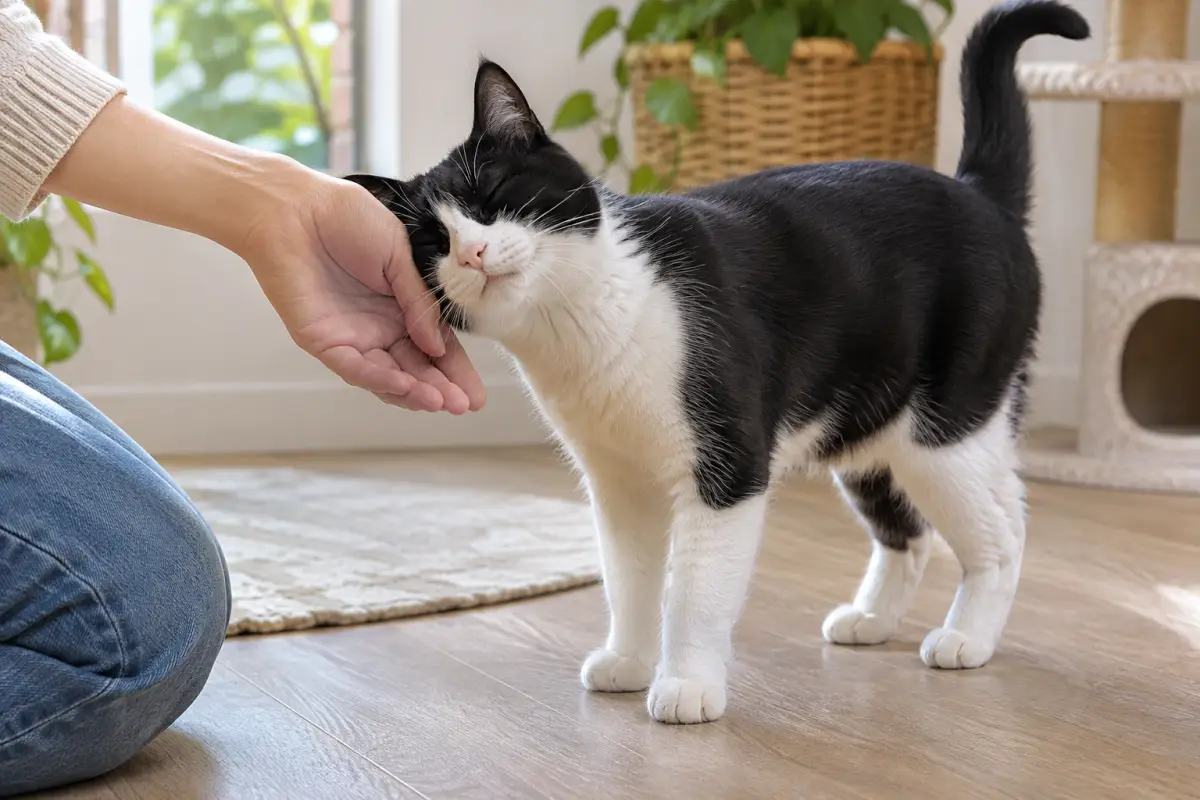
When a cat headbutts you, it is marking you with its scent and showing that it trusts you. VCA explains that cats have scent glands on the cheeks, forehead and chin, and rubbing them on you, a behavior called bunting, mixes your scent with theirs and welcomes you into their inner circle. It is a friendly gesture. Pressing the head hard against a wall is different and needs a vet.
By Matt GarnettUpdated November 14, 20263 min read3 sources
Scent and the family smell
Cats rely heavily on scent to understand their world. Merck notes that cats mark territory with scent glands under the chin and on the paws, as well as with urine and feces. The glands on the face produce pheromones that people cannot smell but cats can detect easily.
In multi-cat homes, cats headbutt and rub against each other to build a shared colony scent, VCA explains, which helps them recognize each other as part of the group. When your cat bunts you, it is adding you to that shared scent, a sign that you are family. Cats that do not bunt may simply show affection in other ways.
A sign of trust
VCA describes headbutting as a sign of trust and acceptance, rather than necessarily love in the human sense. A cat will usually bunt only people and animals it feels safe with, and the behavior often comes with purring, a raised tail, slow blinking or flopping over on its side.
Many cats bunt at greeting time, when you come home or first thing in the morning, which may help refresh a scent that has faded while you were apart. Some cats bunt hard and with real enthusiasm; others give a gentle cheek rub along your hand or leg. Both mean the same thing.
Headbutting furniture and objects
Cats also rub their faces on furniture, door frames, corners and cat trees. VCA explains that this marks an area as a safe space and is quite different from territorial urine marking. A cat that cheek-rubs the corners of a room after a move, or after new furniture arrives, is making the new environment smell familiar.
This kind of marking is normal and harmless and helps cats feel settled. Try not to wash every surface your cat rubs on at once during stressful times, such as after a move, so some familiar scent remains while your cat adjusts.
Cats also leave scent by scratching, so a sturdy scratching post near the places your cat already marks gives it an approved spot to do both.
How to respond
Most cats enjoy a gentle response. Offer your hand or cheek and let your cat rub against it, or give a light scratch under the chin and along the cheeks, where the scent glands are. Let your cat lead: some want a brief rub and then move on, others settle in for petting.
Watch for signs your cat has had enough, such as a twitching tail, flattened ears or a tensing body, and stop before it becomes overstimulated. Avoid pushing your face toward a cat you do not know well; let it come to you and choose whether to bunt.
Headbutting versus head pressing
Head pressing is not the same as bunting. A cat that stands with its head pushed firmly against a wall or corner for long periods, often looking dull or unaware, may have a serious problem affecting the brain, such as a toxin, liver disease, infection or a head injury. This needs to be seen by a vet urgently.
Contact your vet too if a cat that always headbutted you stops doing so and shows other changes, such as hiding, a change in appetite or reduced activity. VCA notes that a change like this can be a sign of illness, and cats often hide pain behind small shifts in behavior.
This page is general information, not veterinary advice, and it cannot replace an examination by the vet who knows your pet.
Common questions
What does it mean when a cat headbutts you?
It is a friendly behavior called bunting. Your cat is marking you with scent from glands on its face and showing that it trusts you and sees you as part of its group. It often comes with purring and a raised tail.
Why does my cat headbutt me so hard?
Some cats simply bunt with enthusiasm. A hard headbutt usually just means a confident, affectionate cat. It is different from head pressing, where a cat holds its head against a wall, which needs an urgent vet visit.
Do cats headbutt other cats?
Yes. Cats that get along often headbutt and rub each other to build a shared group scent. It helps them recognize each other as part of the same family, especially after one has been away, such as at the vet.
Should I headbutt my cat back?
Gently offering your cheek or hand for your cat to rub is usually welcome. Let your cat make the move, and avoid pushing your face at a cat that is not relaxed. A chin or cheek scratch is a good response.
Sources we checked
This guide is general information, not veterinary advice. If your pet is unwell or injured, contact your veterinarian.