






Care & how-to
Why Does My Dog Lie or Sit on Me?
Your dog may lie or sit on you to seek closeness or interaction, especially if contact has reliably brought attention. The position alone does not reveal a precise intention. Look at the dog’s whole behavior, whether everyone is comfortable, and what happens when someone approaches or you need to move. New or concerning changes deserve veterinary guidance.
By Matt GarnettUpdated November 14, 20263 min read4 sources
Closeness can be rewarding without a complicated explanation
San Francisco SPCA describes dogs as social animals and notes that touching a dog pressing against you can reinforce that behavior. If sitting against or on you regularly leads to interaction, your response may help explain why the dog repeats it. That does not tell you every reason for every contact.
Think about the immediate sequence. Did the dog approach while you stopped playing, settle quietly beside you first, or repeatedly seek a response? What did you do next? Observe without turning a single posture into a statement about loyalty or rank. VCA explains that body language generally conveys emotional states rather than the precise messages people sometimes assign to it.
Read the whole dog rather than one position
VCA recommends interpreting body signals in their full context. Notice body tension, facial expression, head position, and responses to people moving nearby. Being physically close does not establish that a dog wants every kind of touch or that it is comfortable with everyone approaching.
If the dog turns away, stiffens, or appears unsettled, stop adding pressure and consider what might be making the interaction difficult. Ask for professional guidance when you are unsure how to interpret the pattern. A relaxed cuddle and a tense interaction can occur in a similar location on the couch, so focus on what is happening rather than assuming the location itself explains the emotion.
Set up a nearby alternative when you need space
If the dog is comfortable and the contact is simply inconvenient, offer an inviting resting spot nearby. AKC discusses teaching a place cue and rewarding a dog for settling on its bed. Practice when you are available to teach calmly instead of waiting until you are frustrated or unable to move comfortably.
Reward the alternative you want to see. Keep expectations consistent among the people who interact with the dog, and make ordinary rest worth noticing. San Francisco SPCA recommends giving attention for settled behavior as well as scheduling interaction. You can decide that lap time works sometimes while teaching another comfortable option; the useful skill is moving between those situations without distress.
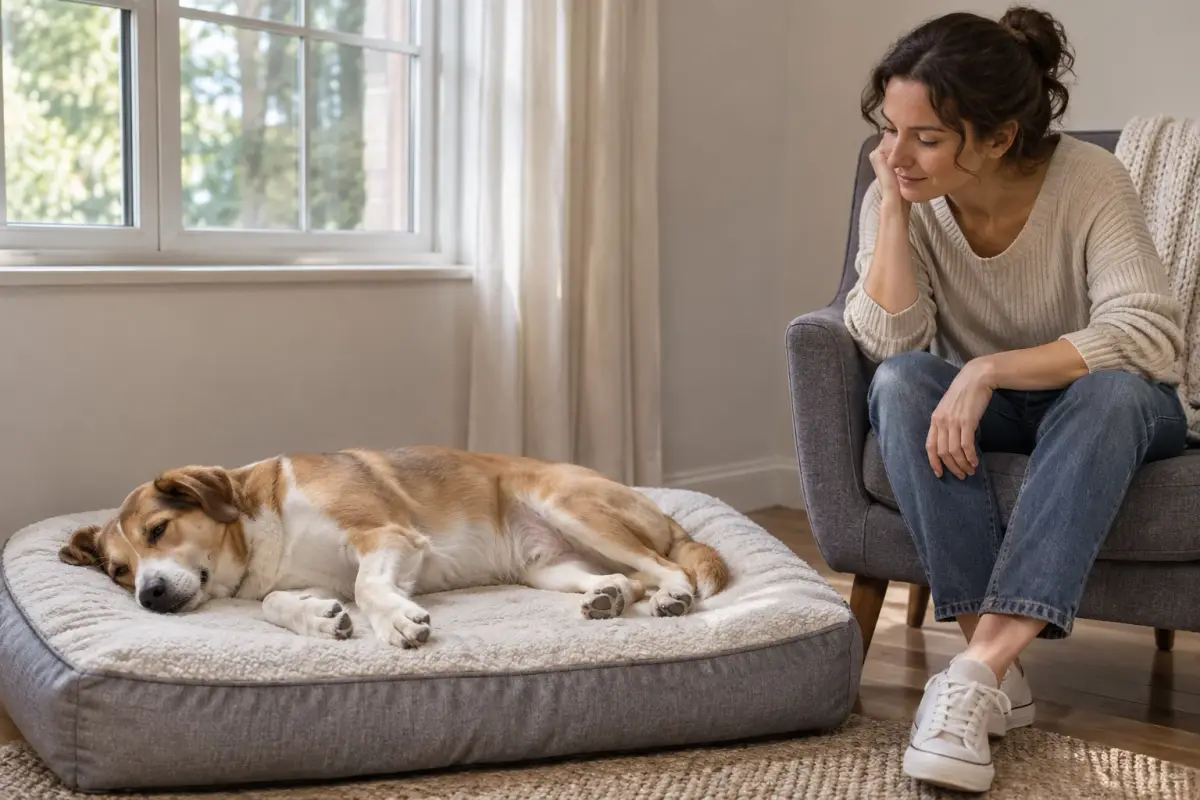
A comfortable dog bed or folded dog blanket placed right next to your seat gives your dog a close, rewarding alternative to your lap.
Respond to warning signs with space and qualified help
Growling, threatening, or snapping when someone approaches needs attention. Cornell explains that dogs can guard a favorite person or resting place, among other resources. Those signs are different from merely choosing to sit close, and should prompt a conversation with your veterinarian about safe management and assessment.
Do not invite another person or animal closer to test the dog’s reaction. Avoid confrontational handling and arrange help with a plan suited to the household. Tell the clinician exactly who approached, what the dog did, and what happened next. Describe observable behavior rather than deciding that the dog is jealous or protective, because those labels can obscure details the professional needs.
Check changes and build a routine that works for both of you
A sudden increase in closeness can deserve a veterinary check, particularly when comfort or normal activities also change. AKC’s veterinary advice notes that sudden clinginess may accompany a physical problem. Tell your veterinarian whether the dog is resting normally, moving comfortably, and behaving as usual at other times.
For a comfortable dog, maintain suitable interaction, activity, and opportunities to rest. If closeness becomes persistent or hard to manage, seek qualified support rather than repeatedly pushing the dog away; San Francisco SPCA notes that such responses can themselves provide attention. Your goal is a comfortable arrangement with understandable expectations, while taking distress, new changes, and safety concerns seriously.
This page is general information, not veterinary advice, and it cannot replace an examination by the vet who knows your pet.
Common questions
Why does my dog sit on me when I stop paying attention?
Attention may be part of the pattern if contact regularly brings a response. Observe what happens before and after, meet the dog’s needs, and reward a comfortable alternative when you need space.
Is sitting on me proof that my dog is guarding me?
No. The position alone does not establish guarding. Growling, threatening, or snapping when others approach is a separate concern that warrants veterinary guidance and an individual plan for safe management.
How can I ask my dog to rest somewhere else?
Teach a comfortable nearby place and reward calm settling there while the dog is relaxed. Keep the cue and expectations consistent, and seek help if movement or separation causes distress.
Sources we checked
This guide is general information, not veterinary advice. If your pet is unwell or injured, contact your veterinarian.