






Care & how-to
Quail Eggs: Size, Cooking, Safety and Raising Quail for Eggs
Quail eggs are tiny, speckled eggs from Coturnix (Japanese) quail, about one-fifth the size of a chicken egg, so five equal roughly one chicken egg. They taste much like chicken eggs, with a slightly larger yolk for their size. Store and cook them like chicken eggs: refrigerate at 40°F or below and cook until the yolk and white are firm. Quail start laying at about seven weeks old.
By Matt GarnettUpdated November 14, 20264 min read3 sources
What quail eggs are, and how they compare
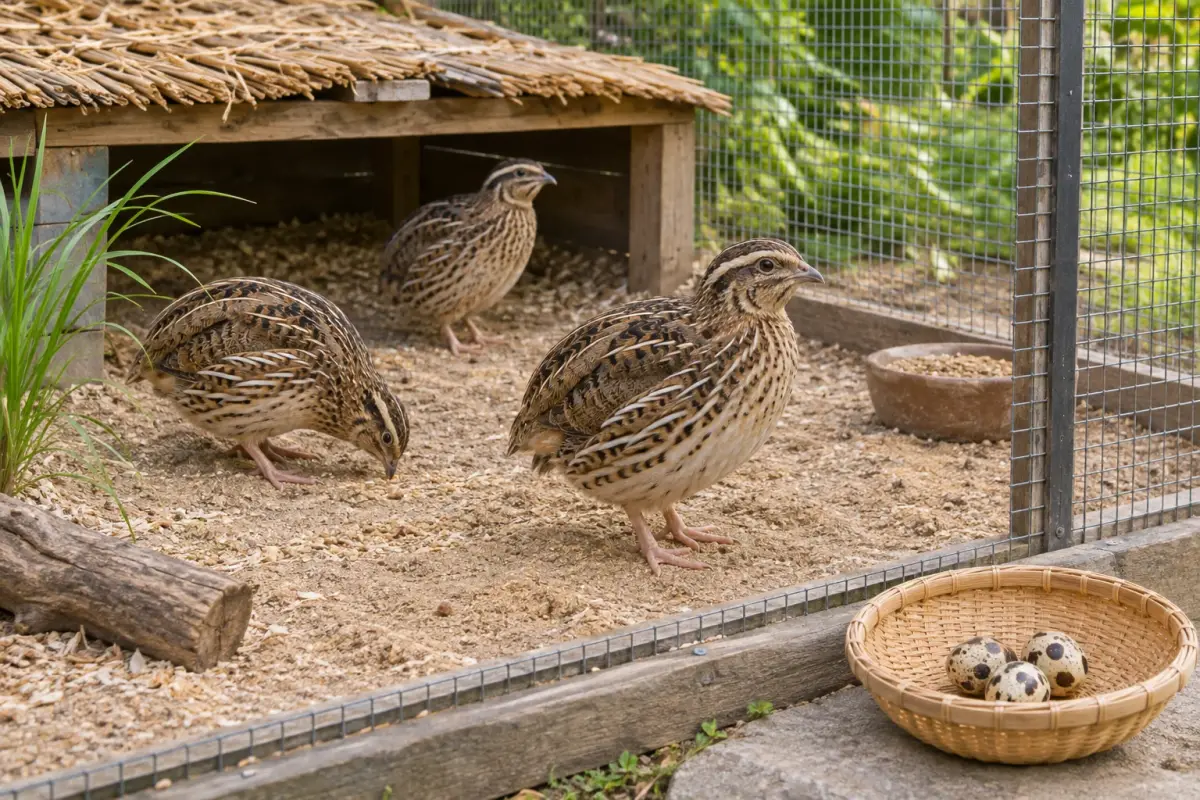
Nearly all quail eggs sold in the US come from Coturnix, or Japanese, quail, a small game bird kept for both eggs and meat. The poultry extension service says the eggs average about 10 grams each, roughly 8% of the hen's body weight, which is a large egg for so small a bird. About five quail eggs equal one chicken egg in a recipe.
The shells are cream to tan with brown and blue-gray mottling that varies from hen to hen, and the extension service notes they are thicker and harder to crack than chicken shells, with a tough inner membrane. Inside, the yolk is proportionally larger than a chicken egg's, which is why many cooks describe quail eggs as richer. Nutritionally they are broadly similar to chicken eggs, gram for gram.
How to crack and cook quail eggs
Cracking a raw quail egg against the edge of a bowl usually crushes it, because the membrane is so tough. Instead, tap the egg gently with a small serrated knife to score the shell, then snip through the membrane with the tip or small scissors and tip the contents out. Specialty quail egg scissors make this quick if you cook them often.
To hard-boil, lower the eggs into boiling water for about two and a half minutes for a soft, jammy center or four minutes for fully firm, then move them into ice water. The extension service warns that the shells stick to the whites and are hard to peel; slightly older eggs, a short soak in the ice bath, and peeling under running water all help. Quail eggs are popular fried on toast, pickled, in ramen and salads, and as bite-size appetizers.
Storing quail eggs safely
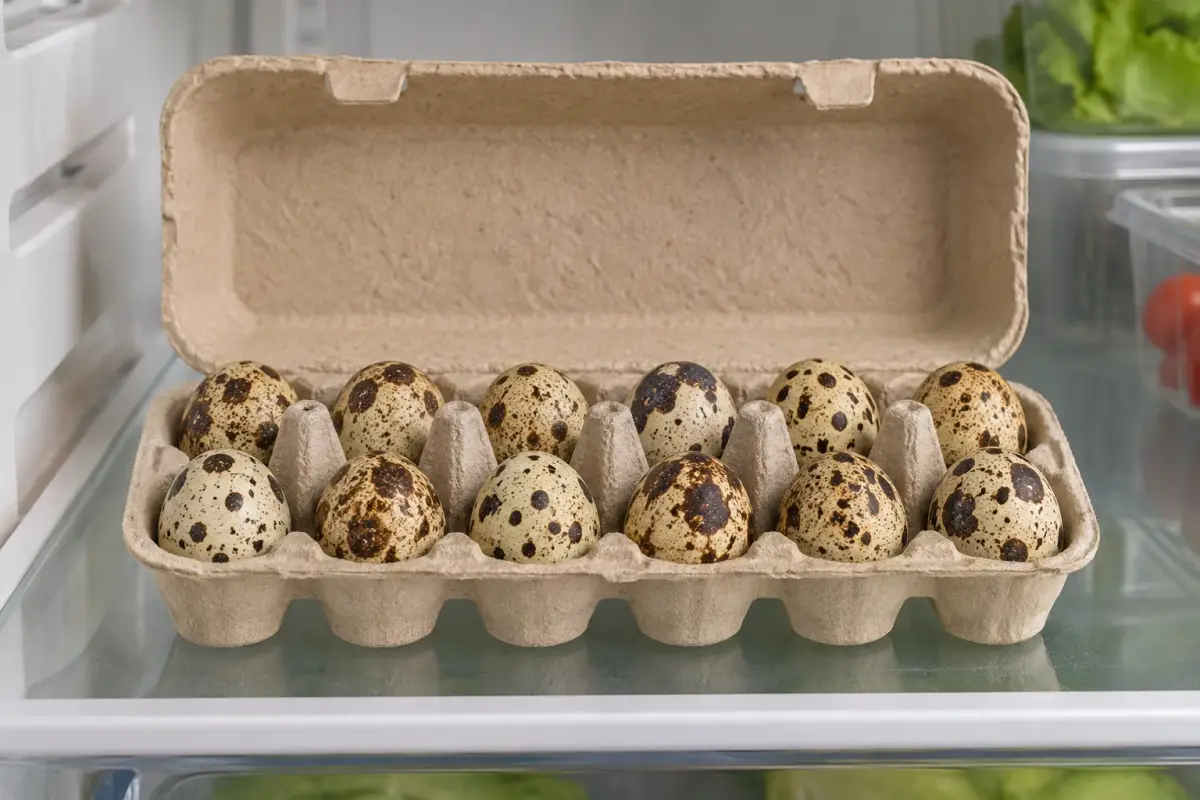
Treat quail eggs like any other egg. The FDA advises keeping eggs refrigerated at 40°F or below, using raw eggs within about three weeks for best quality, using hard-cooked eggs within a week, and not leaving cooked eggs out for more than two hours, or one hour in heat above 90°F. Keep them in a covered carton on a fridge shelf rather than in the door.
Salmonella can be present even in clean, uncracked eggs, so cook quail eggs until the white and yolk are firm, cook egg dishes to 160°F, and use pasteurized eggs for recipes that call for raw egg. Children under five, pregnant people, older adults and anyone with a weakened immune system should avoid undercooked eggs of any kind. Discard cracked or dirty eggs.
Raising Coturnix quail for eggs
Quail are one of the fastest ways to put fresh eggs on the table. The extension service says Coturnix mature in about six weeks and can be laying by seven weeks, and that hens keep laying economically for at least a year. They are small, quiet compared with chickens, and need far less space, which is why they are popular with suburban keepers, though local rules on keeping birds still apply.
Light drives laying. Laying hens need 14 to 18 hours of light a day, so in winter many keepers add a low-intensity light on a timer. Laying quail are usually kept in cages or hutches with wire or solid floors, which keeps eggs clean and easy to collect; in floor pens quail do not build nests and hide their eggs in the litter instead. Feed a high-protein game bird ration rather than standard chicken layer feed.
Many keepers house small Coturnix flocks in a covered, predator-proof run; our chicken runs and chicken coops are built for chickens, so check floor space and mesh size before using one for quail.
Telling hens from males, and hatching
Adult females have light tan throat and breast feathers with black speckles on the breast, while males have rusty brown throat and breast feathers, according to the extension service. Mature males also have a foamy cloacal gland at the top of the vent. Keep roughly one male for several females if you want fertile eggs, or no males at all for eating eggs.
Coturnix eggs hatch fast: Utah State's incubation table lists 17 days, against 21 for chickens and 23 to 24 for bobwhite quail. Hens rarely go broody, so hatching is done in an incubator. Call a vet who treats poultry if birds stop eating, sit fluffed up for long periods, or have swollen eyes or labored breathing. Chicks are tiny and need a warm brooder, very shallow water with pebbles or marbles to prevent drowning, and fine, high-protein game bird starter.
This page is general information, not veterinary advice, and it cannot replace advice from a veterinarian who treats poultry.
Common questions
How many quail eggs equal one chicken egg?
About five. Quail eggs average roughly 10 grams each, around one-fifth the weight of a large chicken egg, so swap about five quail eggs for each chicken egg in recipes.
How long do you boil quail eggs?
About two and a half minutes in boiling water gives a soft, jammy yolk and about four minutes a firm one. Cool them in ice water straight away, then peel under running water.
Are quail eggs safe to eat raw?
Like chicken eggs, quail eggs can carry Salmonella even when the shell looks clean. Cook them until the white and yolk are firm, and use pasteurized eggs in recipes that call for raw egg.
How many eggs does a quail lay?
A healthy Coturnix hen with enough daylight often lays close to an egg a day in her first year, and the extension service says hens keep laying economically for at least a year.
Sources we checked
This guide is general information, not veterinary advice. If your pet is unwell or injured, contact your veterinarian.