






Care & how-to
Pet Emergency Kit and First Aid Kit: What to Pack
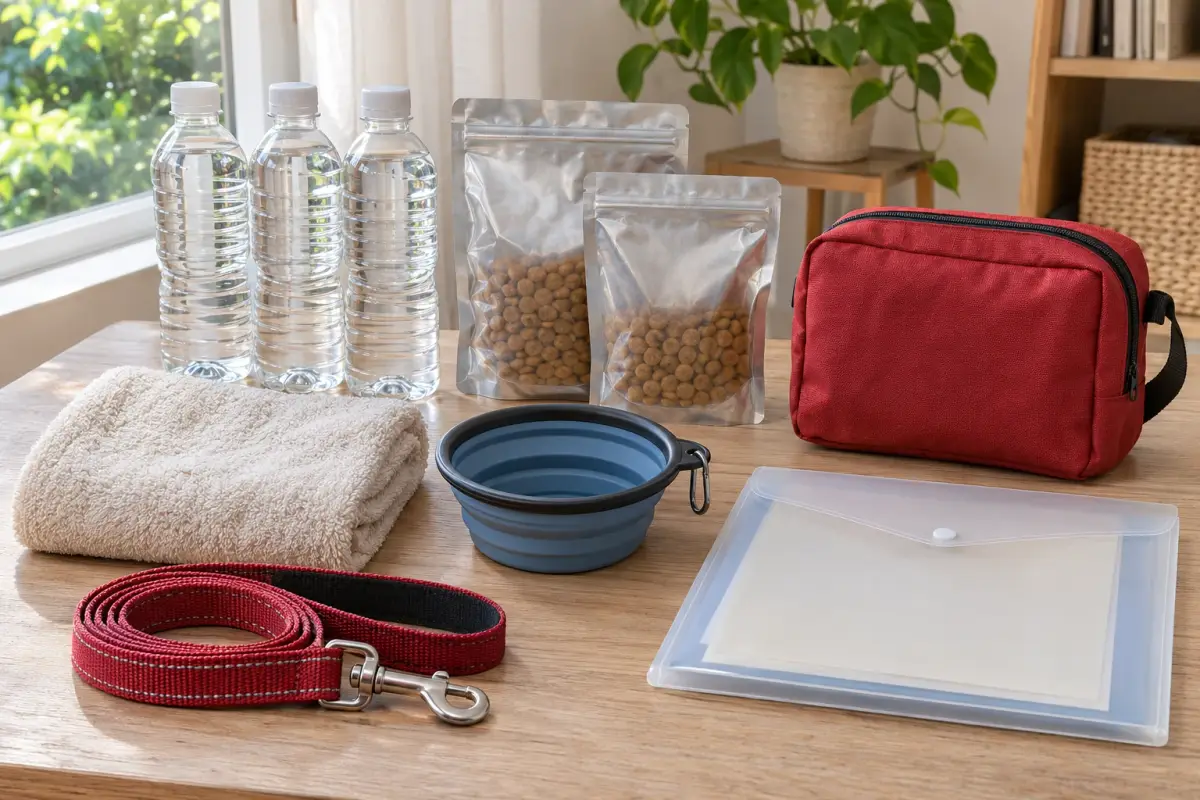
A pet emergency kit holds at least a week of food and bottled water, two weeks of any medication, copies of medical records, a carrier, spare collar and leash with ID, sanitation supplies, a recent photo of you with your pet, and a first aid kit. Keep it in a waterproof bin by an exit, check it every two months, and plan where your pets will go before a hurricane or wildfire comes.
By Matt GarnettUpdated November 14, 20265 min read2 sources
The core emergency kit checklist
The ASPCA recommends 7 to 10 days of food and at least seven days of bottled water for each pet, both rotated about every two months so they stay fresh. Store dry food in an airtight, waterproof container, and add a manual can opener if you pack canned food. Include bowls, an extra collar or harness with ID tags, a spare leash, and a two-week supply of any medication your pet takes, in a waterproof bag.
Ready.gov adds copies of registration, vaccination and medical records, kept in a waterproof pouch and stored electronically too, and a recent photo of you with your pet, which helps prove ownership if you are separated. Pack a sturdy carrier or crate for each pet, a flashlight, a blanket, familiar toys or bedding, and the name and number of your vet and of a backup vet outside your area.
Sanitation and species-specific supplies
For cats, pack disposable litter trays, a bag of scoopable litter and a pillowcase, which the ASPCA notes can help you scoop up and carry a frightened cat that will not go into a carrier. For dogs, include poop bags, chew toys and a week's supply of crate liners or puppy pads. Everyone needs paper towels, dish soap, disinfectant and garbage bags.
Smaller pets need their own plan. Birds need a travel cage and a cover, plus seed or pellets and a spray bottle for misting in heat. Rabbits, guinea pigs and other small mammals need a carrier, hay, pellets, a water bottle and bedding, and reptiles need a secure container and a way to keep warm if the power goes out. Ask your vet for advice on any animal with special needs.
What goes in a pet first aid kit
A basic pet first aid kit includes gauze pads and rolls, self-adhesive bandage wrap, non-stick pads, adhesive tape, blunt-tipped scissors, fine-pointed tweezers or a tick tool, a digital thermometer, disposable gloves, a clean towel, a soft muzzle or a strip of fabric to make one, and a saline eyewash. Add an emergency blanket and a slip leash, and keep a printed pet first aid guide in the box.
Ready.gov suggests asking your vet what your pet's first aid kit should contain. Do not add human painkillers or other medicines: many are dangerous to pets, and only your vet can decide whether a medicine is appropriate. Write the numbers for your vet, the nearest 24-hour emergency vet, ASPCA Animal Poison Control at (888) 426-4435 and Pet Poison Helpline at (855) 764-7661 inside the lid; a fee may apply for poison calls.
Two kits: one to stay, one to go
Ready.gov recommends two kits: a larger one for sheltering in place, for example during an ice storm or a long power cut, and a lightweight one you can grab in seconds for an evacuation. Keep the go-kit in a backpack or a lidded bin near the door you would use to leave, with leashes and carriers beside it, and make sure everyone in the house knows where it is.
Put a reminder in your calendar to check both kits every two months. Rotate food and water, replace expired medication, update photos and records, and adjust the supplies as your pets age or their needs change. A kit that was packed for a puppy may be no use for the adult dog it became.
Planning where your pets will go
Many emergency shelters and hotels do not accept pets, so plan ahead. The ASPCA suggests listing boarding kennels your vet recommends, local shelters that offer emergency foster care, pet-friendly hotels outside your area, and friends or relatives who could take your pets. Ready.gov recommends a buddy system with a neighbor who can evacuate your pets if a disaster hits while you are out.
Never leave pets behind, and plan to be away for weeks rather than days. Bring pets indoors at the first sign of a storm, because frightened animals wander and hide. Make sure every pet has a microchip with current contact details, including an out-of-area contact, and a collar with ID. A rescue alert sticker by your front door tells first responders how many pets are inside.
Practice before you need it
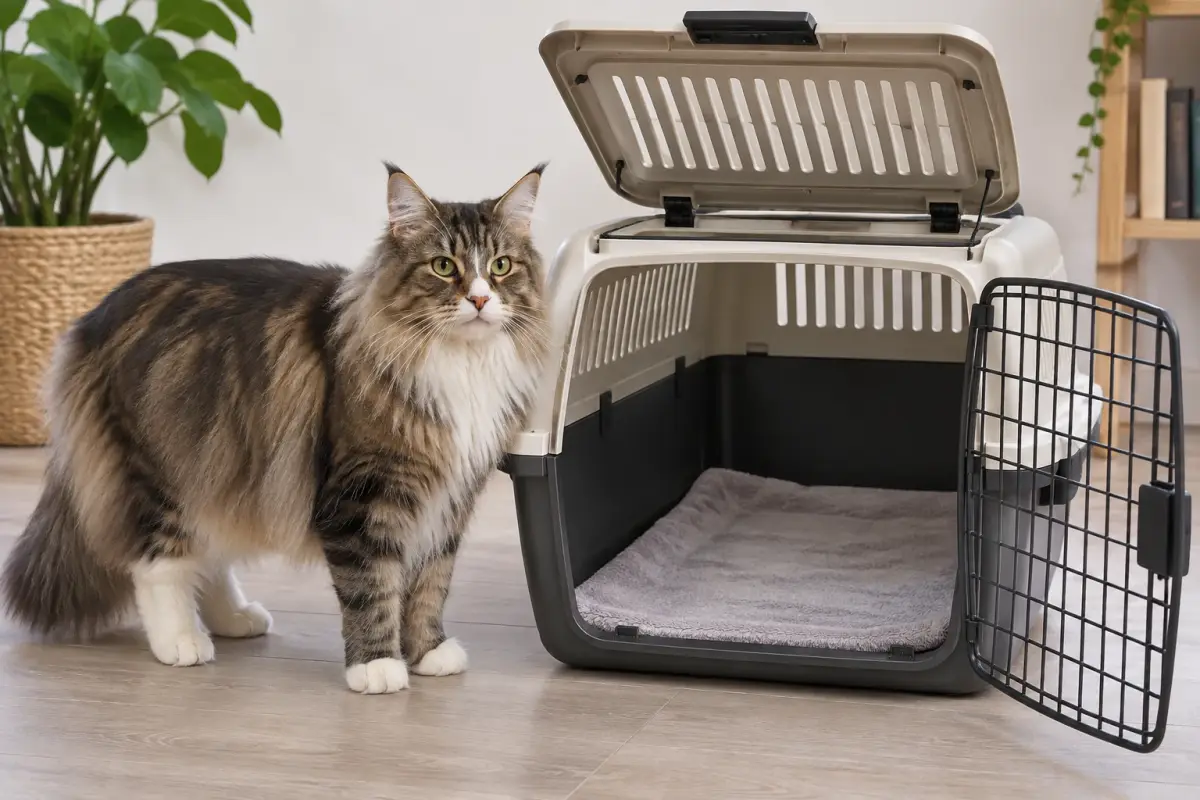
The hardest part of an evacuation is often getting pets into carriers. Leave carriers open around the house, feed meals in them and add familiar bedding so they become a normal, safe place. Note where each pet hides when frightened, so you can find them quickly. Practice a calm, timed drill once or twice a year.
After an emergency, keep pets on a leash or in a carrier, since familiar landmarks and smells may be gone and fences may be down. Watch for injuries, stress and changes in eating or drinking, and call your vet if your pet seems unwell, has cuts or burns, or was exposed to floodwater or smoke.
This page is general information, not veterinary advice, and it cannot replace an examination by the vet who knows your pet.
Common questions
How much food should be in a pet emergency kit?
The ASPCA suggests 7 to 10 days of food and at least seven days of bottled water per pet, rotated every two months. Pack more if your area is prone to long outages or slow recovery after storms.
What should be in a dog first aid kit?
Gauze, self-adhesive bandage wrap, tape, blunt scissors, tweezers or a tick tool, a digital thermometer, gloves, saline eyewash, a soft muzzle, an emergency blanket and your vet's and poison control's numbers. Ask your vet what else to add.
Can I take my pet to an emergency shelter?
Some shelters accept pets and many do not. Check with your local emergency management office before hurricane or wildfire season, and list pet-friendly hotels, kennels and friends you could go to instead.
How do I evacuate with a cat that hides?
Know your cat's hiding spots, keep the carrier familiar and close by, and bring your cat indoors at the first sign of trouble. A pillowcase can help you safely carry a panicked cat out to the car.
Sources we checked
This guide is general information, not veterinary advice. If your pet is unwell or injured, contact your veterinarian.