Care & how-to
Nose Work for Dogs: Scent Games to Start at Home
Nose work for dogs is any game where your dog uses their sense of smell to find something: a treat, a toy or, in the sport, a specific target odor. It suits almost every dog, from puppies to seniors, needs little space and tires dogs out mentally. Start at home with treats hidden in boxes or under cups, make it a little harder each time, and let your dog work it out without helping too much.
By Matt GarnettUpdated November 9, 20264 min read3 sources
Why scent games work so well
Sniffing is the most natural thing a dog can do, and the AKC describes scent games as a way to channel that love of sniffing while enriching a dog's mind. They also teach you to read your dog: the head snap, the slowing down and the focused sniffing when your dog catches the scent are fascinating to watch.
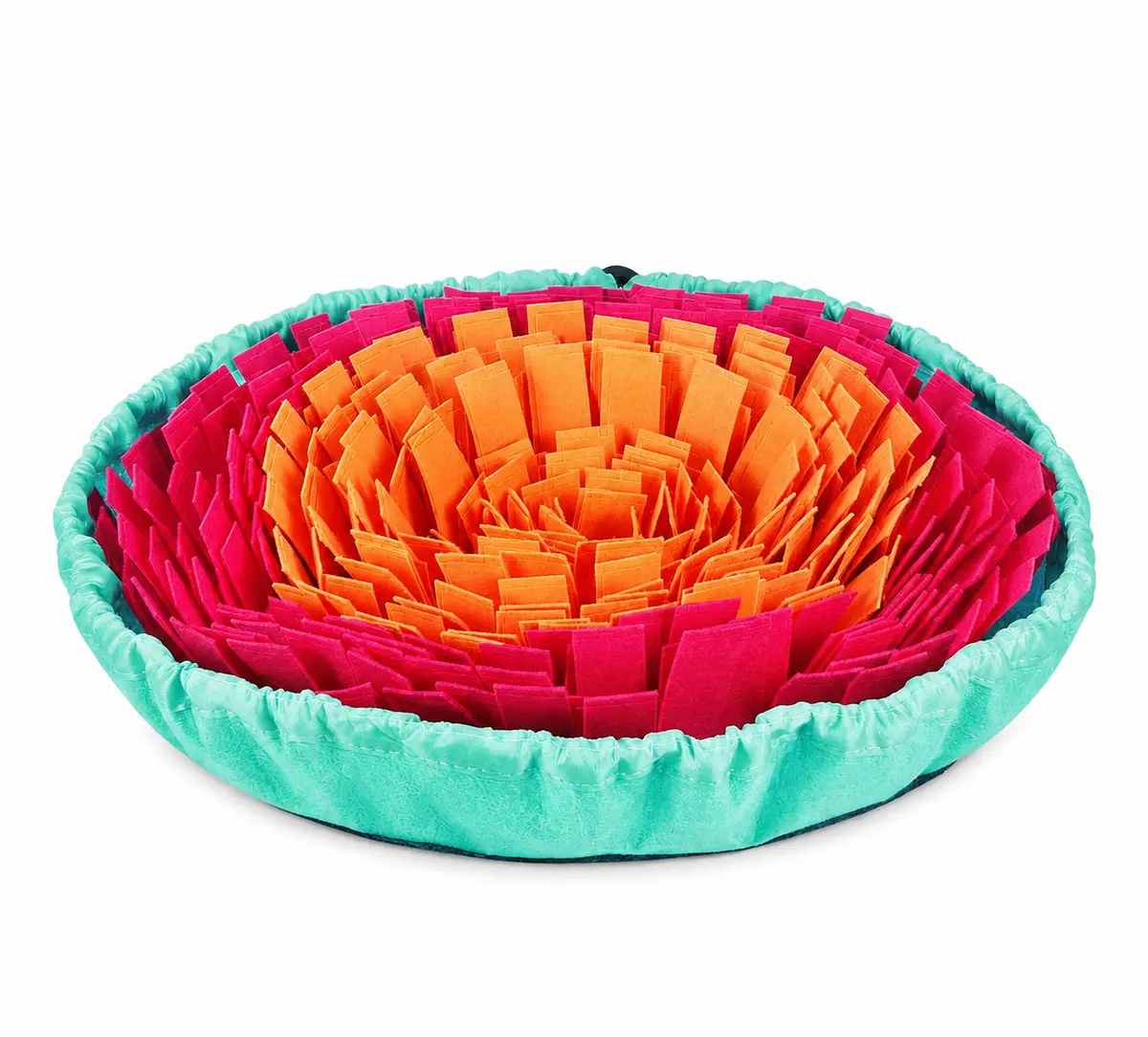
Scent work is low impact, so it suits dogs that cannot run much, such as seniors, dogs recovering from injury and flat-faced breeds in hot weather. Shy and reactive dogs often do well with it too, because the game is calm and focused. Many owners find it builds confidence in dogs who are unsure of new things. A snuffle mat is a gentle indoor version for those dogs, with treats tucked into fabric folds for a slow, easy search.
Game 1: The box search
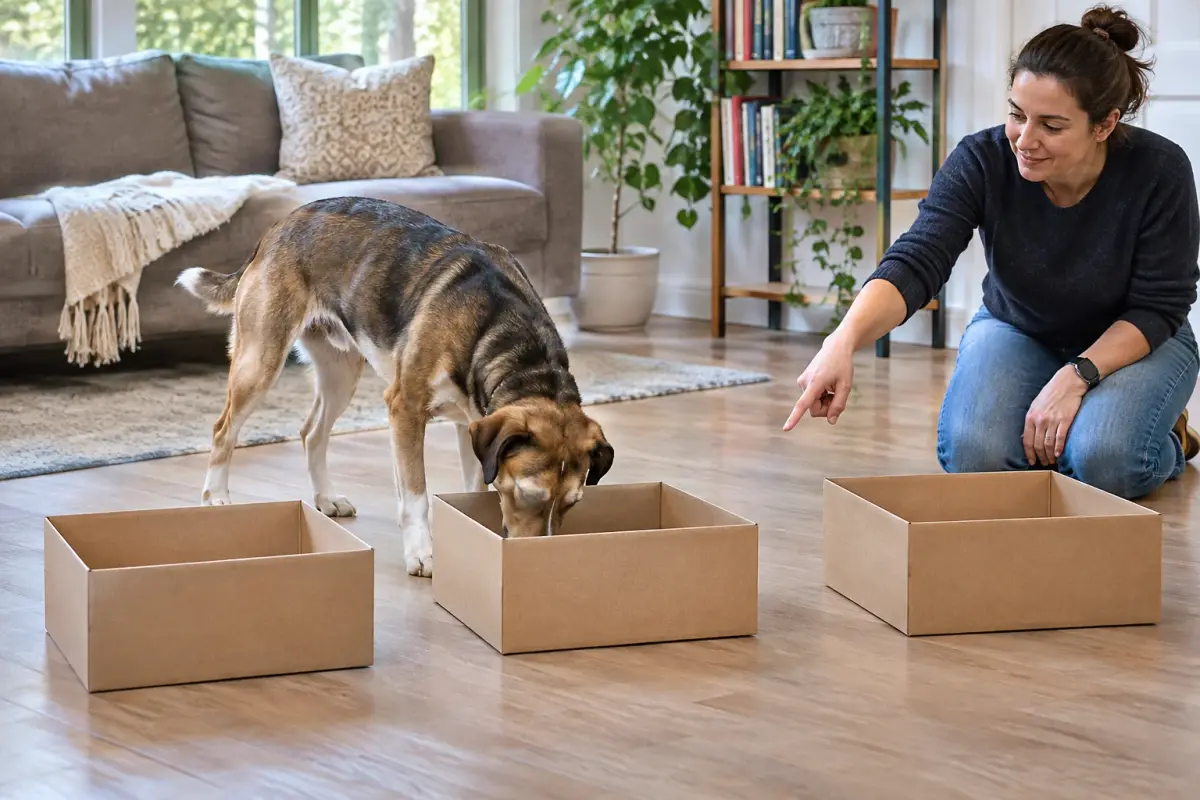
Step 1: While your dog waits in another room, set out several empty boxes on the floor. Step 2: Drop a treat into one or two of them. Step 3: Bring your dog in and encourage them to search with a cue such as find it. Step 4: Praise warmly and let them eat each treat they find.
Step 5: When all the treats are found, the AKC suggests luring your dog out of the area with one last treat at their nose, so they learn the game has ended and do not keep searching. Add more boxes, fold some flaps closed or stack them as your dog gets better. Supervise so nobody eats cardboard.
Game 2: The cup game and the muffin tin
For the cup game, put a treat under one cup while your dog watches and reward them for nosing it. Add an empty cup beside it, then reward only correct choices. If your dog picks the empty one, lift it to show nothing is there and reset. As the AKC describes, adding more cups and moving them around makes your dog rely on their nose rather than memory.
For a muffin tin puzzle, put treats in a few of the cups, cover every cup with a ball, and let your dog find which balls hide food. Change the treat cups each time. Use sturdy cups for big dogs and supervise, so no one chews up the balls or cups. If you would rather buy than improvise, dog puzzle toys use the same find-the-food idea.
Game 3: Find the toy, then hide it harder
Ask your dog to sit and stay, or have someone hold them, while you hide a favorite toy just out of sight. Release with your cue and celebrate the find with a game of tug. Next time, hide it behind a chair leg, then under a cushion, then in another room. Gradually make the hiding spots trickier, but keep it easy enough that your dog wins most of the time.
Once your dog loves the game, try scent trails: drag the toy along the floor before hiding it, or let your dog search the yard. The AKC also suggests having someone else hide the target while you and your dog are out of the room, and practicing in different rooms with different distractions.
From games to the sport of scent work
In organized scent work, dogs learn to find specific odors rather than food. The AKC explains that in its Scent Work sport, Novice dogs search for birch, and advanced levels add anise, clove or cypress, hidden in containers, interior rooms, outdoor areas and vehicles. Dogs signal the find to their handler, who calls it to the judge.
If your dog loves home scent games, a local class is a great next step. An instructor will show you how to introduce the target odor safely, using small amounts on a cotton swab kept in a closed container, and how to read your dog's alert. Barn Hunt, where dogs search for rats safely enclosed in tubes among hay bales, is another nose-based option.
Tips for success, and when to check with your vet
Keep sessions short, about five to ten minutes, and end while your dog still wants more. Use small, smelly treats and count them toward daily food. A snuffle mat or a dog puzzle toy keeps the nose busy on days when you cannot set up a full search. Let your dog work without pointing or helping, because figuring it out is the whole point. If your dog gets frustrated, make the next search easier.
If your dog suddenly loses interest in sniffing, seems to have trouble smelling food, or has nasal discharge, sneezing or nosebleeds, ask your vet to take a look.
This page is general information, not veterinary advice, and it cannot replace an examination by the vet who knows your pet.
Common questions
What is nose work for dogs?
Nose work is any activity where your dog uses smell to find something, from hidden treats at home to specific target odors in the organized sport of scent work. It is mentally tiring and suits most dogs.
Can any dog do scent work?
Almost any dog can enjoy it, including puppies, seniors, mixed breeds and flat-faced breeds. Hounds may take to it fastest, but all dogs have a powerful nose and can learn the games.
How do I start scent games with my dog?
Start easy: hide a treat in one of a few boxes while your dog waits, then let them search. Praise each find, make it harder gradually, and keep sessions short so your dog stays keen.
Sources we checked
This guide is general information, not veterinary advice. If your pet is unwell or injured, contact your veterinarian.