Buying guides
Are Snuffle Mats Good for Dogs?
Yes, for most dogs a snuffle mat is a good, low-cost way to add mental work and slow down a meal. The AKC describes them as playtime with a purpose that can ease boredom and help fast eaters. They are not right for every dog: aggressive chewers and dogs who swallow objects need a different toy, and every session needs supervision.
By Matt GarnettUpdated November 13, 20264 min read2 sources
What snuffle mats do well
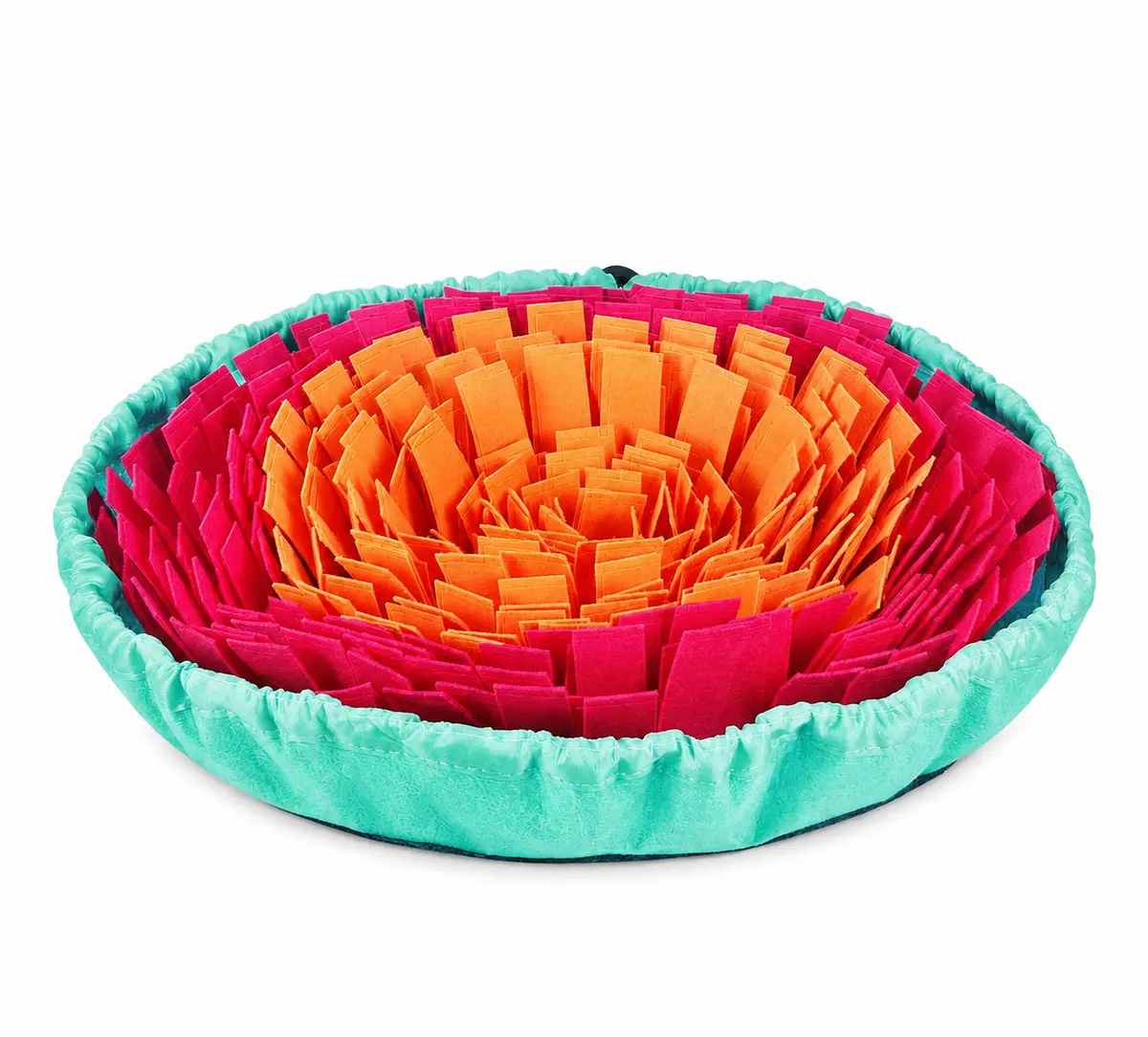
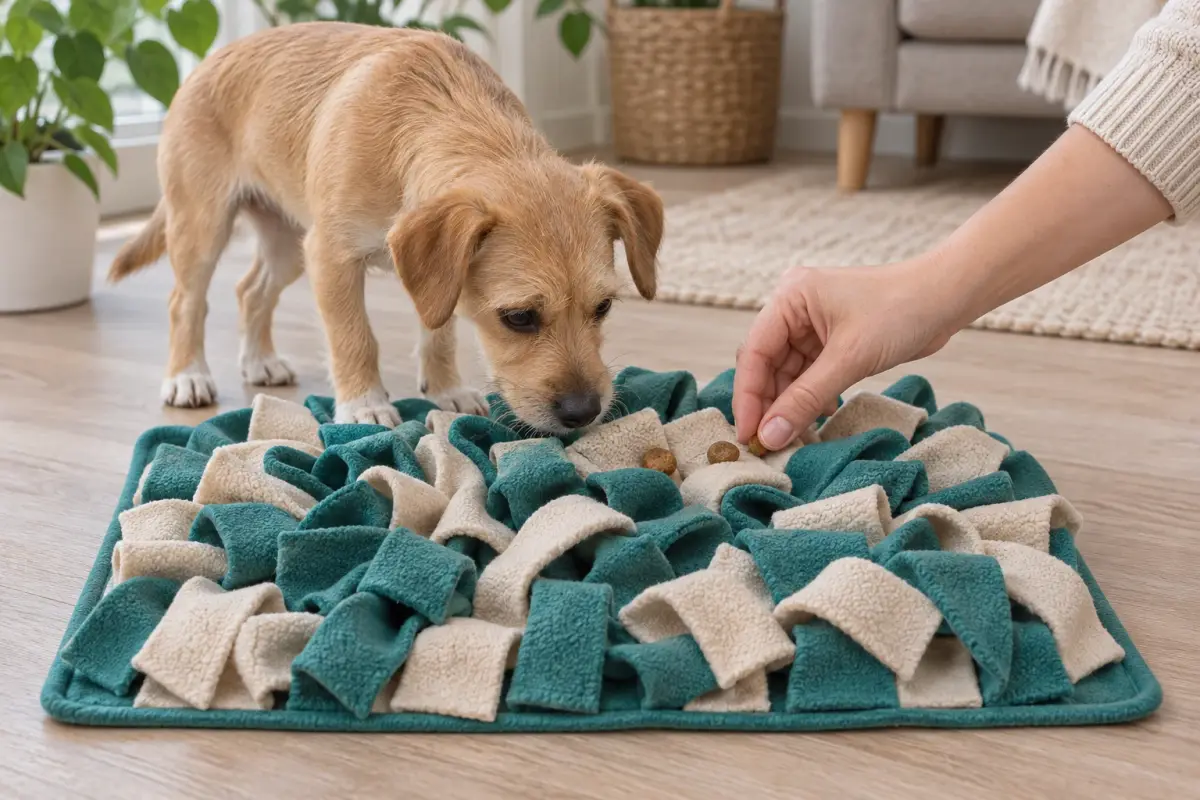
A snuffle mat is a fabric base with strips or pockets that hide small treats or kibble, so your dog has to sniff them out. VCA Hospitals says exercising the mind is also exercise: it burns calories and tires a dog out, and dogs can have up to 300 million scent receptors depending on breed. A few minutes of searching on one of our snuffle mats uses that nose in a way a bowl never does.
The AKC also says a mat works like a slow-feeder bowl, because each piece takes effort to reach, which helps dogs who devour food in seconds. It notes they can ease boredom, keep high-energy dogs busy when weather limits outdoor time, and give senior dogs at risk of cognitive decline a puzzle to solve. Fast eating has its own causes and fixes, covered in our guide to slowing down a dog that eats too fast.
Which dogs they suit
Snuffle mats suit dogs who are motivated by food and gentle with their toys: sniffers, scavengers, bored high-energy dogs and seniors who need low-impact brain work. They also help on rainy or very hot days when a walk is short, because sniffing games count as enrichment even when your dog is not moving much.
Size and difficulty matter. The AKC notes that a simple mat can keep a small dog busy but may not hold a larger or more active dog's interest for long, so match the number of pockets and the depth of the pile to your dog's size and temperament. Plush pocket and snail-style foraging toys are one variation on the idea; the fleece snail puzzle toy is an example of that style.
When a snuffle mat is the wrong choice
The AKC says snuffle mats are not a good choice for an aggressive chewer, or for a dog who treats everything like a chew toy or is not motivated by treats. Fabric strips can be pulled apart once the food is gone, and dogs with a history of chewing or swallowing objects need close monitoring or a sturdier option.
If you think your dog has swallowed a piece of the mat, call your vet right away rather than waiting to see what happens. Always supervise while your dog is snuffling, and keep other pets apart so nobody guards the mat. A dog who growls over it should get a different, simpler way to forage while you talk to your vet or a trainer.
How to use one safely
Step 1: Start easy by placing a few treats on top where your dog can find them at once. Step 2: Ask your dog to wait while you fill the mat, then release with a cue such as find it. Step 3: Use small, dry treats or kibble, and pick the mat up when the food is gone so it does not become a chew toy.
Step 4: Count the food you put on the mat toward the day's total so snuffling does not add calories. Make the game harder only after your dog finds the easy version quickly, by tucking treats deeper into the pile. If your dog gets frustrated, go back a level, because the point is a relaxed search, not a test.
Cleaning and care
Saliva and food residue build up, so a snuffle mat needs regular cleaning, and owning a second one lets you rotate. The AKC suggests pet-friendly detergent and warm water on a gentle machine cycle followed by air drying, or a damp cloth with mild soap for spot cleaning. Check the maker's instructions before washing.
The AKC advises avoiding wet food unless you plan to wash the mat after every use. For wet or spreadable treats, a lick mat is the better tool, and it keeps the snuffle mat dry. Retire a mat when strips fray or tear, because loose threads are what dogs swallow.
Choosing one and when to see your vet
If you are ready to buy, our guide to choosing a snuffle mat covers sizes, materials and how to match a mat to your dog, and you can browse the full range of snuffle mats afterward.
Talk to your vet if fast eating comes with vomiting, gagging or coughing after meals, or if your dog guards food or toys, because those can be medical or behavior problems that a mat will not fix.
This page is general information, not veterinary advice, and it cannot replace an examination by the vet who knows your pet.
Common questions
Do snuffle mats tire dogs out?
Often, yes. VCA Hospitals says mental exercise burns calories and tires dogs out, and searching with the nose is real work. Many dogs settle and rest after a session, though it does not replace walks.
Can a snuffle mat replace a walk?
No. A mat adds enrichment but does not give the exercise, social contact and new smells of a walk. Use it for rainy days or as an extra, and consider sniff-focused walks as well.
Are snuffle mats safe for puppies?
Only with close supervision. Puppies chew almost everything, so keep sessions short, pick the mat up when the food is gone, and stop if your puppy starts pulling the fabric apart.
Can I put wet food on a snuffle mat?
Wet food sticks in the fibers and is hard to clean, so the AKC suggests avoiding it unless you will wash the mat after every use. A lick mat suits wet or spreadable treats better.
Sources we checked
This guide is general information, not veterinary advice. If your pet is unwell or injured, contact your veterinarian.