






Training & behavior
How to Use a Dog Whistle for Training
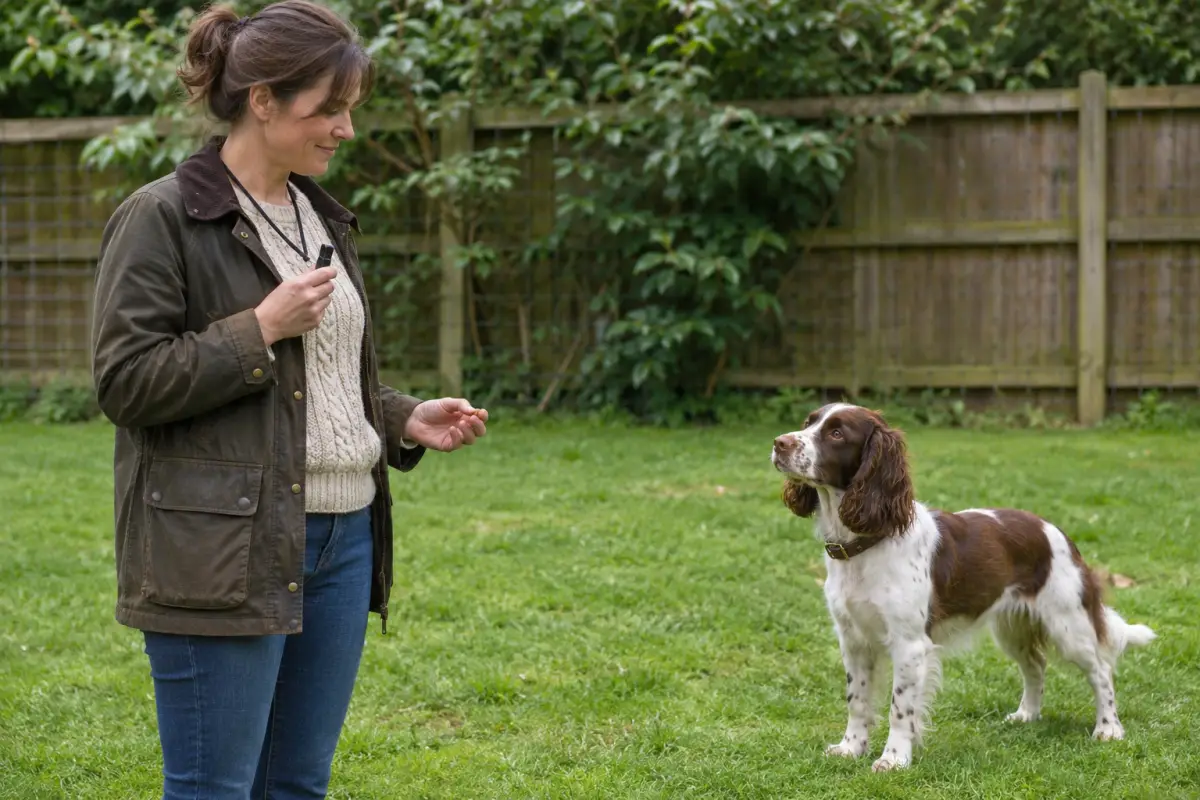
To use a dog whistle, first teach your dog that the whistle means something great: blow one consistent signal and immediately give several treats, repeated over a few sessions. Then use it as a recall or other cue, rewarding every time your dog responds. A whistle carries farther and sounds the same every time, but it does nothing on its own, and it should never be blown near your dog's ears or used to startle.
By Matt GarnettUpdated November 14, 20263 min read2 sources
How dog whistles work
Dogs hear much higher pitches than people, so a dog whistle can produce sound your dog hears clearly while it seems quiet or silent to you. Standard whistles are audible to people too; so-called silent whistles are pitched too high for most adult human ears, though they still make a sound.
A whistle is simply a cue, like a word or a hand signal. It does not stop barking or make a dog come by itself. Its advantages are distance, consistency, since it sounds the same whatever your mood, and cutting through wind and noise better than your voice.
Silent or standard: which to choose
Standard whistles, such as the pea-less types used by gundog trainers, are easy to hear and many owners like knowing exactly what they blew. The downside is that they can bother people nearby. Silent whistles, such as this ultrasonic training whistle, avoid disturbing neighbors, but you cannot hear whether you blew it correctly, which some handlers find harder.
Pick one whistle and stick to it, because pitch can vary between models. Our dog whistle buying guide explains the types, and you can see every dog whistle we list. Many owners hang it on a lanyard so it is always to hand. Choose a distinctive pattern, such as two short blasts for come, so your dog does not confuse your cue with someone else's whistle at the park.
Step 1: Charge the whistle
In a quiet room, wait until your dog is looking at you, blow your chosen signal once, then give five small treats one after another. Wait a few minutes and repeat. Do several sessions over a day or two, until your dog's ears perk up and it turns to you eagerly at the sound.
You do not need to blow hard; the sound is louder to your dog than to you. Never blow a whistle right next to your dog's head or ears, which can be painful.
Step 2: Teach a whistle recall
If your dog already comes to a word, blow the whistle just before you say it, and reward lavishly when your dog arrives. After many repetitions, drop the word so the whistle works alone. If your dog does not yet have a recall, blow the whistle just as it is already heading toward you, then reward.
Build distance and distraction gradually, first indoors, then the yard, then on a long line outdoors. Use your best treats, and never use the whistle to call your dog for something it dislikes. Practice regularly so the cue stays sharp.
Other cues and using whistles kindly
Gundog and herding handlers use different whistle patterns for stop, sit, turn and come at long distance. You can do the same, teaching one cue at a time and pairing each with a clear reward. Keep patterns very different so your dog can tell them apart.
A whistle should never be used to startle or punish a dog, for example to interrupt barking with a loud blast. That relies on discomfort and can make sound-sensitive dogs anxious. If your dog seems distressed by any whistle, or suddenly stops responding, check with your vet, as hearing can change with age.
This page is general information, not veterinary advice, and it cannot replace an examination by the vet who knows your pet.
Common questions
Do dog whistles stop barking?
Not on their own. A whistle is a trained cue. Using a blast to interrupt barking relies on startling your dog, which is not recommended. Address the reason for barking instead.
Can humans hear a silent dog whistle?
Most adults cannot hear it, or hear only a faint hiss, because the pitch is very high. Children and some young adults may hear it. Dogs hear it clearly.
How far away can a dog hear a whistle?
Much farther than a voice, depending on the whistle, wind and terrain. That range is why gundog and herding handlers rely on whistles in open country.
Is a dog whistle cruel?
Not when used as a trained cue at normal strength away from your dog's ears. It becomes unkind when blown close to the head or used to startle and punish.
Sources we checked
This guide is general information, not veterinary advice. If your pet is unwell or injured, contact your veterinarian.

