






Breeds
Whippet vs Greyhound: Size, Temperament and Care Compared
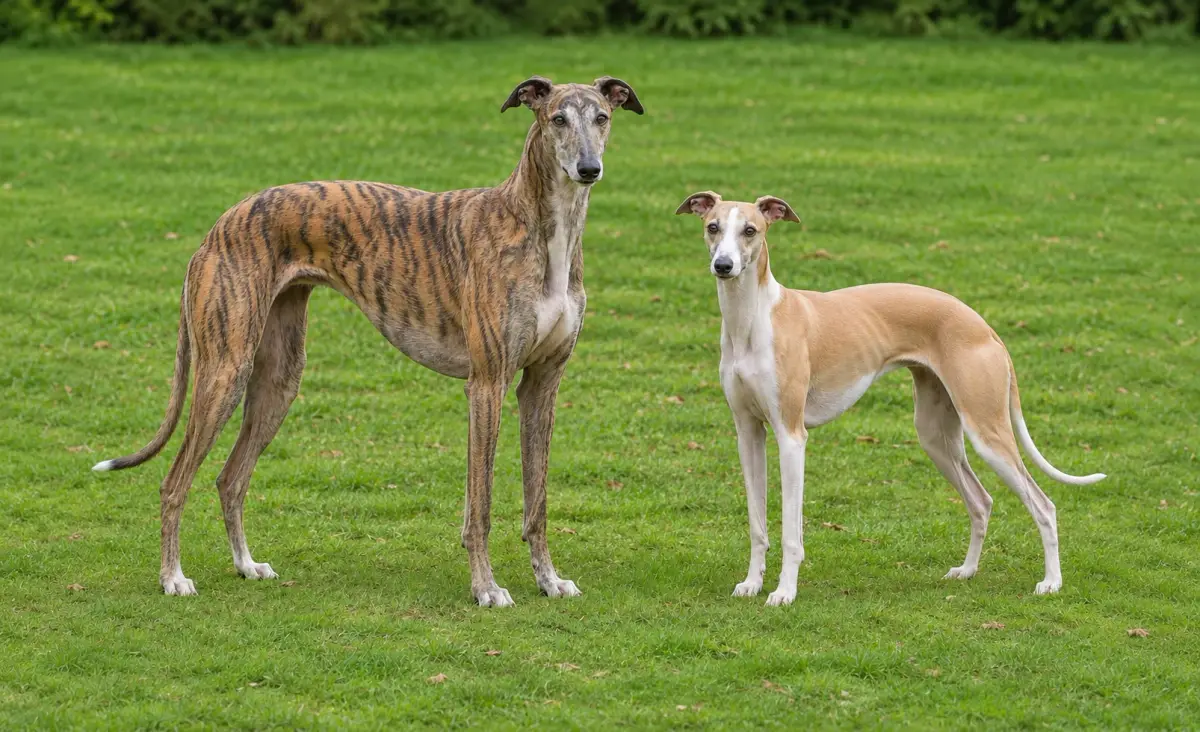
A Whippet looks like a Greyhound in miniature, and that is largely what it is: the AKC lists Whippets at 18 to 22 inches and 25 to 40 pounds, against 27 to 30 inches and 60 to 70 pounds for Greyhounds. Both are gentle, quiet sighthounds that sprint hard, then sleep for hours. The real choice is size, lifespan and whether you want a puppy or a retired racing greyhound, which is how most pet Greyhounds in America arrive.
By Matt GarnettUpdated November 10, 20265 min read4 sources
Side by side
Size: the AKC gives Greyhound males 28 to 30 inches and 65 to 70 pounds, females 27 to 28 inches and 60 to 65. Whippet males stand 19 to 22 inches and females 18 to 21, at 25 to 40 pounds. Lifespan: AKC gives Greyhounds 10 to 13 years and Whippets 12 to 15. Coat: both short and smooth; VCA notes Greyhounds shed below average. Popularity: Whippets rank 50th on the AKC list, Greyhounds 118th, though retired racers are not counted.
Energy: both need a daily walk plus a chance to run in a fenced area, then settle quietly indoors. Prey drive: very high in both. Training: both learn quickly but get bored, so short, reward-based sessions work best. Recall: VCA says Greyhounds are not very good at coming when called, and Whippets lose focus around small animals. Best for: Greyhounds suit people with room for a big dog; Whippets suit smaller homes and active families.
Origins and the racing connection
Greyhound-type dogs appear in hunting scenes going back to ancient Egypt and Greece. In England they became dogs of the nobility, used for coursing hare and stag, and in the 1800s they came to America to course game on the Midwestern plains. VCA explains that American Greyhounds now fall into two types: the National Greyhound Association racing dog and the less common AKC show dog, and that retired NGA racers make up most pet Greyhounds.
The Whippet is younger. VCA says many experts believe it was developed in northern England in the late 1800s by crossing Greyhounds with small terriers to hunt small game. Working-class owners raced them on their days off, earning the breed its nickname, the poor man's racehorse. The AKC calls it lightning quick, amiable and gentle, but all business once something starts running.
Temperament at home
Both are famously calm indoors. VCA describes the Greyhound as a loyal, gentle companion and a very quiet housedog as long as its exercise needs are met, though its independent nature can frustrate children who want a playmate. The AKC calls it gentle, noble and sweet-tempered. Whippets, per VCA, are quiet, gentle and well-behaved inside, love the couch and greet their owners with wild enthusiasm.
Neither makes a watchdog, because both are friendly to visitors. Both are usually good with other dogs. Cats are the question: VCA says a Greyhound raised with cats can be good with them, but retired racers may or may not be, so ask the adoption group whether a dog has been cat-tested. A Whippet's prey drive can override everything outdoors, so supervise closely with small pets.
Exercise and safety
VCA recommends a moderate walk or jog, or a sprint in an enclosed area, every day for Greyhounds, and moderate exercise for Whippets. Both are built for short bursts, not endless miles, so a couple of hard runs and a good walk satisfies most. Whippet enthusiasts suggest lure coursing, which puts that speed and chase instinct to work in a safe setting.
Never let either breed off leash in an unfenced area: VCA says most Greyhounds should only run free in securely fenced spaces, and a sighthound that spots a squirrel can be gone before you call it. Check that any collar or dog harness fits snugly, and ask a sighthound rescue group which styles they recommend. Both have thin coats and little body fat, so a coat helps in cold weather. Padded styles such as a water-repellent winter jacket or a waterproof cotton-padded jacket are two kinds to look at among our dog winter coats.
Grooming, feeding and health
Grooming is minimal. VCA calls the Whippet the ultimate wash-and-go dog that needs only weekly brushing with a hound glove, plus nail trims and ear cleaning, and gives the Greyhound weekly brushing and occasional baths. Both are lean dogs that appreciate a soft, padded dog bed.
VCA notes Greyhounds are naturally lean and often overfed: you should be able to feel the ribs without them standing out. For Whippets, VCA lists sebaceous adenitis, a skin disease affecting hair follicles, progressive retinal atrophy and other eye problems, and heart defects among the most worrisome inherited issues, and advises eye and skin screening of breeding dogs. Ask your vet to check a new Greyhound or Whippet soon after it comes home.
Which to choose
Choose a Greyhound if you have room for a large dog and like the idea of adopting a calm adult; VCA notes retired racers make up most pet Greyhounds. Choose a Whippet if you want the same gentle sighthound personality in a smaller, longer-lived dog that fits an apartment or small car more easily.
Either way, budget for a secure fence or a safe place to run, a warm coat for winter (look at winter coats for large dogs for a Greyhound) and soft bedding. Both breeds bond closely with their people and do not enjoy long days alone, so plan around your schedule before you bring one home.
This page is general information, not veterinary advice, and it cannot replace an examination by the vet who knows your pet.
Common questions
Is a Whippet just a small Greyhound?
Not quite. VCA says Whippets resemble Greyhounds in miniature and were likely developed in the late 1800s by crossing Greyhounds with small terriers. They are a separate AKC breed with their own standard.
Which is better for an apartment, a Whippet or a Greyhound?
Both are quiet indoors, but the Whippet's smaller size makes it easier in an apartment. Either needs a daily walk and regular access to a safely fenced area to run.
Can Whippets and Greyhounds be off leash?
Only in securely fenced areas. VCA says Greyhounds are not reliable at coming when called and may run off to chase small animals, and Whippets' prey drive overrides training once they spot something.
How long do Whippets and Greyhounds live?
The AKC lists Whippets at 12 to 15 years and Greyhounds at 10 to 13 years. Keeping them lean, active and seen by a vet regularly helps them reach the upper end of those ranges.
Sources we checked
This guide is general information, not veterinary advice. If your pet is unwell or injured, contact your veterinarian.


