






Care & how-to
The Egg Float Test and How to Handle Fresh Backyard Eggs
In the float test, a fresh egg sinks and lies flat, an older egg tilts or stands on end, and an egg that floats is old. Floating shows age, not safety, so crack it and check before using. Collect backyard eggs at least daily, clean them gently only if needed, refrigerate them at 40°F or below, and they keep for at least a month.
By Matt GarnettUpdated November 14, 20265 min read3 sources
How to do the float test
Fill a bowl or tall glass with cold water deep enough to cover an egg by a couple of inches, then lower the egg in gently. A very fresh egg sinks and lies on its side. As it ages it begins to tilt, then stands upright on its pointed end while still touching the bottom. An egg that rises and floats at the surface is old.
The test works because of the air cell at the wide end of the egg. Eggshells are porous, so as an egg ages moisture slowly escapes and air takes its place, and the air cell grows until it is big enough to lift the egg. That means the float test measures age and moisture loss, not bacteria. A floating egg is not automatically spoiled, and a sinking egg is not automatically safe.
What to do with the result
Sinkers and tilters are fine for any use. Upright eggs are older but usually good; they are actually easier to peel when hard-boiled, which is why many keepers save their oldest eggs for boiling. For floaters, crack the egg into a separate bowl. Discard it if it smells bad, or if the white or yolk looks discolored, slimy or unusual.
Dry the eggs and return them to the fridge after testing, because wetting the shell and leaving it to sit can draw moisture, and anything on the surface, inward. Better still, do the test only when you are unsure of an egg's age, such as a hidden nest found in the yard, rather than on every egg. Label cartons with the collection date so you rarely need to guess.
How long fresh eggs last
Penn State Extension says covered, refrigerated whole eggs can be stored for at least a month, kept in a carton with the pointed end down. The FDA advises using eggs within three weeks for best quality, using hard-cooked eggs within a week, and eating leftover egg dishes within three to four days. Store cartons on a fridge shelf rather than in the door, where the temperature swings every time it opens.
Eggs can be frozen for up to a year, but never in the shell. Crack them, beat the whole eggs or separate yolks and whites, and freeze in portions; an ice cube tray works well. Freshness matters less for baking and scrambling and more for poaching and frying, where a fresher egg holds its shape better.
Do fresh eggs need to be refrigerated?
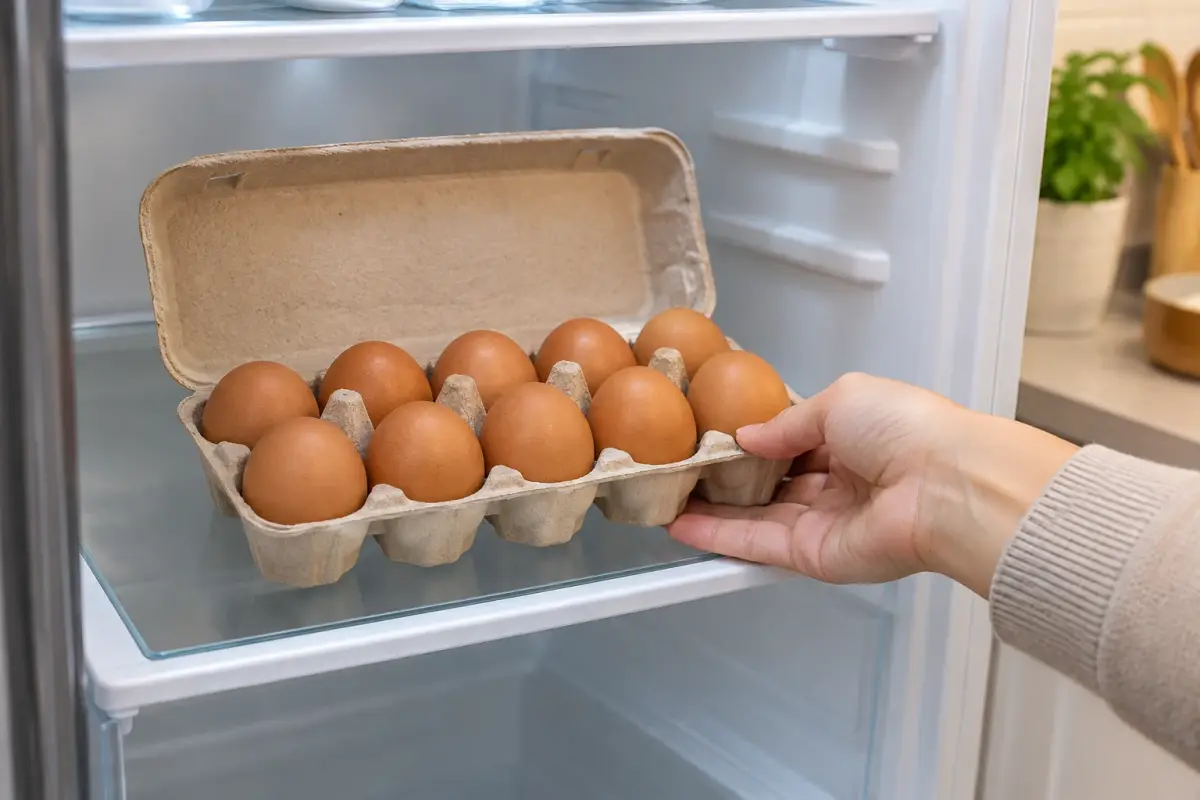
In the US, yes. Food safety agencies advise keeping eggs at 40°F or below. Penn State notes that temperature swings let Salmonella grow, which is why a cool pantry or basement is not recommended. Salmonella can be present even inside clean, uncracked eggs, and the FDA notes that symptoms usually appear 12 to 72 hours after infection and include diarrhea, fever, cramps and vomiting.
You may hear that unwashed eggs keep on the counter for weeks, and that eggs are sold unrefrigerated in some other countries. Those systems rely on different flock vaccination and handling rules. For a backyard flock in the US, the safest choice is to refrigerate every egg promptly after collection and keep it cold until you use it. An egg that has been chilled should stay chilled.
The bloom, and whether to wash fresh eggs
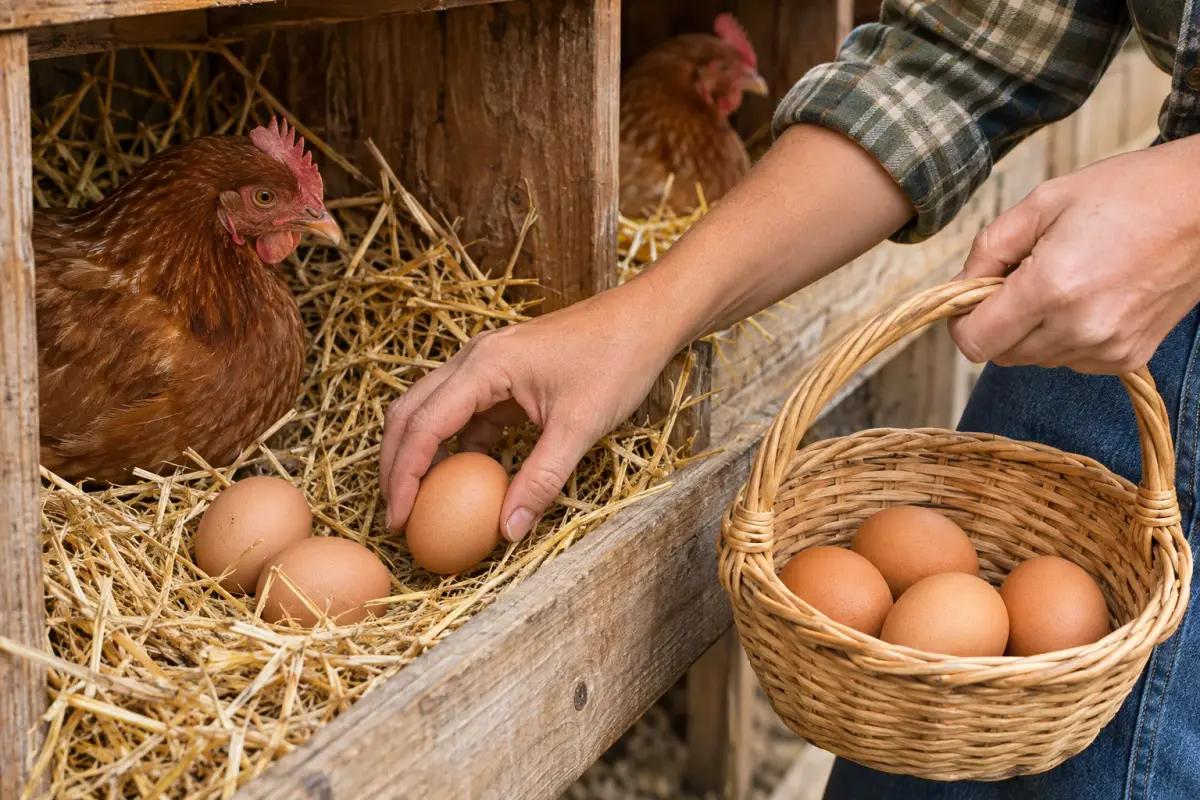
Hens coat each egg with a thin protective layer called the bloom, or cuticle, as it is laid. It helps seal the shell's pores against bacteria and moisture loss. Washing removes it, which is why many keepers prefer not to wash clean eggs at all. Penn State says washing is optional for eggs from your own flock, and the simplest approach is to keep eggs clean in the first place: dry nest boxes with fresh bedding, roosts placed away from the nests, and collection at least once a day, ideally twice.
If an egg is dirty, dry-brush it first. If you must wash, Penn State advises agitating each egg in water at least 20°F warmer than the egg and at least 90°F, never soaking it, and never scrubbing hard. Cold water makes the egg contents contract and can pull bacteria in through the pores. Dry each egg completely and refrigerate it straight away. Throw out eggs that are cracked or heavily soiled.
Cleaner eggs start in the coop: fresh bedding in the nesting boxes and a dry, well-kept chicken coop mean fewer eggs need washing at all.
Cooking and selling eggs safely
The FDA advises cooking eggs until both the yolk and the white are firm, cooking egg dishes to 160°F, and not leaving cooked eggs out for more than two hours, or one hour above 90°F. Use pasteurized eggs in recipes calling for raw egg, and do not eat Easter eggs that have been hidden outdoors. Wash your hands after collecting eggs and handling birds, since chickens can carry Salmonella on their feathers and feet without looking sick.
If you plan to sell eggs, check your state's rules first. Many states set requirements on washing, refrigeration, cartons and labeling, and Penn State encourages sellers to stay informed about state and federal washing requirements. A healthy flock is the foundation of safe eggs, so call a vet who treats poultry if hens stop laying suddenly, lay misshapen or thin-shelled eggs, or seem unwell.
This page is general information, not veterinary advice, and it cannot replace advice from a veterinarian who treats poultry.
Common questions
Is an egg bad if it floats?
Not necessarily. A floating egg is old because its air cell has grown, but it may still be fine. Crack it into a separate bowl and throw it out if it smells bad or looks discolored or slimy.
How long do fresh eggs last in the fridge?
Refrigerated at 40°F or below, fresh eggs keep for at least a month according to Penn State Extension, and the FDA advises using them within three weeks for best quality. Label cartons with the collection date.
Should you wash fresh eggs?
Only if they are dirty. Washing removes the protective bloom. Dry-brush light dirt first, and if you must wash, use water at least 20°F warmer than the egg and at least 90°F, then dry and refrigerate.
Can you leave fresh eggs on the counter?
For safety in the US, refrigerate all eggs at 40°F or below. Temperature swings help Salmonella grow, and once an egg has been refrigerated it should not be left out to warm up.
Sources we checked
This guide is general information, not veterinary advice. If your pet is unwell or injured, contact your veterinarian.