






Care & how-to
Why Are Dogs Scared of Thunder? How to Calm a Dog in a Storm
Dogs are scared of thunder because a storm hits several senses at once: sudden booms, flashes of lightning, wind and rain, and changes in air pressure and static that many dogs seem to feel before we notice anything. To calm a dog during a storm, give it a dark, quiet retreat, mask the noise, keep it busy with a chew, and stay calm yourself. Severe storm fear is worth discussing with your vet.
By Matt GarnettUpdated November 14, 20264 min read3 sources
Why some dogs fear thunderstorms
Storm fear is one of the most common noise fears in dogs. Thunder is loud and unpredictable, but many dogs react to the whole package rather than the sound alone: the darkening sky, gusting wind, rain on windows, lightning, the drop in barometric pressure and the buildup of static electricity in the coat. That is why some dogs start pacing or hiding before the first rumble.
Genetics, early experience and one bad storm can all play a part. Herding and sporting breeds are often described as more sound-sensitive, but any dog can develop the fear. It also tends to grow: a dog that once just looked uneasy may, a few summers later, be panting, trembling and trying to escape.
Signs of storm anxiety in dogs
Watch for trembling or shaking, heavy panting when it is not hot, drooling, pacing, whining or barking, clinging to you, hiding in a bathtub or closet, yawning and lip licking, and tucking the tail. Some dogs refuse food or have accidents indoors. A few dig at doors and windows, chew through crates or break through screens trying to get away.
Shaking during a thunderstorm is one of the clearest signs, and so is a dog that keeps moving from room to room. Note how long your dog takes to recover after the storm passes, because a dog that stays wound up for hours needs more help than a home routine alone.
How to calm a dog during a storm
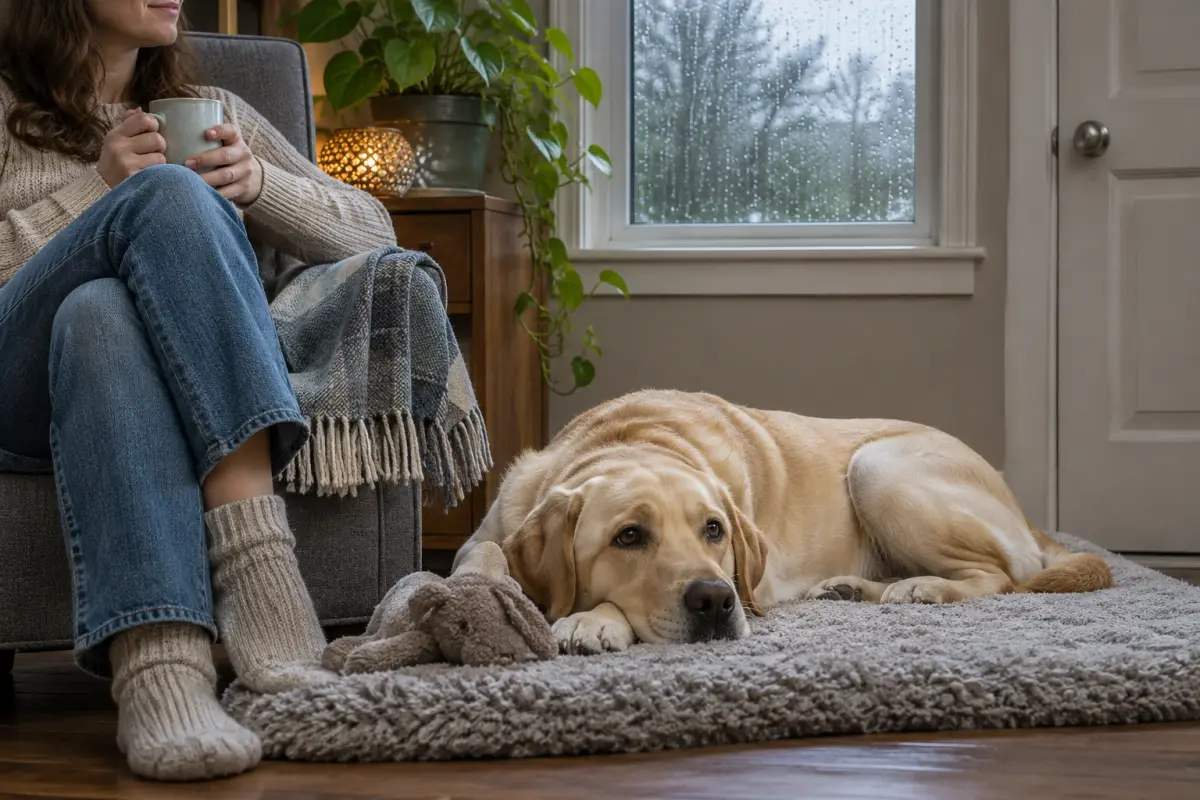
Step 1: Offer a retreat. Many storm-phobic dogs choose a bathroom, basement or closet, possibly because those rooms are quieter and less affected by static. Let your dog go there, and add a soft bed or blanket from our calming dog beds. Step 2: Block the flashes with curtains or blinds and mask the noise with a fan, white noise or steady music.
Step 3: Give your dog something to do. A stuffed food toy, a long-lasting chew or an easy game of fetch indoors can help a dog that can still eat and play. Step 4: Keep doors and gates closed, because frightened dogs bolt. Stay with your dog if you can; calm company and gentle petting will not make the fear worse, while scolding will.
Helping a dog scared of thunder at night
Night storms are harder because the house is quiet, so every rumble stands out and your dog may be alone in another room. Let your dog sleep near you during storm season, or set up its safe spot next to your bedroom with a fan or white noise already running.
Check the forecast and get a last potty break on leash before the storm arrives. If your dog wakes you panting and pacing, keep the lights low and your voice calm, offer a chew, and avoid a long, anxious fuss. A dog that cannot settle at all through a night storm should be discussed with your vet.
Teaching your dog to cope over time
Start desensitization in the off-season. Play a recording of thunder very quietly while your dog eats or plays, and raise the volume only in small steps over weeks, dropping back whenever your dog looks worried. Pair the sound with good things so it starts to predict treats and games.
Recordings cannot copy the pressure changes, rain and static of a real storm, so they rarely solve storm fear alone. Combine them with a well-practiced settle-on-a-mat cue, a familiar safe space and, for some dogs, a snug anxiety vest or wrap introduced on calm days. Wrap-style options include this dog anxiety calming vest and a hooded calming vest for dogs, and our anxiety vest guide explains fit; none of them replaces a behavior plan or your vet's advice. A certified behavior consultant can help with a severe case.
When to call your vet about thunder fear
Call your vet if your dog injures itself, destroys doors or crates, cannot settle for hours after the storm, or if the fear is spreading to other noises. A new or sudden fear in an older dog should also be checked, because pain or a change in hearing can make noise harder to cope with.
Your vet may discuss medication for storm season or for individual storms, alongside a behavior plan. Only your vet can decide whether that is right for your dog. Never give human medicines or another pet's prescription.
This page is general information, not veterinary advice, and it cannot replace an examination by the vet who knows your pet.
Common questions
Should I comfort my dog during a thunderstorm?
Yes, calmly. Sitting with your dog, speaking quietly and petting a dog that wants contact will not make it more afraid. Avoid anxious fussing, forcing it out of a hiding spot, or punishing it for shaking or barking.
Why does my dog hide in the bathtub during storms?
Many storm-fearing dogs pick bathrooms, closets or basements. These rooms are often quieter and have fewer windows, and some people believe the tile and plumbing reduce static. Let your dog use the spot if it is safe.
Are there home remedies for dogs scared of thunder?
Safe home measures include a quiet retreat, curtains drawn, white noise, a food puzzle and an anxiety wrap introduced in advance. Do not give human medicines or supplements without asking your vet first, as some are dangerous for dogs.
Can dogs sense a storm coming?
Many owners see their dog become restless before thunder starts. Dogs may notice falling air pressure, wind, the smell of rain, static or distant thunder we cannot hear yet, so the early worry is real.
Sources we checked
This guide is general information, not veterinary advice. If your pet is unwell or injured, contact your veterinarian.


