






Buying guides
Best Dog Anxiety Vest: How to Choose a Calming Wrap
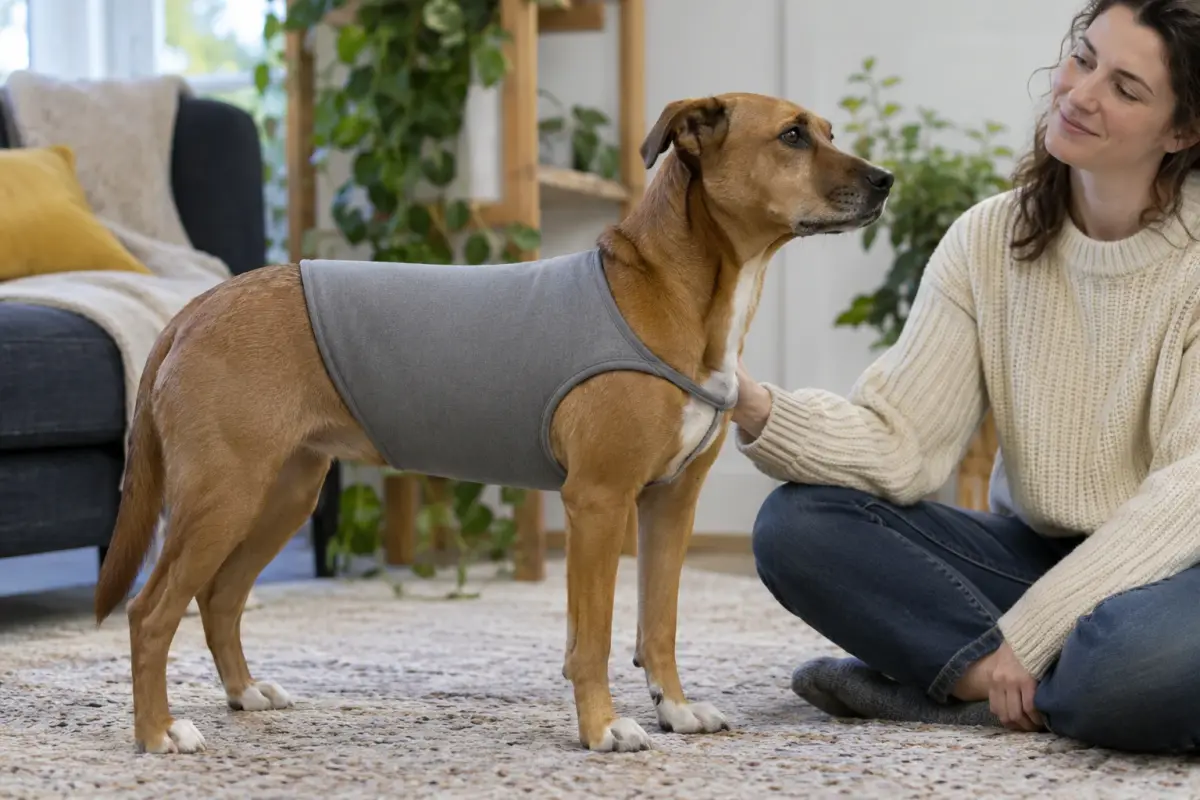
The best dog anxiety vest is a wrap that applies firm, even pressure around the chest and torso, adjusts with wide hook-and-loop panels, uses breathable fabric and fits without restricting movement. Wraps of this kind, often called thunder shirts, help some dogs and not others; VCA notes there is minimal data on their effect. Treat one as a support alongside training and your vet's advice, not a cure.
By Matt GarnettUpdated November 14, 20264 min read2 sources
What a calming wrap can and cannot do
Anxiety vests work on the idea that steady, gentle pressure, rather like swaddling, can help some dogs feel calmer during storms, fireworks, travel or vet visits. VCA's overview of behavior management products notes that wraps exert constant pressure but that there is minimal data to support their effect at this time. The AKC says some dogs benefit from tools like anxiety wraps, that results vary, and that they should be introduced gradually.
So the honest buying goal is a well-fitted, comfortable anxiety vest your dog accepts, used as one part of a plan. Desensitization, counter-conditioning, a safe hiding place and, for severe fear, a conversation with your vet do more than any garment. Our range includes a dog anxiety calming vest and a calming vest with a hood.
What matters in the design
Pressure should be even around the chest and torso, not concentrated at one strap. Wide hook-and-loop panels let you tune the snugness. The fabric should be breathable and stretchy enough that your dog can move, sit and lie down normally, and light enough not to overheat it, especially for thick-coated or flat-faced breeds.
Check that the wrap leaves the neck free, sits clear of the armpits and does not ride up when your dog moves. Some vests include a leash opening, which helps if you use them on walks or at the vet.
Best type for each situation
For noise fear during storms and fireworks, put a well-fitted wrap on before the noise starts, alongside a quiet den, background sound and treats. For travel or car anxiety, a wrap may help some dogs settle, together with gradual car training. For vet visits, it can be one of several comfort tools, with your vet's input.
For flat-faced or thick-coated dogs, choose the lightest breathable fabric and watch for overheating. For very small dogs, choose a wrap with fine adjustment. For dogs with severe or worsening anxiety, a wrap alone is not enough, and your vet can discuss a full behavior plan.
What to avoid
Avoid wraps that are so tight they restrict breathing or movement, or so loose they shift and rub. Avoid leaving a wrap on all day; many guides suggest limited periods with breaks. Avoid putting it on for the first time during a storm, which can link the wrap to fear.
Avoid relying on a wrap when your dog shows severe distress such as self-injury, destroying doors, constant panting or trembling. Those signs need your vet, who may refer you to a veterinary behaviorist. Never give your dog human calming medicines; only a vet can decide on medication.
How to size and fit an anxiety vest
Measure your dog's chest at the widest point behind the front legs, and its weight, and use the maker's chart. If between sizes, follow the maker's advice; snug but not tight is the goal. Fit it on a calm day, adjusting the panels until it feels like a firm hug: you should still slide two fingers under the edge.
Introduce the wrap with treats for a few minutes at a time when your dog is relaxed, as the AKC suggests for gradual introduction. Watch your dog's response. If it freezes, scratches at the wrap or seems more anxious, remove it.
Care and lifespan
Wash the wrap on a gentle cycle with hook-and-loop panels fastened, and air dry. Clean hair from the fasteners so they keep gripping. Replace the wrap if the fabric loses stretch, the fasteners stop holding or your dog's weight changes. See also whether anxiety vests actually work, and browse all of our dog anxiety vests.
Keep notes on whether the wrap helps during specific events. If it makes no difference after several uses, it may not suit your dog, and that is useful information to share with your vet when planning other help.
This page is general information, not veterinary advice, and it cannot replace an examination by the vet who knows your pet.
Common questions
Do anxiety vests really work for dogs?
Some dogs seem calmer in them and others show no change. VCA notes there is minimal data on their effect. Use one as a support alongside training and your vet's advice.
How tight should a dog anxiety vest be?
Snug like a firm hug, with two fingers of room under the edge, and no restriction of breathing or movement. Check the armpits for rubbing.
When should I put on an anxiety vest?
Before the stressful event starts, such as before a forecast storm or fireworks, once your dog is used to wearing it on calm days. A wrap put on mid-panic is less likely to help.
How long can a dog wear an anxiety wrap?
For the stressful event, with breaks, rather than all day. Follow the maker's guidance and remove it if your dog overheats or seems uncomfortable. Check under the wrap for rubbing each time.
Sources we checked
This guide is general information, not veterinary advice. If your pet is unwell or injured, contact your veterinarian.


