






Buying guides
Choosing a Bird Travel Carrier
Start with the space your individual bird will use, then work outward to the perch, door and carrying system. A backpack’s outside dimensions help with storage and handling, but they do not establish interior fit or transport approval.
By Matt GarnettUpdated November 14, 20263 min read3 sources
Separate outside size from usable room
Make two columns when comparing carriers: outside dimensions and usable interior dimensions. A curved front, lining, base insert and perch fittings all occupy space. Look at the narrowest part of the body as well as its widest point, and check the room above and beside the perch.
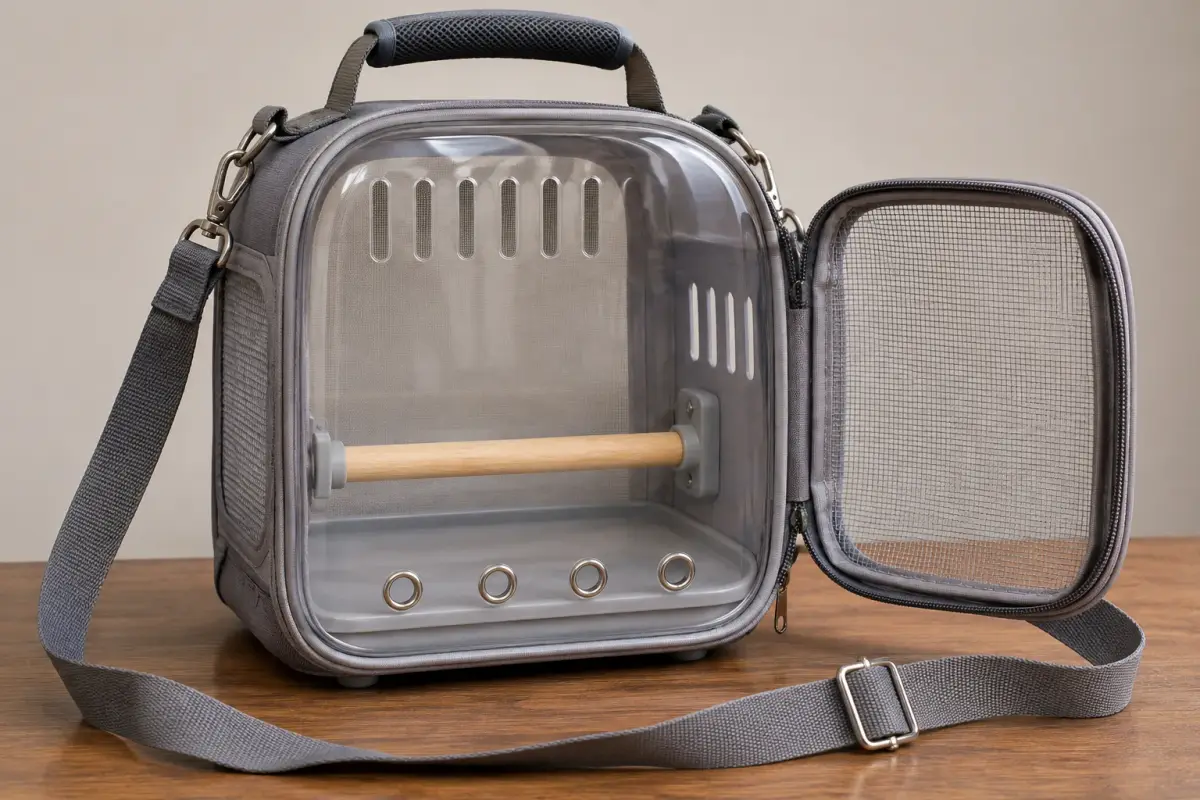
The clear-front bird backpack carrier with perch has published outside dimensions of 12.60 × 10.24 × 16.14 inches (32 × 26 × 41 cm). Its perch rod is 12.60 inches (32 cm) long. These are useful comparison measurements, but the rod length is not a measurement of the clear standing space between its fittings.
Examine the perch as a separate component
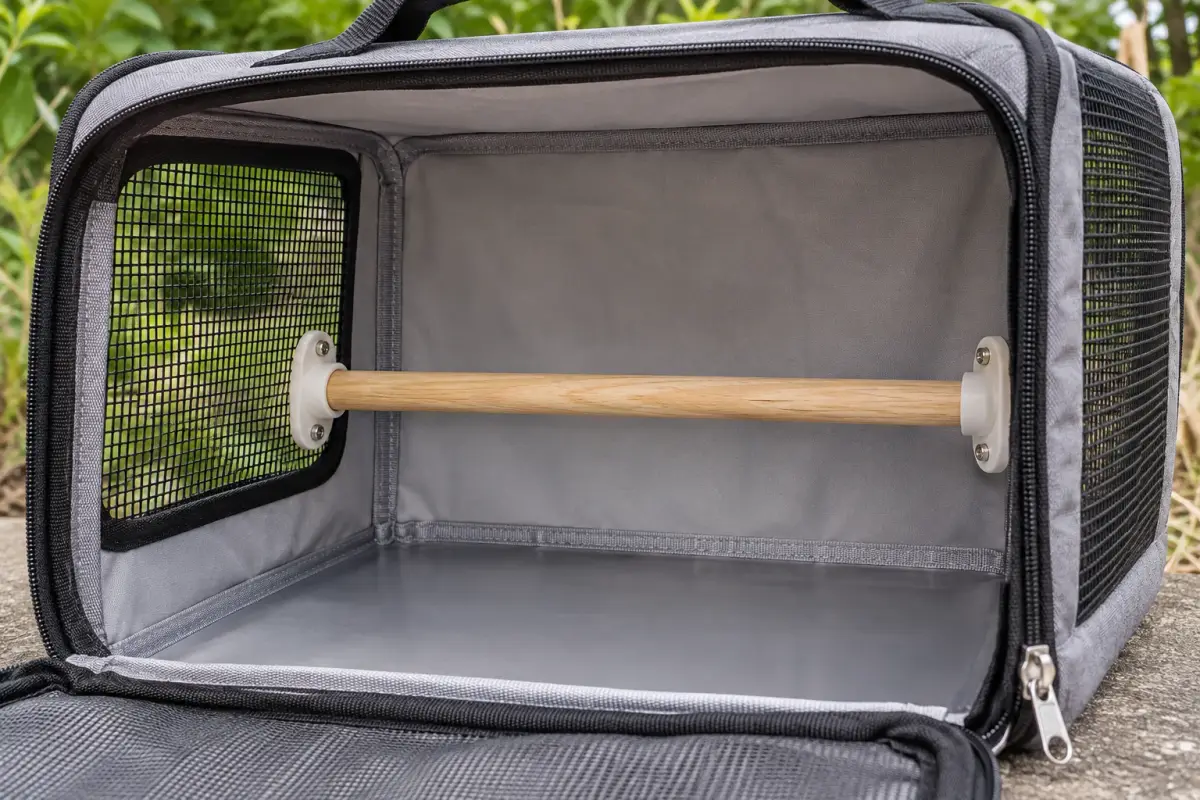
Ask for the perch diameter, position above the floor and fastening method. Compare the shape with a perch your bird already uses, rather than choosing from a species name in a product title. Check whether both ends can be inspected and whether removal is part of the maker’s cleaning instructions.
A perch shown across a clear-front carrier establishes the layout, not its grip, installation strength or suitability for every bird. Note where the fittings project into the body and whether they reduce the access opening. Keep questions about the perch separate from the overall backpack measurements.
Trace the opening and carrying arrangement
Follow the zipper or door all the way around in the product photographs. Check how far it opens, where the bird enters and which fastenings must be closed before lifting. Look for a base that stays in position when the carrier is set down. Compare the handle attachments and shoulder-strap adjustment with how you intend to carry it.
The clear-front backpack example has a zippered front section, backpack straps and a top handle. Those features offer different access and carrying positions. They do not by themselves establish vehicle restraint compatibility, a carrying-load rating or acceptance on a flight.
Check ventilation and cleaning access
Locate the actual openings rather than assuming a transparent panel is ventilated. Check their position with the carrier upright, with the straps in place and beside anything you plan to carry. A bag or loose cover placed against an opening changes that layout.
Trace how debris can be removed from the bottom and how the inner corners and perch fittings can be reached. Check the material-specific cleaning directions, including whether the perch or base is removable. A wipeable clear front and an accessible fabric seam are different cleaning tasks.
Match the carrier to the journey
List the practical constraints of the trip: how the carrier will be carried, where it will be set down and whether a transport provider has specific requirements. Request the missing interior or fastening details before relying on a product photograph as a fit check.
For air travel, ask the airline about the exact bird and carrier before booking. IATA’s traveler guidance directs travelers to check airline-specific procedures. IATA also states that it does not certify or endorse particular pet containers. A backpack description or an IATA-style marketing label cannot replace that confirmation.
Bird carrier measurements and access checks
| Check | Information to compare | Keep separate from |
|---|---|---|
| Outside body | The full carrier footprint and height | Usable interior dimensions |
| Perch | Diameter, position and clear span between fittings | The rod's total length |
| Opening | Door or zipper travel and clear access | The size of the transparent front |
| Carrying system | Handle and shoulder-strap attachments | A vehicle or flight approval |
| Ventilation | Location of actual openings with straps in place | A transparent panel without openings |
| Cleaning | Access to the base, corners and perch fittings | An assumption that all parts are removable |
Common questions
Does a published backpack height tell me the headroom above the perch?
No. Ask for the perch position and usable clearance above it; the outer height includes parts outside that space.
Is the perch rod length the usable standing length?
Not necessarily. End fittings and the carrier walls may occupy part of that length. Check the clear usable span separately.
Does having a top handle mean the carrier is approved for a car or flight?
No. The handle is a carrying feature. Vehicle compatibility and airline acceptance require their own checks.
Sources we checked
This guide is general information, not veterinary advice. If your pet is unwell or injured, contact your veterinarian.


