






Buying guides
Choosing a Backyard Bird Feeder
A feeder is easiest to live with when you can hang it securely, refill it without spilling and reach every surface for cleaning. Compare the landing area, reservoir and mounting hardware before choosing a model for your yard.
By Matt GarnettUpdated November 14, 20262 min read2 sources
Choose the feeding surface first
An open tray gives birds a broad landing space and gives you a clear view of what remains. Look underneath before buying. Drainage matters when rain reaches the tray, and a removable tray is easier to carry to the sink.
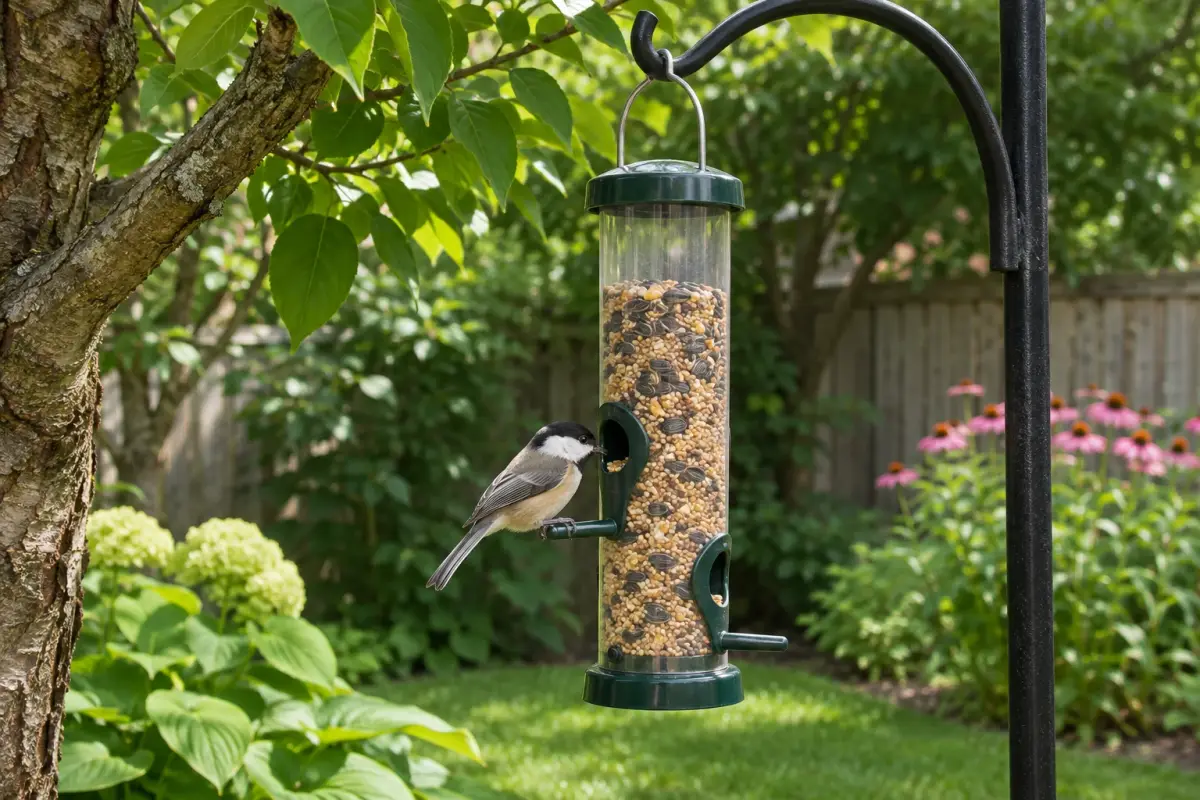
A tube feeder stores seed above several ports. Compare the port opening with the seed you intend to use. Check how much room a visiting bird has on the adjacent perch. With a hopper, look at the narrow opening where seed moves from the reservoir onto the tray. That is where damp seed can collect.
Measure for the hanger and the refill
Start at the attachment point and measure down to where you want the tray to sit. A published body height may leave out the wire hanger. Allow clearance to lift the lid, slide out the reservoir or remove the whole feeder with one hand.
For a window-mounted model, inspect the backing plate, attachment method and the clearance needed to remove the tray. Make the glass visible to birds. Project FeederWatch recommends closely spaced markings on the outside surface or an exterior screen.
Check which parts you can reach
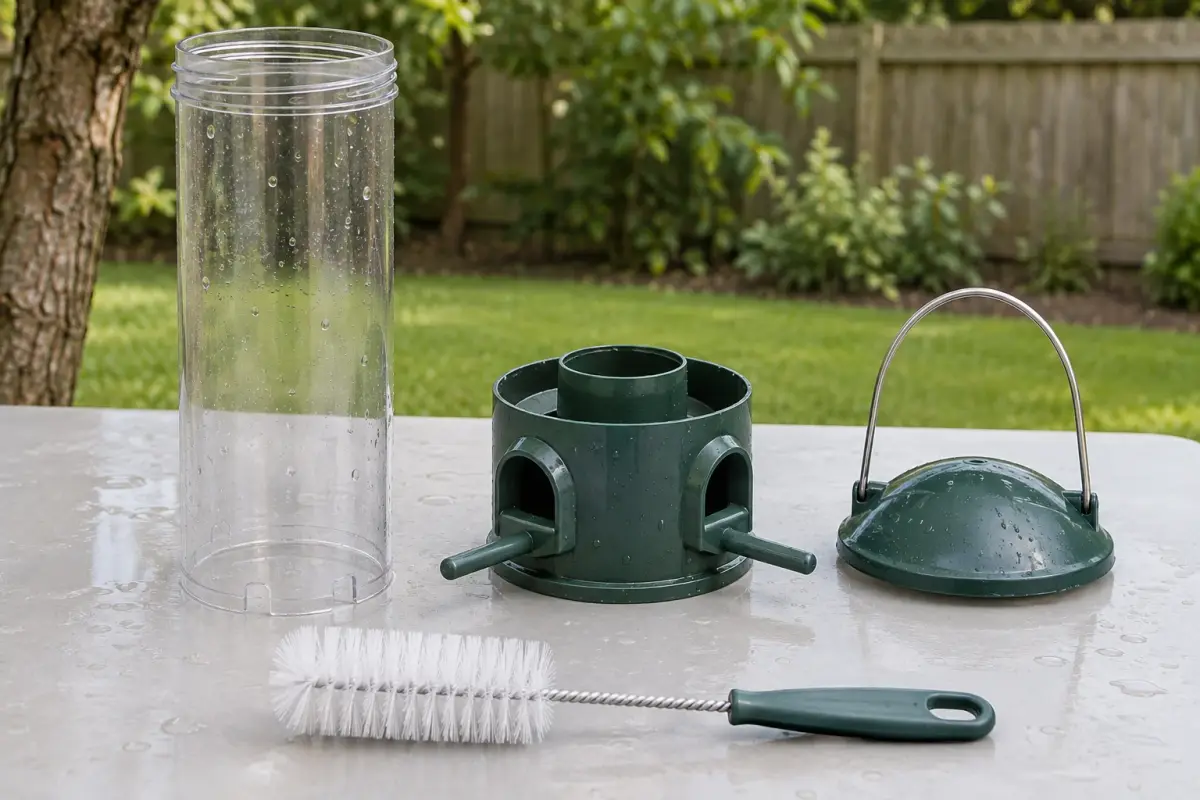
Trace the route a seed takes through the feeder. Can you reach the bottom of the reservoir, the underside of the ports and the corners of the tray with a brush? Start with a smaller fill until you know how quickly birds empty it.
Project FeederWatch recommends cleaning seed feeders every week or two, and more frequently in wet weather or during heavy use. Take the feeder apart, remove debris, wash and rinse its parts, then let them dry before refilling. Follow the maker’s instructions for the materials in your model.
Match the feeder to the food
A hummingbird feeder needs a liquid reservoir and accessible nectar ports. A dry-seed hopper uses a different outlet. Check the number of bottles, the capacity of each one and whether the brushes you already have will reach inside. Hummingbird feeders need cleaning every few days, more frequently when it is warm.
Feeder formats and access points
| Format | Food route | Check for access |
|---|---|---|
| Open tray | Food rests on an exposed landing surface | Drainage and the underside of the tray |
| Tube | Seed moves through ports beside perches | Port openings and the bottom of the reservoir |
| Hopper | Seed passes from a reservoir onto a tray | The narrow outlet where damp seed can collect |
| Nectar reservoir | Liquid passes to feeding ports | Inside the bottle and each port |
| Window-mounted | The body attaches to glass | Backing plate and room to remove the tray |
Common questions
Does a larger reservoir mean less maintenance?
A larger reservoir holds more food. How often you need to inspect and clean it still depends on weather and use. Start with an amount birds can use while it is fresh.
What should I measure for a hanging feeder?
Measure hanging clearance, the body’s width and the space needed to remove its lid or reservoir. Leave room to reach the hook safely.
Can a cage feeder go on a garden hook?
Check the actual attachment. A box that fastens to cage bars needs a compatible mounting surface. A hanging outdoor model has its own suspension point.
Sources we checked
This guide is general information, not veterinary advice. If your pet is unwell or injured, contact your veterinarian.


