






Breeds
Ragdoll vs Birman: How to Tell These Blue-Eyed Cats Apart
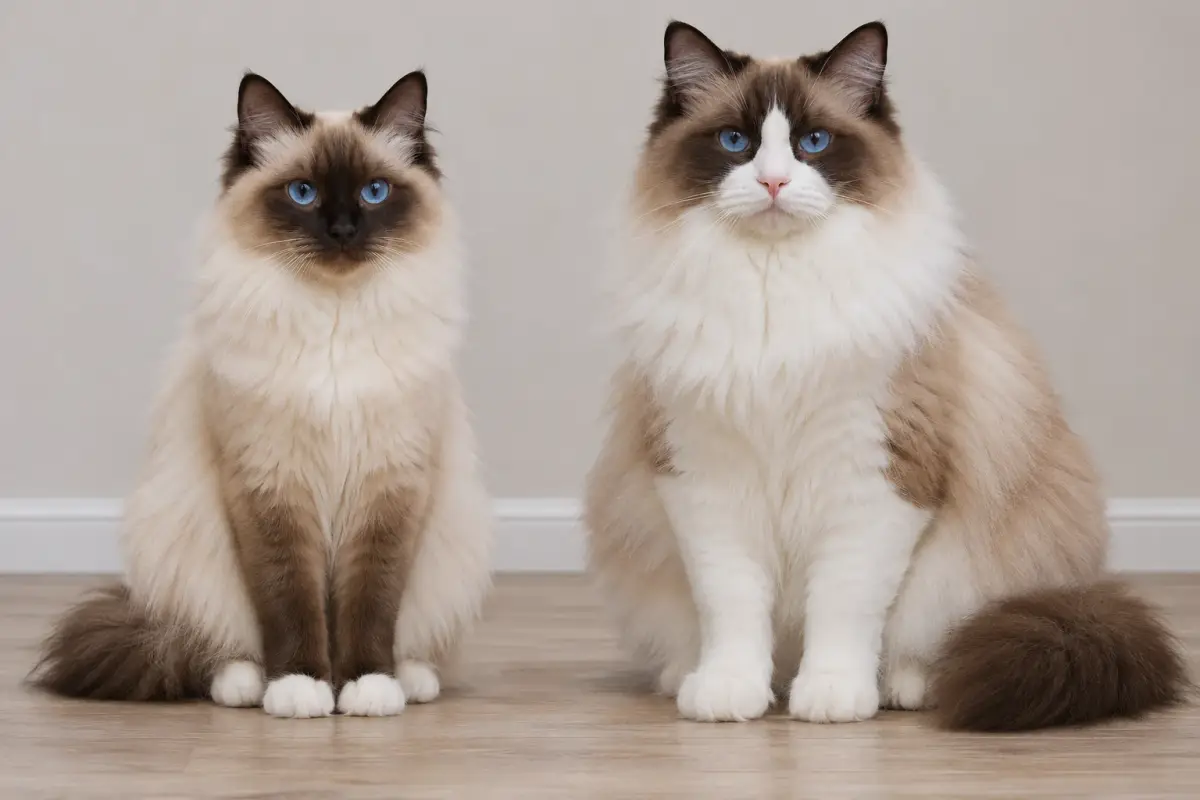
Ragdolls and Birmans are both gentle, blue-eyed, color-pointed cats, but the Ragdoll is the larger of the two: VCA lists Ragdolls at 15 to 20 pounds and Birmans at 6 to 15. The quickest way to tell them apart is the paws: every Birman has four pure white feet, while Ragdolls come in colorpoint, mitted and bicolor patterns. Both are affectionate and calm. Ragdolls are floppier lap cats; Birmans are a little more playful and inquisitive.
By Matt GarnettUpdated November 14, 20264 min read4 sources
Side by side
Size: VCA lists Ragdolls at 15 to 20 pounds and Birmans at 6 to 15. Lifespan: VCA gives Ragdolls 15 to 25 years and Birmans 15 to 20. Maturity: the CFA says Ragdolls reach full size and weight at about four. Coat: both are medium to long and silky without heavy matting. Paws: Birmans always have white gloves on the front and laces on the back, per the CFA; Ragdolls may be pointed, mitted or bicolor.
Lap cat: VCA rates Birmans 5 out of 5 and Ragdolls 4. Children: Ragdolls 4, Birmans 3. Dogs: VCA rates Birmans 5 and says Ragdolls fit nicely in homes with dogs. Voice: both quiet; Birmans speak in soft tones. Activity: Ragdolls prefer the floor to high shelves, and Birmans are not counter-climbers either. Best for: calm households wanting an affectionate, easygoing cat.
Origins
VCA credits Ann Baker, a breeder in Riverside, California, with developing the Ragdoll in the 1960s from a white longhaired cat named Josephine, selecting for sweet temperaments and non-matting coats. The CFA notes Ragdolls have become the most popular breed of cat in the world by its registration figures.
The Birman's origins lie in western Burma, though the details are unclear, and VCA recounts the legend of a temple cat named Sinh whose paws turned white in devotion to a dying priest. The breed reached France around 1919 and the United States in 1959, and VCA says the CFA accepted it in 1967. The CFA calls it a cat of mystery and legend.
How to tell them apart
Check the feet first. The CFA standard requires a Birman's front paws to have white gloves ending in an even line, and its back paws white laces. VCA says all four paws are always white. Ragdolls can also have white paws in the mitted and bicolor patterns, but a colorpoint Ragdoll has dark feet.
Then look at size and shape. VCA describes the Ragdoll as big, muscular and well boned with a wedge-shaped head, big oval blue eyes and a coat like rabbit fur, and notes a fatty pad under the belly is common. The Birman has a large, cobby body, a round head, small ears and round, deep blue eyes. The CFA also mentions a golden mist, a faint golden cast on a Birman's back.
Temperament
VCA describes Ragdolls as relaxed and gentle, polite with children and seniors, and happy in homes with dogs. They are called puppy cats for following their people from room to room and stay playful into adulthood. VCA also notes they are overly trusting, so keep them indoors or supervised outside.
Birmans are gentle, playful and inquisitive, per VCA, seeking your company in a sweet, quiet way, speaking in soft tones and learning tricks easily. They welcome other pets but do better with a companion animal when their owners are at work. Neither breed is a high-energy climber, though both enjoy interactive play.
Grooming and health
Ragdolls have a satin-soft coat that VCA says sheds minimally and does not mat, needing a weekly comb. Birmans have a silky coat without an undercoat, which VCA says needs combing once or twice a week. Both breeds gain weight easily: VCA flags Ragdolls as prone to obesity because they are not active, and advises measured portions in two or three small meals for Birmans.
The CFA notes Ragdolls are relatively healthy thanks to a diverse genetic background but that hypertrophic cardiomyopathy, a heart disease, has been found in the breed, and breeders now routinely test for it. Ask any Ragdoll breeder for heart test results, ask Birman breeders about health screening, and keep yearly vet checkups for either.
Which to choose
Choose a Ragdoll if you want a big, floppy, follow-you-everywhere companion that is happy on the floor and with gentle kids and dogs. Choose a Birman if you want a smaller, quietly affectionate cat with signature white gloves, a little more curiosity and playfulness, and ideally another pet for company.
Both slow-growing, gentle breeds do best indoors with daily play, a sturdy scratching post, portion-controlled meals and a calm routine. Meet the kittens and their parents, ask about temperament, and choose the individual whose personality suits your household.
This page is general information, not veterinary advice, and it cannot replace an examination by the vet who knows your pet.
Common questions
What is the difference between a Birman and a Ragdoll?
Size and paws. VCA lists Ragdolls at 15 to 20 pounds and Birmans at 6 to 15, and every Birman has four white paws, while Ragdolls come in pointed, mitted and bicolor patterns.
Which is more affectionate, a Ragdoll or a Birman?
Both are very affectionate. VCA rates Birmans 5 out of 5 and Ragdolls 4 out of 5 as lap cats, and describes Ragdolls as following their people from room to room. Individual personality matters most.
Do Birmans or Ragdolls shed a lot?
Neither sheds heavily. VCA says the Ragdoll's coat sheds minimally and does not mat, and the Birman's silky coat lacks an undercoat. A weekly comb keeps either tidy.
Are Ragdolls bigger than Birmans?
Yes, usually. VCA lists Ragdolls at 15 to 20 pounds against 6 to 15 pounds for Birmans, and the CFA says mature male Ragdolls often reach or exceed 20 pounds.
Sources we checked
This guide is general information, not veterinary advice. If your pet is unwell or injured, contact your veterinarian.