






Buying guides
Best Reflective Dog Vests and Coats: What Actually Matters
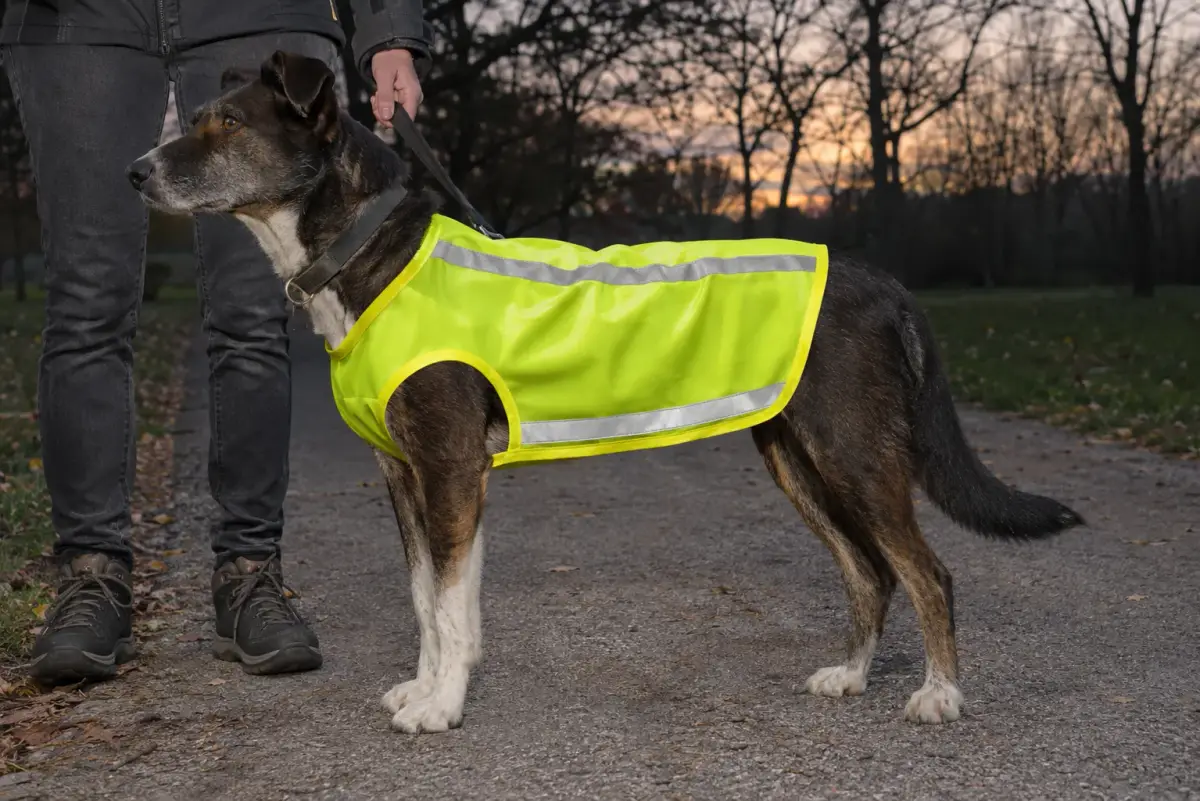
A reflective dog vest or coat helps drivers and cyclists notice your dog on dark walks, and a coat version adds warmth. Look for reflective panels on the sides and back rather than a thin trim line, a fit measured by chest girth, and a fabric suited to your weather. Browse our reflective dog coats with those three checks in mind.
By Matt GarnettUpdated November 14, 20264 min read5 sources
What a reflective coat does, and what it does not
Reflective material bounces light from headlights and flashlights back toward its source, so it only works when light is shining on it. The American Kennel Club notes that reflective materials add visibility at night, but a reflective panel is not a force field: it does not help a dog that is off leash in the dark, around a bend or hidden behind a parked car.
Treat a reflective coat as one layer of safety. Keep your dog on a leash, walk where drivers can see you, and make sure your dog always wears an ID tag. The ASPCA points out that more dogs are lost in winter than in any other season, and short days mean more walks happen in poor light.
Does your dog need a vest or a coat?
A vest is mostly for visibility and can be light; a coat is for warmth. The AKC says the dogs that struggle most in the cold are small dogs, dogs without thick fur and lean short-haired breeds such as Whippets and Greyhounds, along with puppies, seniors and hairless breeds. For those dogs a coat with reflective panels does both jobs at once.
Healthy large dogs with thick coats generally do not need extra insulation and can overheat in a padded coat. For a husky or a retriever with a full coat, a lightweight reflective vest worn over the fur gives visibility without the heat. If your dog pants or seems warm, take it off.
Where the reflective material sits
Look for panels on both sides and across the back, because drivers approach from different angles. A single thin stripe along the hem is easy to miss. Wide panels and reflective piping that outlines the shape of the dog stand out more than small logos, and a chest panel helps when your dog walks toward traffic.
The AKC recommends a reflective exterior with a nylon lining for wet weather, because that lining dries faster than absorbent materials, and says to avoid fleece or flannel exteriors in the rain because they soak through. If you walk in drizzle or snow, check that the reflective strips are stitched or bonded firmly rather than glued on, as loose strips peel after a few washes.
Padded, quilted, waterproof or zip-up
The main styles are quick to tell apart. A padded reflective dog coat is for cold, dry days. A quilted reflective winter coat adds more insulation. A waterproof reflective dog coat suits rain and wet snow, and a zip-up dog coat with reflective trim is easier to fasten on a dog that dislikes things pulled over its head.
Weigh your walks against the style. Rain calls for a water-repellent shell, so our dog raincoats range may suit better, and for very cold weather see our dog winter coats. Sweaters are usually less warm than jackets, so they are a better indoor choice than an outdoor one.
Measure for fit
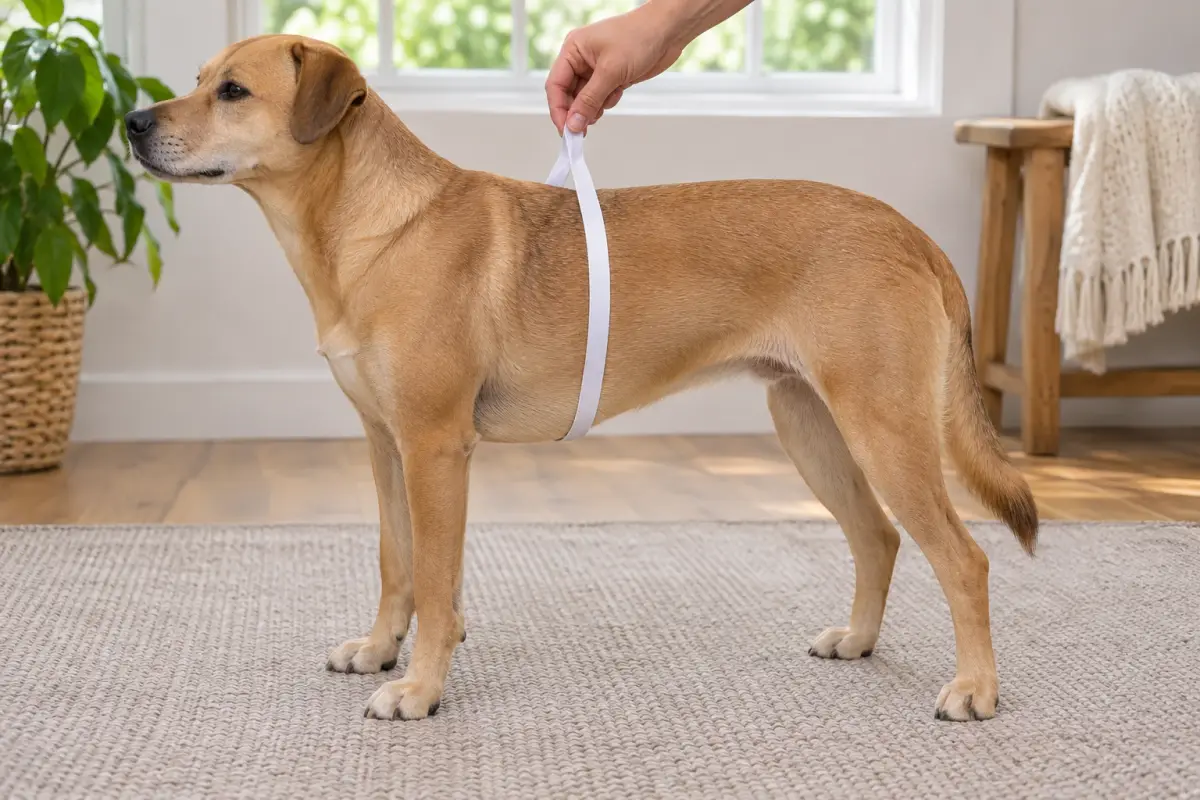
The AKC says to measure three things with a soft tape: back length from the base of the neck to the base of the tail, chest girth around the widest part of the rib cage just behind the front legs, and neck girth. Chest girth is typically the most important measurement for clothing. Measure while your dog stands naturally, and if you fall between sizes, choose the larger one. Brands size differently, so always check each maker's chart.
Use the two-finger test: you should be able to slide two fingers under the straps, and if more than three fit, the coat is too loose. A coat that is too tight restricts movement and a loose one lets rain soak through. Check that the leash can clip through an opening or sit on top of the coat so it does not pull on the fabric when your dog pulls.
Safety, care and when to see your vet
Never leave a dog alone in a coat, including in a crate, because it can snag or tangle. Introduce a new coat gradually indoors with treats before you wear it outside. Wash it according to the care label, since heat and harsh detergent can damage reflective coatings, and dry it fully before the next walk.
If your dog is shivering, curling up, sluggish or has pale gums in the cold, move the dog somewhere warm and contact your vet immediately, because these can be signs of hypothermia. If you are choosing a leash to go with the coat, our rope dog leashes include reflective styles, and you can come back to reflective dog coats when you have your measurements. This page is general information, not veterinary advice, and it cannot replace an examination by the vet who knows your pet.
Common questions
Do reflective dog vests really work?
They help in the right conditions. Reflective material returns light from headlights to the driver, so it adds visibility at night, but it does not replace a leash, good lighting and careful route choice.
Should a dog wear a reflective vest or a reflective coat?
A vest suits a thick-coated dog that needs visibility only. A coat suits small, short-coated, lean, senior and hairless dogs that also need warmth. Healthy thick-coated large dogs can overheat in a padded coat.
How tight should a reflective dog coat be?
Two fingers should slide under the straps. If you cannot, it is too tight; if more than three fit, it is too loose. It should let your dog walk, run and play normally.
Can I put a harness under a dog coat?
Often yes, if the coat has an opening for a leash or harness clip, as some sweaters and coats do. Check the design and fit it with the harness on before the first walk.
How do I wash a reflective dog coat?
Follow the care label. Many are machine washable on a delicate cycle in cold water, but hand washing is gentler on reflective strips and coatings. Dry it completely before using it again.
Sources we checked
This guide is general information, not veterinary advice. If your pet is unwell or injured, contact your veterinarian.


