






Buying guides
Best Rabbit Toys: What Bunnies Actually Use
The best rabbit toys let a bunny chew, dig, toss and hide. Untreated willow, apple or aspen chews, hay-stuffed toys and plain cardboard boxes cover chewing; a dig box covers digging; hard plastic baby keys or cups cover tossing; tunnels cover hiding. Everything must be untreated and non-toxic, because the House Rabbit Society stresses that whatever a rabbit plays with, it also chews.
By Matt GarnettUpdated November 14, 20264 min read2 sources
What matters most: safe materials and natural behaviors
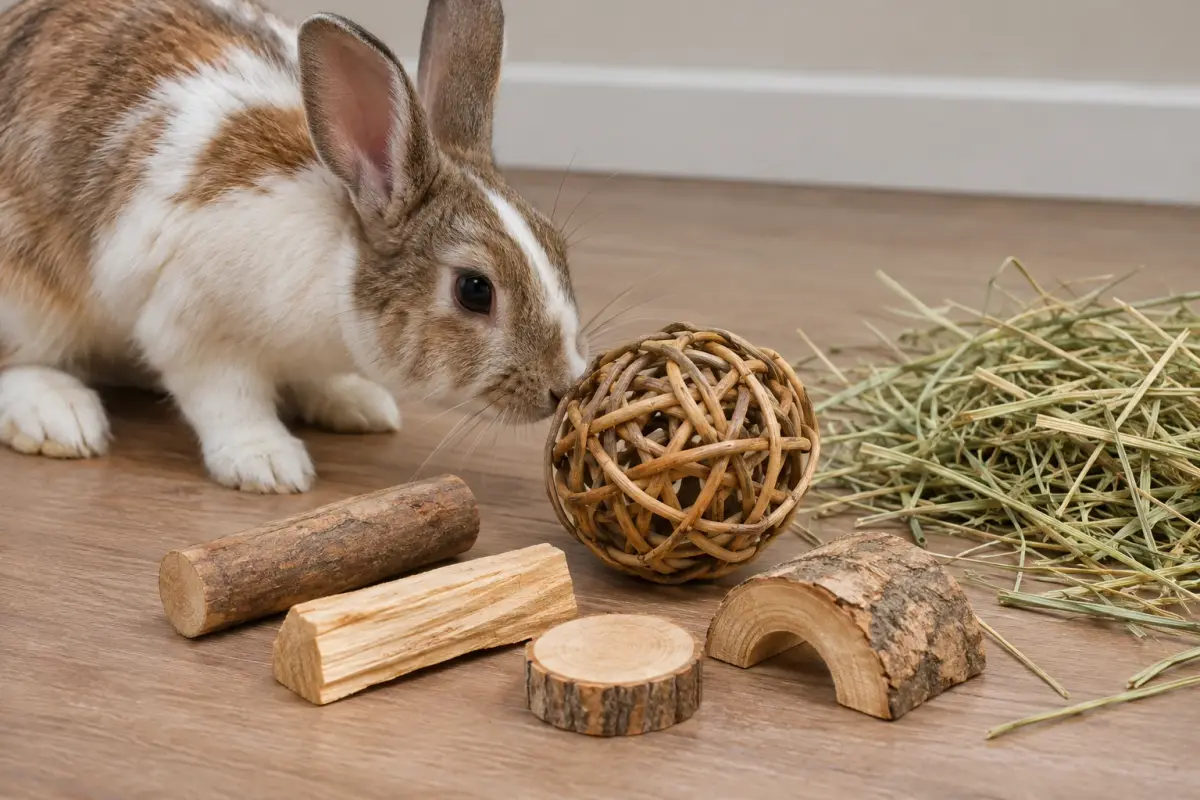
Rabbits chew constantly; their teeth grow throughout life, and chewing is normal behavior. The House Rabbit Society says toys of any size should be made of untreated, non-toxic material, and that fresh hay such as timothy, oat or orchard grass is the healthiest thing for bunnies to chew. Material safety is therefore the first test of any rabbit toy.
The second test is behavior. Rabbits chew, dig, toss, push, climb and hide. A good toy collection gives each of those an outlet, which protects your furniture and cables and keeps a bunny active and engaged. A bored rabbit often turns to chewing baseboards or digging carpet. Browse our rabbit toys and rabbit chew toys.
The main rabbit toy types compared
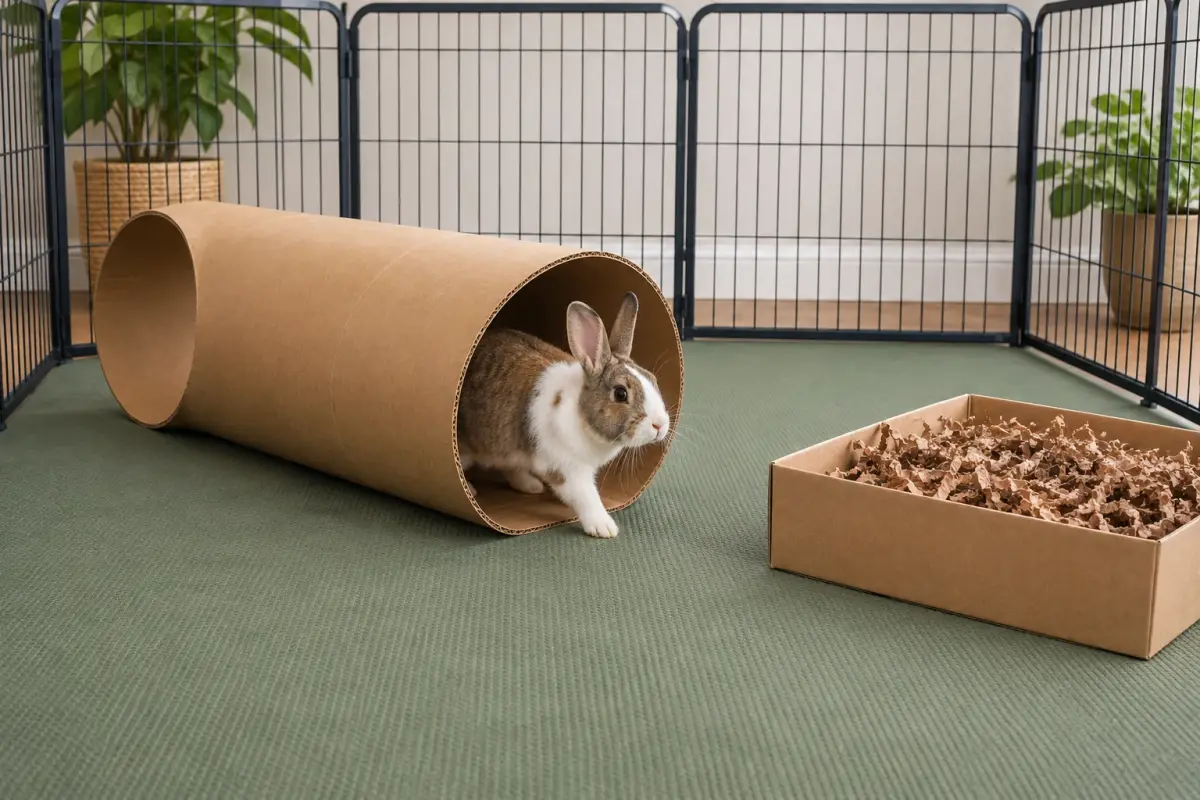
Chew toys include untreated willow balls and rings, apple and aspen sticks, seagrass mats, hay cubes and hay-stuffed toys. The House Rabbit Society lists natural wicker made from willow, rattan, reed and bamboo as good choices. Plain brown cardboard boxes, tubes and egg flats are cheap, safe and much loved.
Tossing toys include hard plastic baby keys, stacking cups and small willow balls that bunnies flick with their noses. Digging boxes filled with shredded paper, hay or a large flat of cardboard let rabbits dig safely. Tunnels and hidey boxes with two exits give shelter and a racetrack. A woven grass triangle hut is one hideout example, and a play tunnel listed for rabbits and ferrets is one tunnel example. Treat puzzles hide pellets or herbs and make foraging a game.
Best toys for each rabbit
For a young, energetic rabbit, give plenty of chewables plus a tunnel and a dig box, and expect toys to be destroyed quickly. For a shy rabbit, a hidey box with two entrances and a tunnel help it feel secure enough to explore. For a senior or arthritic rabbit, choose low, easy-access toys and soft hay mats rather than climbing structures.
For a bonded pair, offer more than one of each toy to avoid squabbles, and larger tunnels both can use. For a rabbit that tosses everything, hard plastic baby keys and willow balls are favorites. For a rabbit that chews cables, provide extra chewables in those spots and bunny-proof the cables themselves.
What to avoid
Avoid painted, varnished or glued wood, treated wicker, and wood from cherry, plum, peach or other stone-fruit trees, as well as pine or cedar shavings in dig boxes. Avoid soft rubber and soft plastic toys that can be chewed into pieces, glossy or printed cardboard, fabric with loose threads, and small parts such as bells and beads.
The House Rabbit Society warns not to rely on training alone to keep rabbits from harmful items. If your rabbit stops eating, produces fewer or smaller droppings, or seems hunched and quiet, call a rabbit-savvy vet immediately, because gut slowdown in rabbits can become serious within hours.
How to choose size and set up a play area
Toys should be too big to swallow and sturdy enough to handle without splintering into sharp shards. Tunnels should let your rabbit pass through without squeezing; for medium and large breeds that usually means at least 10 inches across. Hidey boxes need two exits so a rabbit never feels trapped.
Rabbits play best in a large pen or bunny-proofed room with daily exercise time, not just a cage. Place chew toys near areas your rabbit likes to chew, a dig box in a corner it already scratches, and a tunnel along a wall where it likes to run.
Rotation, cleaning and how long toys last
Rotate toys every few days so they stay interesting, and add something new, such as a fresh cardboard box, every week. Bunnies love novelty, and a cheap box is often more popular than any bought toy.
Throw away chew toys once they become very small, soiled or moldy. Wash hard plastic toys in hot water, and replace cardboard often. Willow and hay toys are meant to be eaten and are used up within days or weeks; that is them working as intended, not a flaw. Browse rabbit toys and rabbit pens to set up a play area.
Rabbit toy formats and the activities they offer
| Format | Activity described | Construction to inspect |
|---|---|---|
| Chew toy | Chewing sticks, rings, mats or hay-filled shapes | Exact material and any treatment |
| Tossing toy | Nosing or tossing a small object | Shape and loose components |
| Digging box | Digging through a contained filling | Box and filling materials |
| Tunnel or hidey box | Moving through or taking cover | Openings and exits |
| Treat puzzle | Finding pellets or herbs | Food access and hiding spaces |
Common questions
What are the safest chew toys for rabbits?
Untreated willow, apple or aspen chews, natural wicker, hay cubes and plain brown cardboard. Fresh grass hay is the healthiest thing of all for rabbits to chew.
Do rabbits like toys?
Yes. Rabbits chew, dig, toss and hide, and toys that allow those behaviors keep them active and help prevent destructive chewing of furniture and cables.
Are plastic toys safe for rabbits?
Hard plastic baby toys are often fine for tossing, but some rabbits chew plastic. Avoid soft plastic and rubber, and remove any toy that is being chewed into pieces.
Can rabbits play with cardboard?
Yes, plain brown cardboard boxes and tubes are safe and popular. Avoid glossy, printed or taped cardboard, and replace it once it is soiled. Remove tape and staples first.
Sources we checked
This guide is general information, not veterinary advice. If your pet is unwell or injured, contact your veterinarian.


