






Buying guides
Best Pooper Scooper: How to Choose One for Your Yard and Walks
The best pooper scooper suits the ground you clean and how much you pick up. Rake-and-pan sets are best for grass and yards with more than one dog, jaw or claw scoopers grip well on pavement and gravel, and bag-attached designs suit walks. Choose a long handle if bending hurts, and remember the reason it matters: the CDC says prompt cleanup lowers the chance of germs spreading to people and pets.
By Matt GarnettUpdated November 14, 20263 min read2 sources
Why picking up matters
Dog poop can carry germs and parasite eggs even when the dog looks healthy. The CDC's healthy pets guidance says to pick up dog waste promptly and dispose of it properly, including in your own yard and especially where children play, and to wash your hands after handling waste or supplies.
A good pooper scooper makes that daily job quick and keeps your hands farther from the mess. It also matters to the neighborhood: waste left on lawns washes into storm drains with rain. Quick cleanup also matters if your dog eats poop, and our guide on how to stop a dog eating poop covers the habit itself.
The main types compared
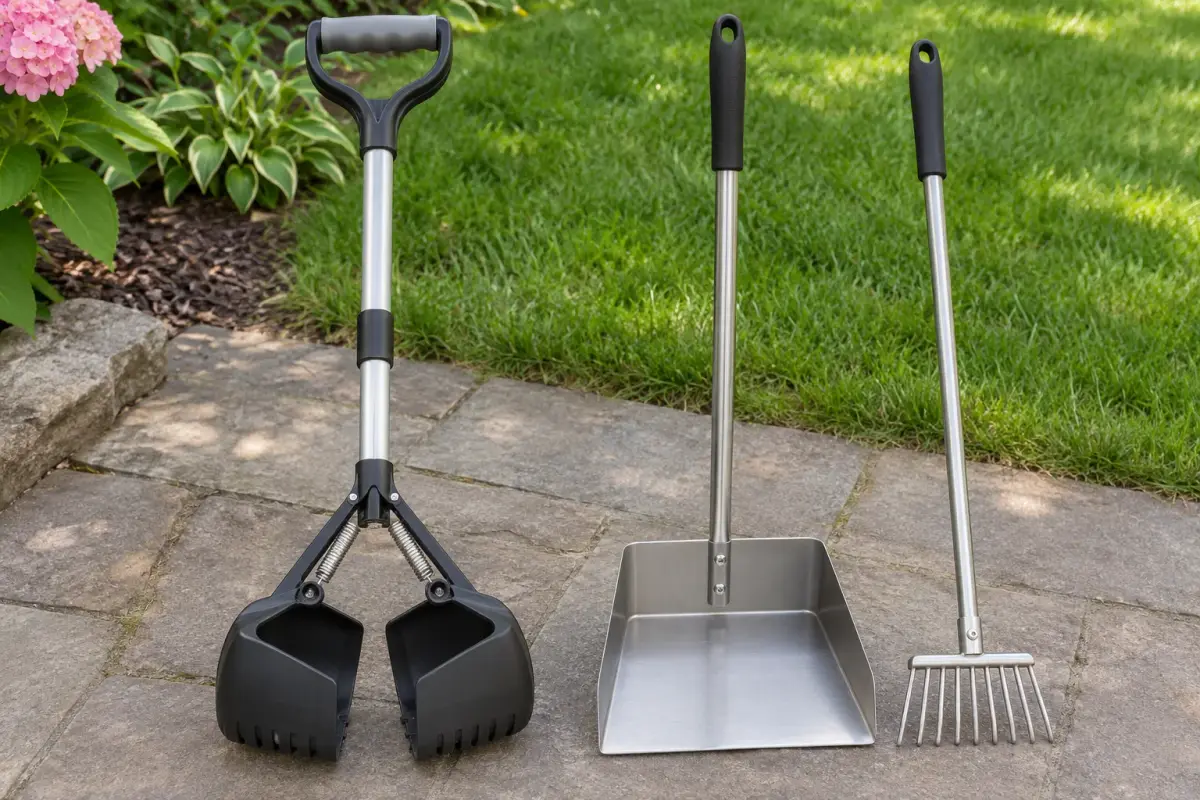
Rake-and-pan scoopers use a rake or spade to push waste into a long-handled pan. They are fast on grass and good for clearing a whole yard, but you then need to bag or dump the pan's contents. Spade versions work better on hard surfaces, rakes better on lawns.
Jaw or claw scoopers pinch waste between two blades with a trigger on the handle. They work on grass, gravel and pavement and suit single dogs. Bag-attached scoopers hold a poop bag open at the jaws, so you scoop and tie in one step, which is ideal for walks. Small handheld scoopers and bag dispensers clip to a leash.
Best type for each situation
For a multi-dog yard or a large lawn, a rake-and-pan set with a lid saves the most time. For gravel or mulch, a jaw scooper with toothed edges picks up waste without a shovel-load of stones. For walks and apartment living, a compact bag-attached scooper or a simple bag dispenser on the leash.
For anyone with back, knee or hip pain, a long handle, around 30 inches or more, and a trigger grip mean no bending at all. For small dogs, a small claw scooper is precise and light. For loose stools, a spade-style pan works better than a claw.
What to avoid
Avoid thin plastic jaws that flex and drop the load, and triggers that need a hard squeeze if you have weak hands. Avoid short handles if the goal is not bending. Avoid scoopers that cannot be rinsed easily, because a dirty scooper smells and spreads germs.
Avoid leaving waste in the yard for days; flies breed in it and the parasite risk to people and other dogs rises. If your dog's stools are often loose, bloody or contain worms, take a sample to your vet rather than just cleaning up.
Disposal options
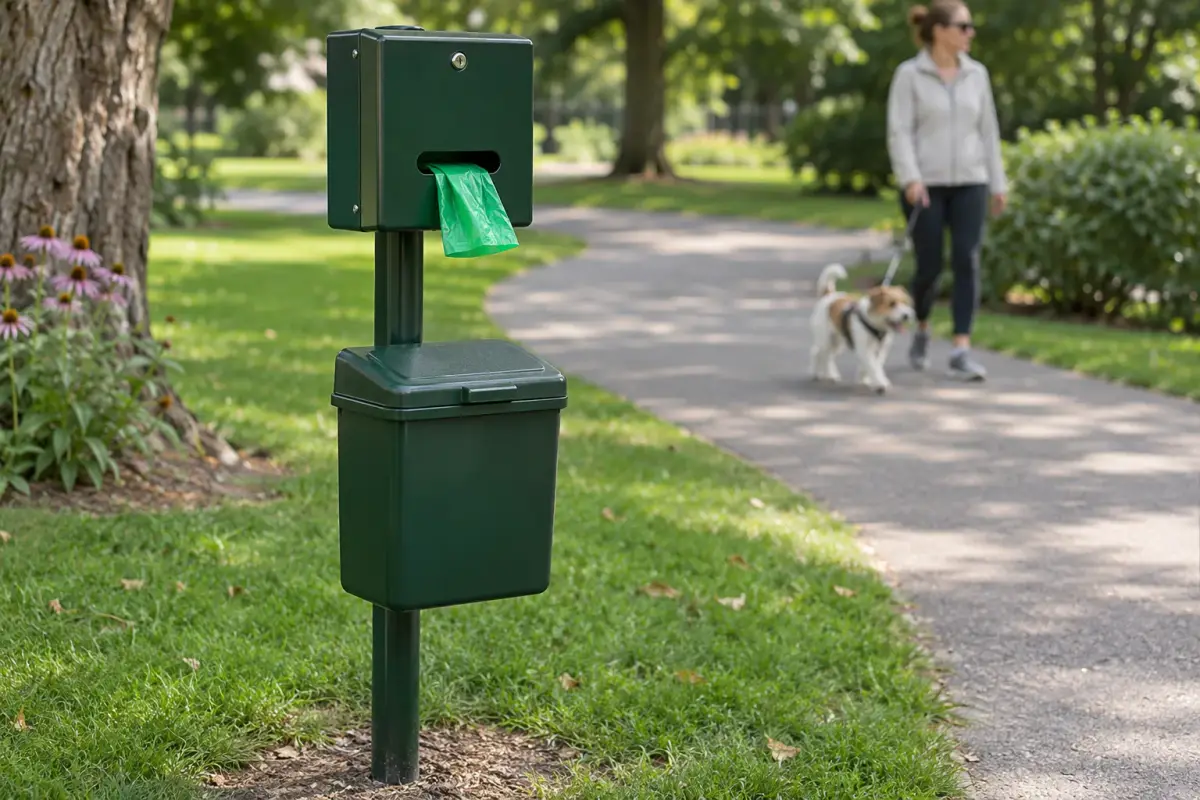
The simplest disposal is a dog poop bag in the trash. Some cities allow flushing of bagless waste; check local rules before you try it, and never flush plastic or compostable bags. Dog waste digesters and in-ground systems work in some soils but not clay or frozen ground.
Do not put dog waste in a home compost used for vegetables, because household composting does not reliably kill parasites. A lidded outdoor bin dedicated to waste keeps smell down between trash days.
Cleaning and lifespan
Rinse the scooper with a hose after each use and disinfect it every week or two with a pet-safe disinfectant, then let it dry in the sun. Store it outside or in the garage, not indoors.
Wash your hands with soap and water afterward, as the CDC recommends, even if you used a scooper. Metal pooper scoopers last longest; replace plastic ones when the jaws crack or the spring weakens.
This page is general information, not veterinary advice, and it cannot replace an examination by the vet who knows your pet.
Waste-scooping mechanisms and handling
| Mechanism | How waste moves | What to check before buying |
|---|---|---|
| Rake and pan | A rake pushes waste into a pan | On grass, look at the gap between the tines. Widely spaced tines can let small pieces slip through. |
| Spade and pan | A flat spade pushes waste into a pan | For a patio, look for a straight edge that sits flush with the paving. |
| Jaw or claw | A trigger closes two blades | If you usually hold a leash in your other hand, check whether you can squeeze and release the trigger one-handed. |
| Bag-attached scoop | The bag sits at the scooping opening | Check which bag sizes fit the opening and whether there is room to tie the bag after removing it. |
| Small handheld scoop | A compact tool carried on walks | Check the folded size against your pocket or walking bag and look for a way to cover the used end. |
Common questions
What is the best pooper scooper for grass?
A rake-and-pan set is fastest on lawns, because the rake lifts waste out of the grass into the pan. A jaw scooper also works well for one dog. Long handles make either type easier on your back.
What pooper scooper works on gravel?
A jaw or claw scooper with toothed edges grips waste without scooping up much gravel. Rake-style tools tend to drag stones with them. Rinse it well after use.
How often should I pick up dog poop in my yard?
Daily is best. The CDC advises prompt cleanup, especially where children play, because waste can carry germs and parasite eggs. Leaving it also attracts flies and kills grass.
Can I flush dog poop?
Some areas permit flushing bagless dog waste, but rules vary, so check locally. Never flush bags, even ones labeled compostable or flushable, as they can block pipes.
Sources we checked
This guide is general information, not veterinary advice. If your pet is unwell or injured, contact your veterinarian.


