






Buying guides
Best Hamster Toys: What Is Safe and Worth Having
The best hamster toys are the ones that suit how hamsters actually behave: a quiet wheel with a solid running surface, a place to hide and burrow, tunnels wide enough to pass through, and safe things to chew. Skip wire wheels and unsupervised exercise balls. A few well-chosen items in a roomy cage beat a crowded one.
By Matt GarnettUpdated November 14, 20264 min read3 sources
What hamster toys are for
Hamsters are active, nocturnal and curious, and toys are how they get exercise and stimulation in a cage. VCA Animal Hospitals says toys provide enrichment and psychological stimulation as well as exercise for pet rodents, with tubes, mazes and exercise wheels among the popular choices. When you browse hamster toys, think in categories: running, hiding, climbing and chewing.
The Merck Veterinary Manual says the enclosure should have enough room for nesting, eating and exercise, so toys should be added to the space, not squeezed into it. A hamster that cannot get past its own toys or find a clear spot to burrow is worse off than one with three simple items.
The wheel: the single most important toy
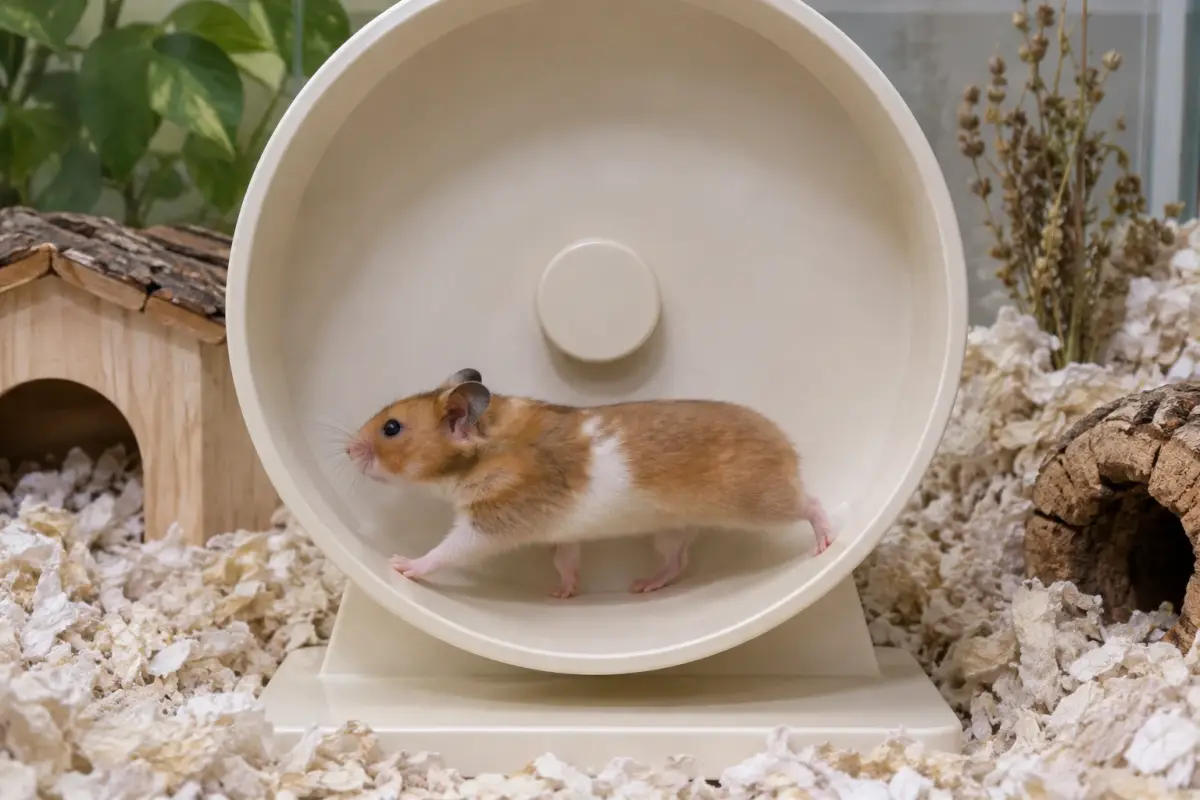
Hamsters run on wheels at night, so a wheel is the one toy nearly every hamster uses. Merck says it should have a solid, not wire, running surface to protect the feet and toes, and be large enough for the hamster to use comfortably. VCA agrees: open track and wire wheels risk a trapped foot, and the safest wheel has a solid plastic floor with no openings. For options, see our hamster wheels.
Noise matters because the wheel runs when you are trying to sleep. VCA points out that pocket pets often use their wheels at night, so it is best to get one that does not squeak. Some cages include a built-in wheel, so check its surface and size before assuming it will do, and replace it if it has open slots.
Exercise balls: use with care
Exercise balls are popular, but they come with conditions. Merck says to make sure the ball is the right size, has good airflow and is secure when closed, and that even in a ball a hamster can get into danger. Watch the hamster closely and return it to its cage after a short time, and never leave a hamster in an exercise ball unsupervised.
If you decide to use a hamster exercise ball, keep the room closed off from other pets, since VCA warns that a dog or cat may see a rodent as a toy or a meal, and keep stairs and doorways out of the picture. A hamster that stops moving, seems frantic or cannot be coaxed to run is telling you to end the session. Many hamsters do fine with a wheel and a larger play area instead.
Tunnels, bridges and hideouts
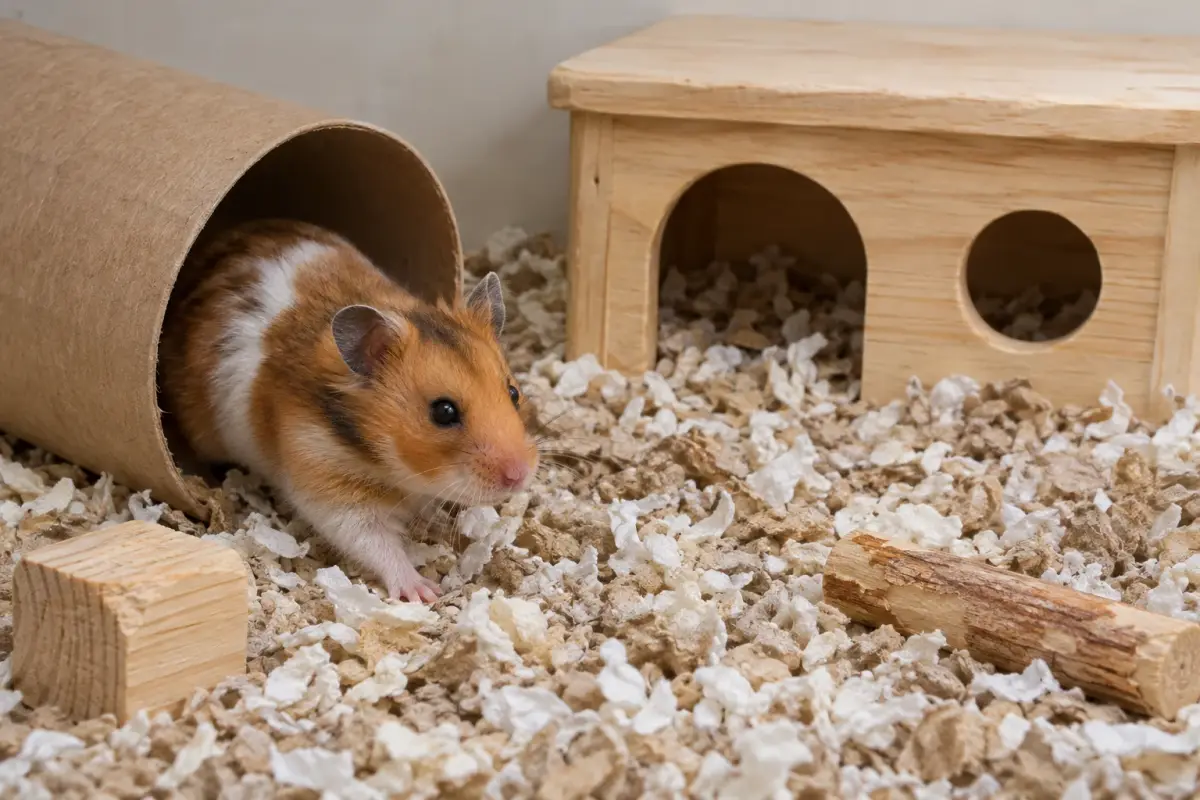
Tunnels and hides satisfy the burrowing instinct. VCA says that since rodents like to burrow, they should have a hiding place in the cage, and Merck says tubes and boxes with holes provide fun places to explore as long as they are large enough for the hamster to move through safely. A fleece-lined hanging tunnel hideout is one design to compare: it combines a hide with a hanging tunnel.
A hanging suspension bridge with hammock adds climbing at cage level. Check that gaps are small enough that a hamster cannot get stuck, that any hanging part is secure, and that the cage is tall enough to leave burrowing room. Merck says the cage should be at least 6 inches high, and 8 inches or more is better for deep bedding, so do not trade bedding depth for extra levels.
Chew toys and cheap enrichment
Hamsters chew constantly, and VCA calls them excellent chewers and great escape artists. Cardboard boxes and paper towel rolls make cheap hides and chews, though VCA says rodents quickly chew them up, so replace them often. Merck advises that the cage itself should have no sharp edges and no wood parts that can be chewed apart.
Avoid anything with small detachable parts, which a hamster could swallow. Hamsters may also chew electrical cords and furniture outside the cage, so supervise any play time in a hamster-proofed room, as VCA says never to allow unsupervised free run of the house. Wash and replace toys: VCA suggests cleaning toys weekly.
What to avoid, and how many toys to use
Skip wire wheels, toys with sharp edges, anything that a hamster could get a foot or head caught in, and cotton-type nesting fluff, which Merck says can catch on toes and cause injury. A good starting set is one solid-surface wheel, one or two hides, a tunnel or bridge, and something safe to chew. Rotate items every week or two so the cage stays interesting.
Hamsters usually live alone, so toys do not need to be duplicated for company. If your hamster is sneezing, sitting quietly in a corner or has moisture around the tail, VCA says these may be signs of illness, so call your vet. For more choices, return to our hamster toys collection.
This page is general information, not veterinary advice, and it cannot replace an examination by the vet who knows your pet.
Common questions
What is the safest kind of hamster wheel?
One with a solid, non-wire running surface that is large enough to use comfortably. VCA calls a solid plastic floor with no openings the safest design, since wire and open-track wheels can trap a foot.
Are hamster exercise balls safe?
Only with strict limits. Merck says the ball must be the right size, well ventilated and secure, and the hamster should be watched closely and returned to the cage after a short time, never left unsupervised.
How many toys does a hamster need?
A few suitable items are enough: a solid-surface wheel, one or two hides, a tunnel or bridge and something to chew. Merck says the enclosure needs room for nesting and exercise, so avoid overcrowding.
What can I give my hamster to chew?
Cardboard boxes and paper towel rolls are cheap chews and hides, and VCA says they need replacing often. Avoid toys with small detachable parts and ask your vet if you are unsure about a material.
Sources we checked
This guide is general information, not veterinary advice. If your pet is unwell or injured, contact your veterinarian.

