






Buying guides
Best Dog Waste Stations: How to Choose One That Works
The best dog waste station pairs a sturdy post with a bag dispenser and a lidded bin big enough to go days between emptying. Place it where dogs and people already walk, and keep it stocked, because waste left on the ground is a health issue: the CDC says pet waste should be picked up daily and bagged or buried. See our dog waste stations for the main styles.
By Matt GarnettUpdated November 14, 20264 min read2 sources
Why a waste station helps
A station makes the right thing the easy thing. When bags and a bin are in sight at the point where people walk their dogs, more waste gets picked up. The CDC says dog and cat waste puts roundworm eggs into the soil and advises that pet waste be picked up daily and bagged and put in the trash.
The delay matters. The CDC says it takes 2 to 4 weeks for those eggs to develop enough to cause infection, and that they can survive for months or even years in the right conditions. Prompt removal means the eggs are gone before they can become a risk to children playing on the ground.
What a station includes
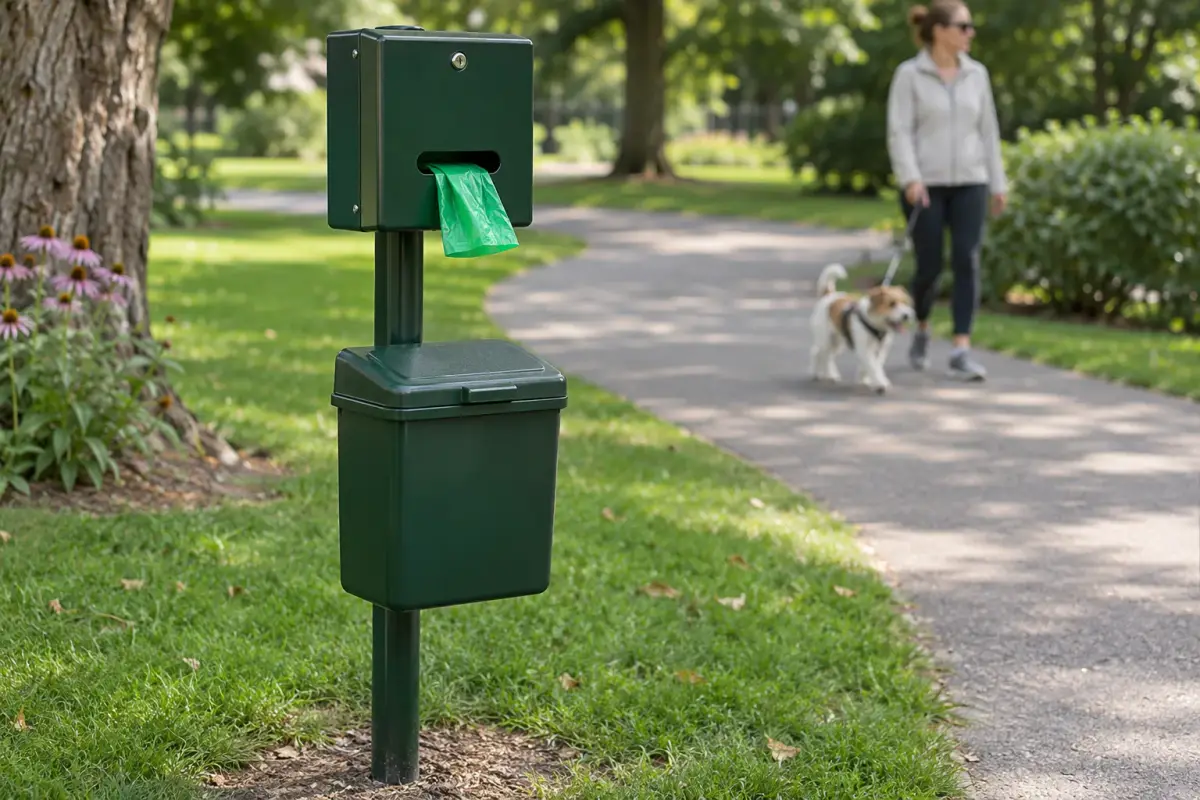
Most stations combine three parts: a post or stand, a dispenser that holds a roll or stack of bags, and a bin with a lid for used bags. Some larger models are sized for communal spaces, such as an 11.5-gallon outdoor station supplied with 600 bags, while others are listed for commercial parks, like this waste station with 600 bags.
A single household usually needs only a small dispenser and a lidded can. A station makes more sense for a larger yard, a farm lane, a rental property, a trailhead or a neighborhood common area. If you only need bags on a leash, see poop bag dispensers instead.
Capacity: bags and bin
Two numbers decide how often you will be refilling. The first is the bag supply: a rack that holds hundreds of bags lasts far longer than a dispenser that holds one roll, and a station that runs out of bags is worse than no station at all, because people stop trusting it. The second is bin volume, which sets how often waste must be emptied.
Think in terms of dogs and visits. A station for ten households will fill faster than one beside a single back gate. Pick a bin large enough that emptying is a weekly job and not a daily one, and make sure the lid closes firmly, because an open bin attracts pests and carries smell across the area.
Where to put it
Place the station on the route dogs already use: near the entrance to a dog run, at a trailhead, by a gate or along a sidewalk loop. Put it near a trash collection point so emptying does not mean carrying full bags far, and well away from outdoor eating areas, play equipment and water bowls.
If the station is on shared or public land, check with the property owner, homeowners association or local authority before installing, and agree who restocks it. Fix the post firmly. A tilted post, a loose lid or an empty dispenser are the usual signs of a station that nobody owns.
Before you fix the post in place, try the spot with a leash in one hand. Can you pull out one bag and lift the bin lid without stepping into the path? Open the gate all the way and leave room for a stroller or wheelchair to pass while someone uses the station.
Hygiene and parasites
The CDC says hookworm eggs hatch in soil or sand and the larvae can burrow into human skin, for example when someone walks barefoot or sits on contaminated ground. Its advice is to dispose of animal waste quickly, keep pets healthy with regular veterinary care including deworming where needed, and wear shoes.
Wash your hands after emptying a bin or handling waste, as the CDC advises. Use gloves when you change a bin liner, and keep bags tied. Talk to your vet about deworming and fecal testing for your own dog, since pets that spend time outdoors are the ones most likely to pick up and pass on parasites.
What to avoid, and how to care for it
Avoid thin posts that tip in wind, bins without a lid, and dispensers that jam when damp. Avoid placing a station beside a drain or stream, where run-off could carry waste. Avoid leaving it unstocked, because empty stations teach people to walk past.
Check the station each week, wipe the dispenser and lid, and replace worn parts. For the bags themselves read our guide to dog poop bags, browse dog poop bags or pooper scoopers, and see the full dog waste stations range.
This page is general information, not veterinary advice, and it cannot replace an examination by the vet who knows your pet.
| Station feature | What to compare before choosing |
|---|---|
| Bag dispenser | Check whether it takes rolls or hanging bags and whether your refill packs fit. |
| Collection bin | Compare usable capacity with the number of dogs using the area and how often someone can empty it. |
| Mount and access | Check the mounting surface, room to open the lid and space to remove a full liner without blocking the path. |
Common questions
How many bags does a dog waste station hold?
It varies by model, from a single roll to hundreds of bags. Check the product page for the stated bag capacity, and choose one that matches how many dogs use the area between refills.
Where should I install a dog waste station?
Put it on the route dogs already use, such as an entrance, trailhead or gate, close to where trash is collected and away from food areas and water. On shared land, ask the owner or association first.
Why is dog poop a health risk?
The CDC says dog waste puts roundworm eggs into soil, and hookworm larvae can burrow into skin. It advises picking up waste daily, bagging it, washing your hands and keeping pets dewormed through your vet.
How often should I empty a waste station?
As often as the bin needs, but weekly is a sensible target for a busy station. Emptying sooner in warm weather keeps smell and pests down, and always wash your hands afterward.
Sources we checked
This guide is general information, not veterinary advice. If your pet is unwell or injured, contact your veterinarian.


