Buying guides
Best Dog Poop Bags and Holders: How to Choose
The best dog poop bags are thick enough not to tear or leak, big enough for your dog's size, easy to open, and unscented unless you want fragrance. Pair them with a dispenser that clips firmly to the leash and lets a bag tear off one-handed. Compostable claims only matter if your area actually has composting that accepts pet waste.
By Matt GarnettUpdated November 14, 20263 min read2 sources
Why picking up matters
Picking up after your dog is about more than neighbors. The CDC advises that pet waste should be picked up daily and bagged or buried, because dog feces can carry roundworm eggs that get into soil, where they can survive for months or years and infect people, especially children, who swallow contaminated dirt. Hookworm eggs in feces can also hatch into larvae in soil.
That makes reliable bags a small health tool. A bag that tears or leaks puts waste on your hands; wash them after handling waste, as the CDC recommends. Regular vet checks and deworming, which the CDC also advises, reduce what your dog sheds in the first place. Browse our dog poop bags and poop bag dispensers.
What matters most in a poop bag
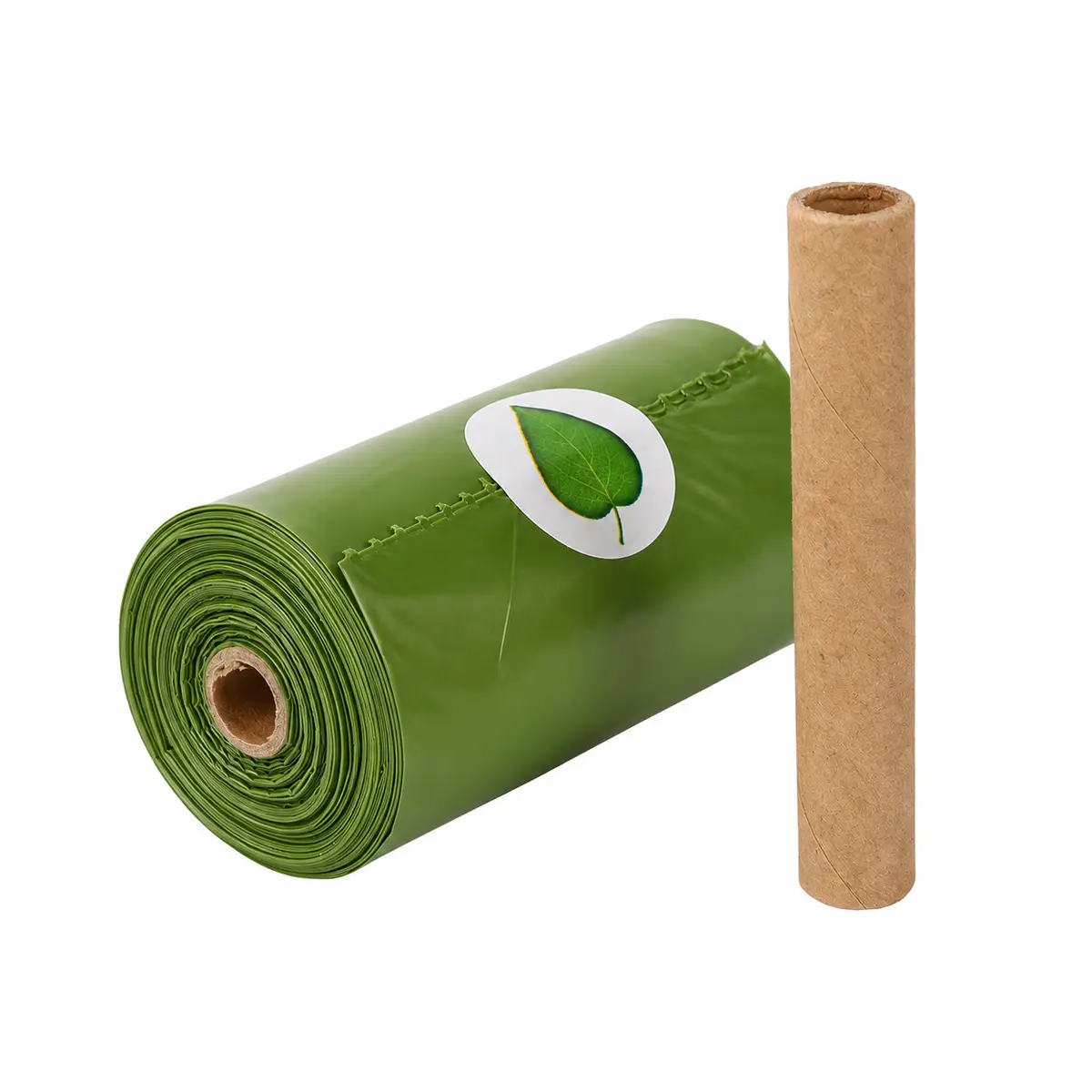
Strength and leak-proofing come first. Look for bags of a reasonable thickness, often described in microns or mils, that do not stretch thin when you scoop, and that are fully sealed at the bottom seam. Test a new brand at home before relying on it on a long walk.
Size and opening come next. Bags around 9 by 13 inches suit most dogs, while giant breeds may need larger. Perforated rolls with an easy-open end save fumbling in the cold. Handle-tie bags are easier to knot. Unscented bags suit people sensitive to fragrance; scented ones mask smell until the trash can.
Plastic, compostable and plant-based compared
Standard plastic bags are cheap, strong and leak-proof, but persist in landfill. Bags labeled compostable are designed to break down in industrial composting conditions, but most municipal compost programs do not accept pet waste, so in practice they usually go to landfill too, where they break down slowly.
Plant-based bags are often thinner and can degrade in storage, especially in heat, so buy what you will use within a year. Biodegradable is a vaguer claim than certified compostable. If sustainability matters to you, ask your local waste service what it actually accepts.
Choosing a holder or dispenser
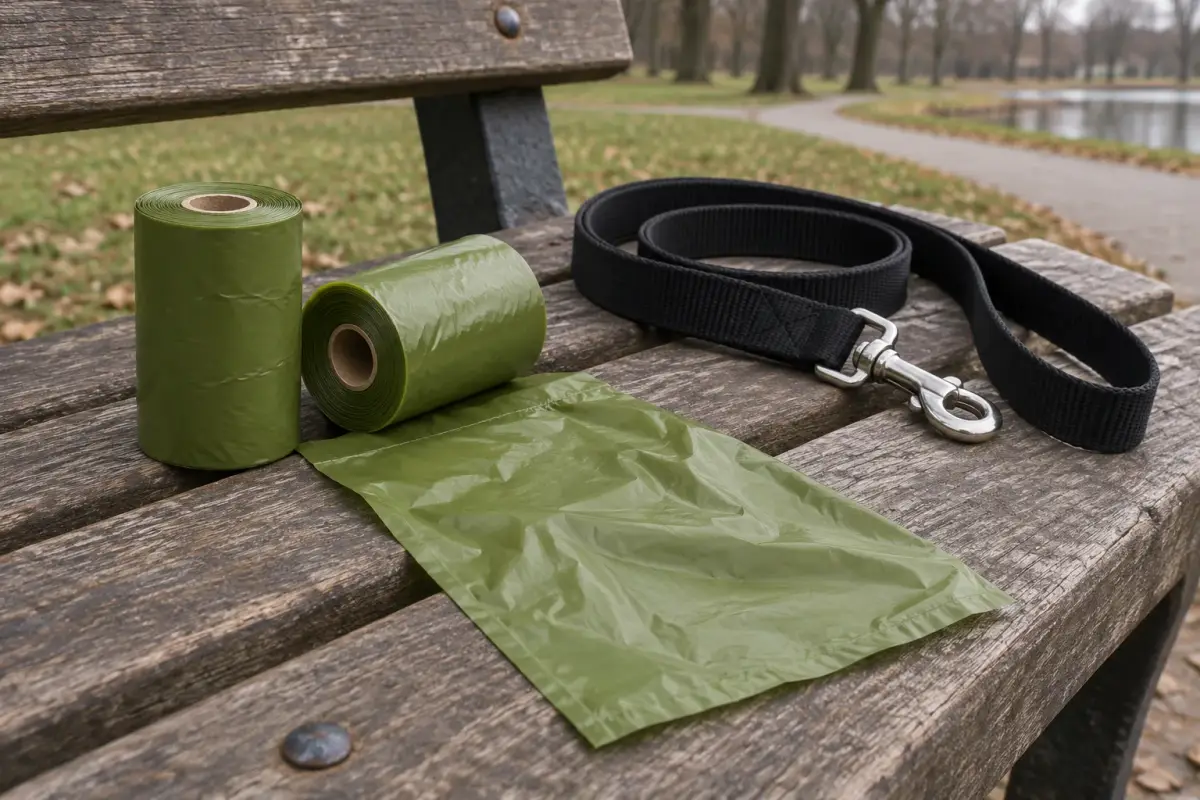
A good dispenser clips securely to the leash or belt, holds a standard roll, and lets you pull and tear one bag with one hand. Carabiner or strap attachments are sturdier than thin plastic clips. Some dispensers include a small flashlight for night walks, or a clip to carry a full bag.
Hard plastic or aluminum dispensers last longer than fabric pouches. Check the roll fits, since roll sizes vary between brands. Keep a spare roll in your car and jacket pocket.
Disposal and what to avoid
Tie the bag and put it in a trash can; never leave filled bags on trails or hang them on branches. Do not put dog waste in curbside compost or recycling unless your local service says it is accepted. In your own yard, pick up daily, especially where children play.
Avoid bags so thin they tear, and dispensers that rattle loose. If you notice worms, blood, mucus or a change in your dog's stool while picking up, mention it to your vet. You can restock from our dog poop bags and pair them with a poop bag holder.
Common questions
What are the best dog poop bags?
Bags that are thick enough not to tear or leak, large enough for your dog, easy to open and fully sealed at the seam. Unscented or scented is a personal preference.
Are compostable dog poop bags worth it?
Only if your local composting service accepts pet waste, which most do not. Otherwise they usually go to landfill like plastic bags. Check with your local waste service first.
What is the best dog poop bag holder?
One that clips firmly to the leash with a carabiner or strap, fits standard rolls and lets you tear off a bag one-handed. Metal or hard plastic holders last longest.
Why should I pick up my dog's poop?
Dog feces can carry parasites such as roundworm and hookworm whose eggs contaminate soil and can infect people. The CDC advises picking up pet waste daily and washing hands afterward.
Sources we checked
This guide is general information, not veterinary advice. If your pet is unwell or injured, contact your veterinarian.