






Buying guides
Best Dog Pool: How to Choose One That Suits Your Dog
The best dog pool is one your dog can step into, stand in, turn around in and climb out of without slipping. Three things decide it: a sturdy wall your dog's claws will not puncture, a non-slip floor, and enough width for the dog to move. Foldable hard-sided pools suit most dogs, inflatables suit gentle ones, and shallow splash pads suit small dogs and puppies.
By Matt GarnettUpdated November 14, 20264 min read3 sources
What matters most in a dog pool
Start with the dog, not the pool. Many dogs are nervous around water, and the AKC notes that many dogs fear the slippery surface of kiddie pools, so grip and stability matter more than color or looks. Look for a floor with some texture, a wall that stays upright when a wet dog leans on it, and a size that lets your dog stand, turn and lie down without being wedged.
Next comes how your dog gets in and out. VCA Animal Hospitals advises teaching a dog to climb out of a pool unassisted, and the AKC points out that dogs do not instinctively know where steps or ramps are. A low side that a dog can step over, or a pool ramp added to a taller one, is a feature in its own right. If you are browsing our full range, start with dog pools.
The main types compared
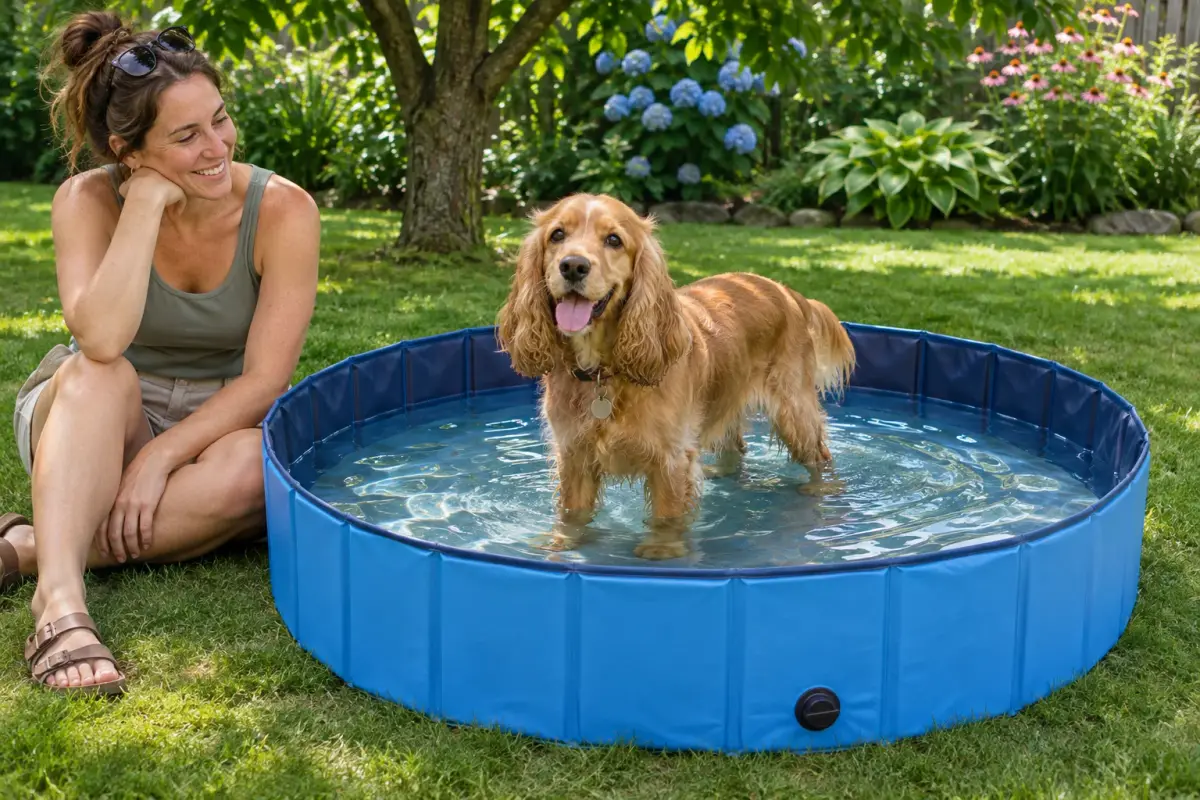
Hard-sided foldable pools have a rigid wall, often a PVC and fabric build, that folds flat for storage. They keep their shape, resist claws better than thin vinyl, and give a dog something stable to lean on. A foldable collapsible dog pool and a portable dog swimming pool tub are examples of this type.
Inflatable and soft PVC pools are light and cheap to store, but they rely on air or thin walls. A foldable PVC pool with a play mat base is a soft-sided design. They suit gentle, light dogs, and dogs with sharp or long claws can puncture them. Splash pads and sprinkler mats are the third type: they hold only a shallow film of water, which suits small dogs, puppies and dogs who prefer running through spray to swimming. A dog sprinkler splash pad is an example.
Which type suits which dog
For a large or energetic dog, choose the rigid, hard-sided type, as wide as your space allows, because an inflatable wall will not hold up to a big dog climbing in and out. Check that the wall is low enough to step over or that you can place a ramp. For a small dog or puppy, a shallow soft pool or splash pad is plenty and safer, since the dog can stand with its head well above water.
For a dog that hates water, a splash pad is the gentlest start. For a short-legged or long-bodied breed, the AKC says some bodies make swimming harder, and every dog can learn to get around safely with a life vest and lessons, so keep the water shallow and stay close. For an older dog with stiff joints, pick a low wall and a very grippy floor, and ask your vet whether swimming is a good fit; VCA notes conditions such as arthritis, heart disease or epilepsy can make swimming risky.
Traction, exits and where to put it
The AKC suggests adding kennel decking or a rubber drainage mat to a slippery kiddie pool so the dog has traction. That is a cheap fix that makes a big difference to a nervous dog. Put the pool on flat, shaded ground that is not hot paved ground, and keep a bowl of fresh water close by.
VCA says not to let a dog lap up the swimming water, so offering plenty of fresh water nearby helps. Fill the pool fresh each time and empty it when you are done, so the water does not sit and grow algae or bacteria in the sun. Never use a pool as a place to leave a dog while you go indoors.
Safe use and what to avoid
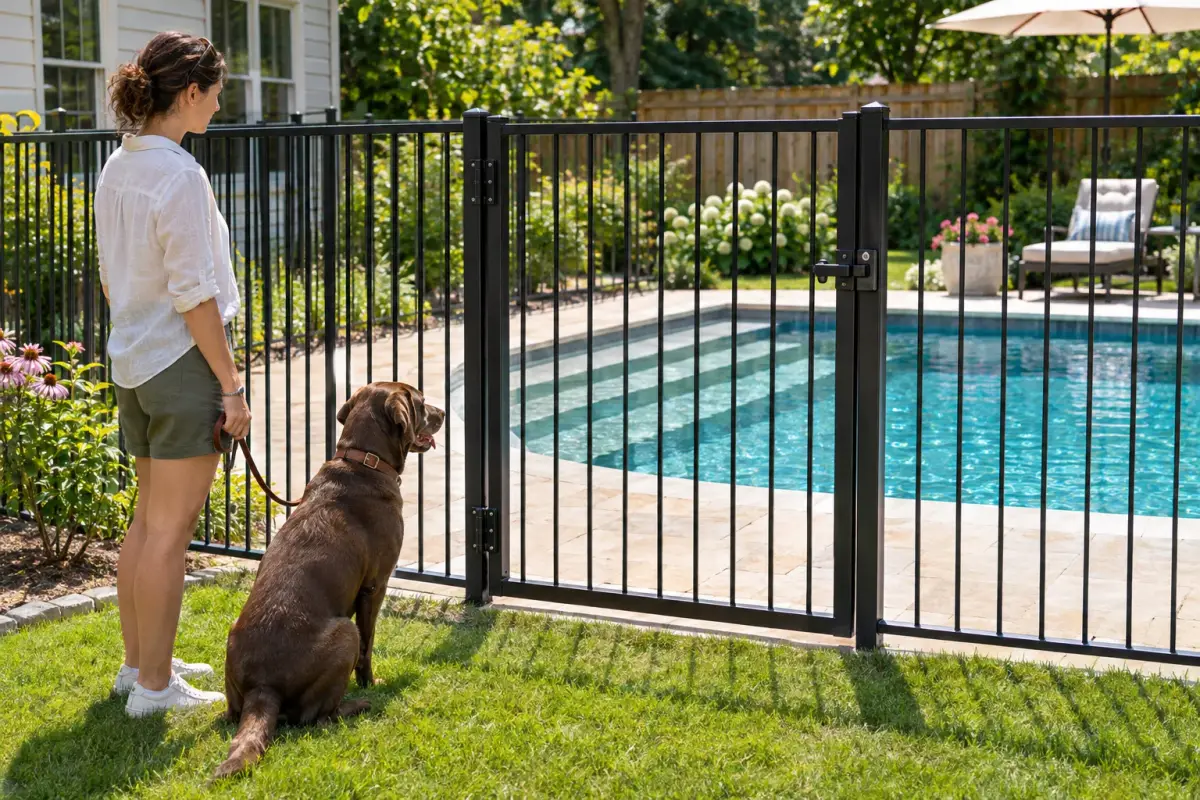
Supervise every swim. VCA states 'don't leave your pet unattended around water,' and the AKC advises never leaving your dog unsupervised in or near water. Introduce the pool gradually: the AKC says to let your dog approach at its own pace and never to throw or force a dog in. Keep swim sessions short, about 10 minutes, since the AKC links long sessions with water toxicity risk.
Avoid pools with sharp seams, thin walls that a claw can split, or smooth slick floors. After a swim, rinse your dog, since VCA notes chlorine, salt or debris can irritate skin, and clean the ears with a drying ear cleaner your vet suggests if your dog is prone to infections. If your dog vomits, becomes lethargic or seems bloated after swimming, call your vet right away. For heat and water safety around bigger pools, see our guide to dog pool safety, and for hot days beyond the pool consider dog cooling mats.
Pool wall and water-feed arrangements
| Format | Physical construction | Check before filling |
|---|---|---|
| Panel-sided foldable | Rigid sections within a folding wall | Wall build,base and drain |
| Inflatable | Air chambers form part of the structure | Valve,inflation instructions and seams |
| Soft-sided | A flexible wall without assumed rigid panels | Support arrangement and floor requirements |
| Sprinkler pad | Water feeds spray outlets around a low surface | Hose connection,drainage and rim |
Common questions
What size dog pool do I need?
Pick one wide enough for your dog to stand, turn around and lie down without being wedged against the wall. Small dogs do well in shallow soft pools; large dogs need a wide, rigid-walled pool and a low side or ramp.
Are inflatable dog pools safe?
They can work for gentle, light dogs, but claws can puncture thin walls and a soft wall gives a climbing dog little stability. Supervise every swim and add a non-slip mat for grip.
How do I stop my dog slipping in a kiddie pool?
The AKC suggests adding kennel decking or a rubber drainage mat to give traction. Fill the pool shallow at first and stay close until your dog is comfortable.
How long should my dog swim at once?
The AKC says to keep swim sessions short, about 10 minutes at most, to reduce the risk of water toxicity. Offer fresh drinking water and take breaks in the shade.
Can my dog drink the pool water?
VCA advises not letting your dog lap up swimming water and offering fresh water instead. Large amounts can cause stomach upset, so call your vet if your dog vomits or seems unwell.
Sources we checked
This guide is general information, not veterinary advice. If your pet is unwell or injured, contact your veterinarian.


