






Buying guides
Best Cooling Mats for Large Dogs: What Actually Matters
The best cooling mat for a large dog is a big one: long enough for your dog to lie fully stretched out, tough enough that a determined chewer cannot open it, and matched to where it will be used. Pressure-activated gel suits indoor rest, frozen-insert and refrigerated mats suit shorter sessions, and no mat replaces shade, water and cool air. Browse our cooling mats for large dogs once you know which fits.
By Matt GarnettUpdated November 13, 20264 min read2 sources
How a cooling mat helps a large dog
Dogs cool themselves mainly by panting and by widening the blood vessels near the skin, with a little sweating through the paw pads. The AKC points out that a body temperature above 105°F can lead to organ failure, and that widened blood vessels can contribute to dehydration if a dog does not drink enough. A cooling mat gives your dog a cool surface to lie on, which may ease some of the need to pant.
A large dog also has a lot of body in contact with the mat, so the surface has to cover that whole area to do any good. That is why the choice comes down to three things: size, cover material and mat type. The sections below take them in that order, starting with the one that matters most.
Size matters more than any other feature
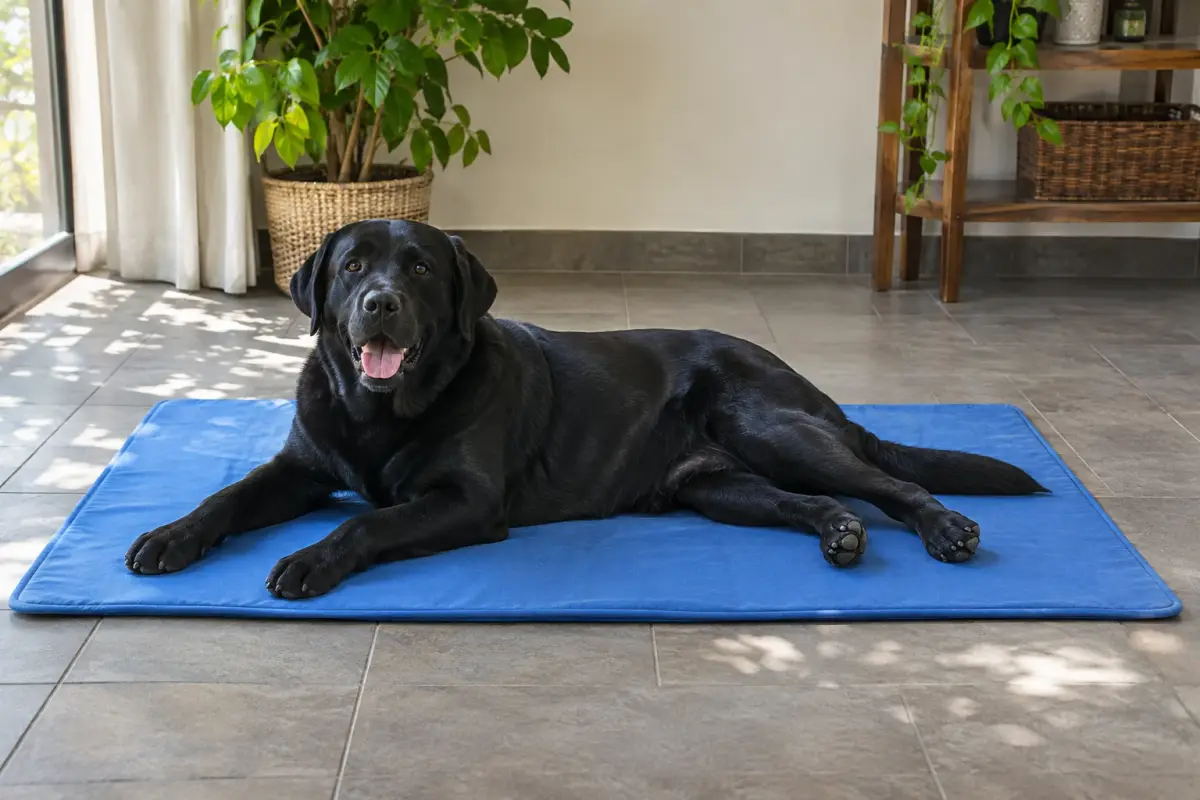
The AKC's advice on cooling mats is blunt: bigger is always better. A small dog can use a large mat, but a large dog cannot use a small one. For a big dog, the test is whether it can lie stretched out on its side with chest, hips and back legs all on the cool surface, instead of curled up with half its body on warm flooring. Measure your dog lying stretched out from nose to hips, then add several inches.
Big dogs also shift position as they warm up, so a mat that only just fits leaves parts of them on the floor within minutes. For a deep-chested, long-legged dog, look at pads around 47 by 28 inches, such as a 47 x 28 inch gel cooling pad. A pad of about 35 by 24 inches, like the 35 x 24 inch version, suits a dog that sleeps curled up.
The main types compared
Pressure-activated gel mats hold a layer of gel under a thin cover. The AKC explains that the gel absorbs body heat and then recharges once the dog steps off, and that these mats can stay cool for several hours. A solid gel mat with a waterproof cover, such as this non-toxic solid gel cooling pad, is one example of the type. Gel suits dogs that spend long stretches resting indoors or in shade.
Refrigerated mats are simpler and cheaper, but they must be chilled before use and give a shorter burst of cooling. Frozen-insert mats take removable inserts that you fill with water and freeze, which avoids gel a chewer could get into. If your dog prefers a raised or bed-style surface, see our cooling dog beds as well, and read our wider guide to dog cooling mats and beds.
Which type suits which large dog
Senior dogs, short-snouted breeds and thick double-coated breeds tend to get the most from a cooling surface, and the AKC adds that a mat may soothe senior dogs with arthritis. For an older big dog, a flat mat is easy to step onto and off. Dogs with obesity, breathing problems or fluid around the heart or lungs need more than a mat, so ask your vet about heat protection for them.
For a heavy chewer or a teething giant-breed puppy, choose a durable nylon cover over plush cotton, because the AKC notes that a plush pad can be torn open and expose the gel. A frozen-insert mat is the safest choice for dogs that destroy bedding. For a dog that lives mostly indoors, an extra large cooling mat for big dogs gives plenty of surface for sprawling.
What to avoid, and what a mat cannot do
Avoid mats that are too small for your dog's full length, thin covers on a dog that chews, and any mat left in direct sun, where it will warm up instead of cool. Check the cover regularly for holes or loose seams, and take a damaged mat away from your dog rather than patching it.
A mat is a comfort aid, not heat protection. The AKC says mats should not replace hydration, sun protection or frequent breaks. In very hot weather, walk only early in the morning or after dusk, and check paws on hot pavement. Laborious panting and heavy drooling are signs to act on: stop activity, cool your dog down and see a vet as soon as possible. When you are ready to choose, browse our cooling mats for large dogs.
This page is general information, not veterinary advice, and it cannot replace an examination by the vet who knows your pet.
Cooling-pad construction and preparation
| Construction | What is inside | Preparation or inspection point |
|---|---|---|
| Gel mat | A gel layer beneath a cover | Cover condition and the maker’s operating directions |
| Refrigerated mat | A pad chilled before use | Available chilling space and instructions |
| Frozen-insert mat | Removable water-filled inserts | Insert filling, removal and freezing directions |
| Raised or bed-style surface | A different resting structure | Usable area and the actual cooling mechanism |
Common questions
How big should a cooling mat be for a large dog?
Measure your dog lying fully stretched out, from nose to hips, and add several inches. The AKC says bigger is always better, since a large dog cannot use a mat meant for a small one.
Do cooling mats work for large dogs?
A mat can give a large dog a cool place to rest and may reduce the need to pant, but it only supports other heat safety steps. It does not replace water, shade, rest or a cool room.
Will my big dog chew a gel cooling mat?
Some will. A plush cover can be torn open, which is why durable nylon covers or frozen-insert mats suit chewers better. Remove any damaged mat immediately and call your vet if your dog swallowed gel.
How long does a gel cooling mat stay cool?
The AKC says pressure-activated gel mats can stay cool for several hours, while refrigerated or frozen mats give shorter, more intense cooling. Cooling fades faster in a hot room or in direct sun.
Sources we checked
This guide is general information, not veterinary advice. If your pet is unwell or injured, contact your veterinarian.

