Buying guides
Best Christmas Toys for Dogs: How to Choose Safe Ones
The best Christmas toys for dogs are the same as the best everyday toys in festive colors: the right size for your dog's mouth, tough enough for the way your dog chews, and free of small parts that can come off. Holiday styling does not make a toy safer. Use these checks, then browse our dog Christmas toys.
By Matt GarnettUpdated November 13, 20264 min read3 sources
A festive toy still has to pass the everyday checks
Santa prints, reindeer shapes and red-and-green rope do not change what makes a toy safe. VCA Hospitals advises choosing a toy too large to fit entirely in your dog's mouth, and avoiding toys with ribbons, eyes or other removable parts that could be swallowed or inhaled. Those checks apply whether the toy is plain brown rubber or a plush Santa.
Seasonal toys are also often bought as gifts, which makes it easy to choose by appearance. Before you wrap anything, look at it as you would any new toy: how big it is next to your dog's jaw, how it is stitched or molded, and whether any decoration is glued on or hanging loose. If a decoration could come off, it is a hazard, however cute it looks.
Match the toy to how your dog plays
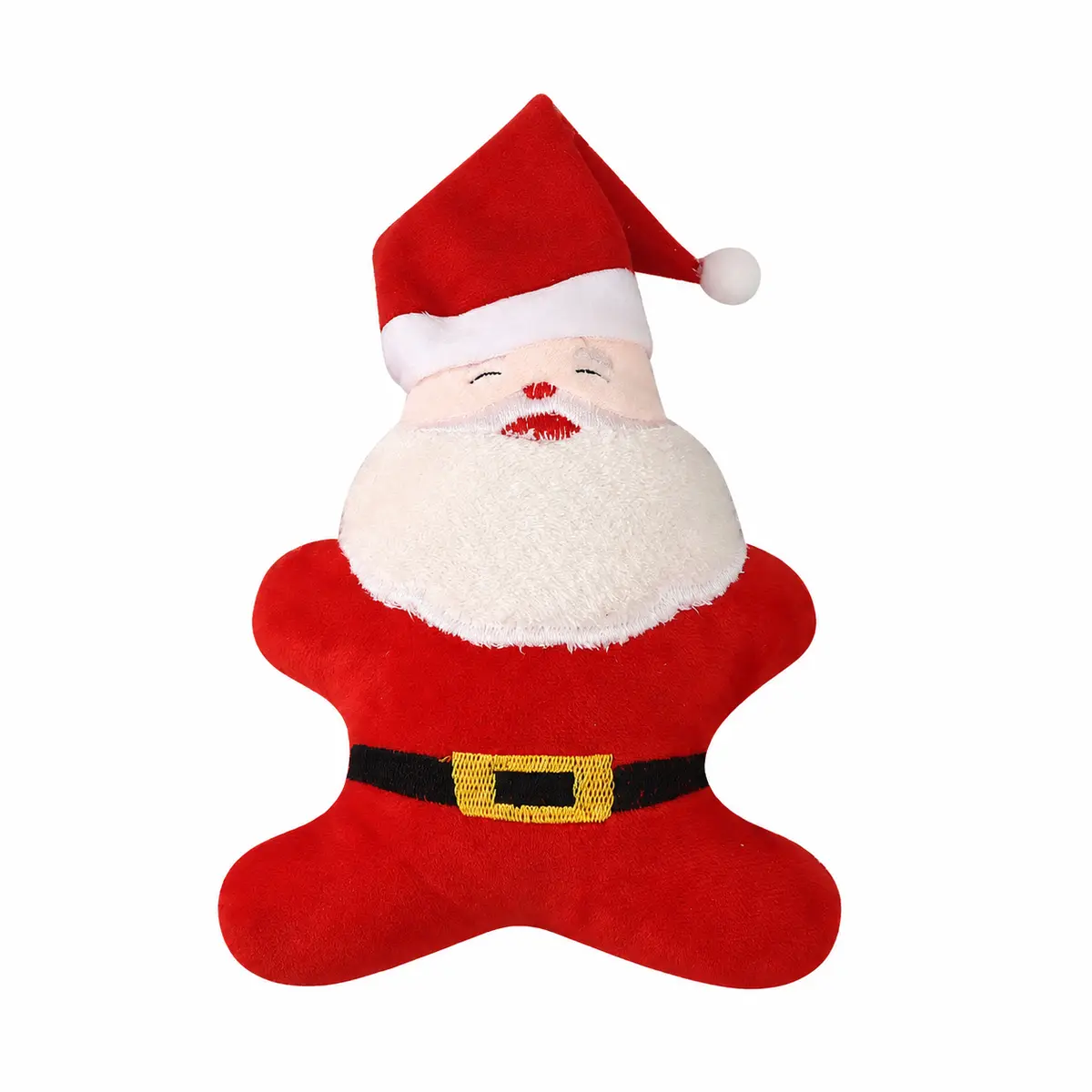
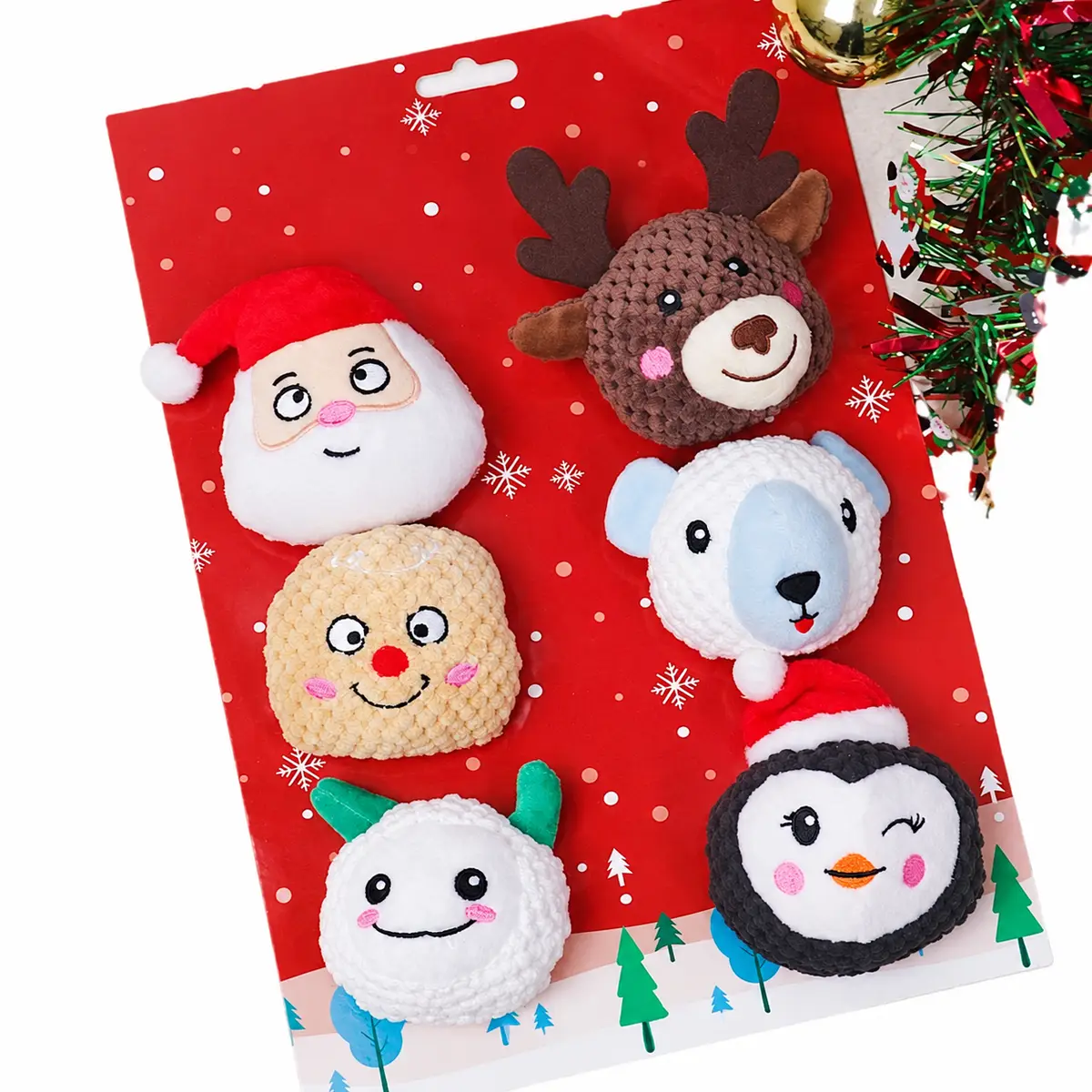
Pick the type by your dog's habits. Soft plush toys suit dogs that carry and cuddle rather than destroy. A set such as this Christmas plush squeaky toy set gives variety for a gentle dog, while a single plush Santa toy suits a small dog or puppy that likes to carry something soft.
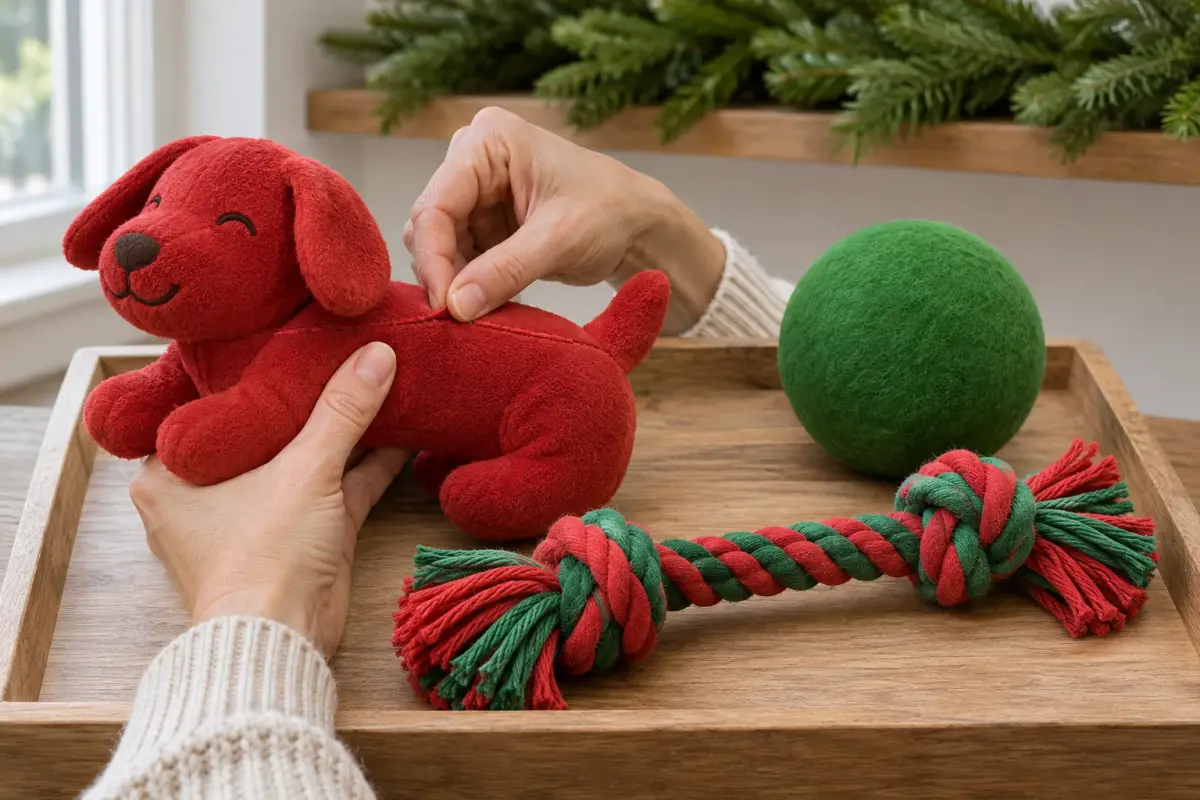
Rope toys suit dogs that tug and chew moderately, and a set of festive rope chew toys gives you several shapes to rotate. Puppies need toys made for puppies, according to the AKC, and strong dogs need more durable rope or balls. The right choice depends far more on your dog than on the season.
Size and durability by dog
Small dogs and puppies need toys light enough to carry and soft enough for tiny teeth, but still not so small that they can be swallowed. The AKC notes that small breeds need balls that are not so small they could be swallowed. Large dogs need larger, sturdier toys, and the AKC says large and giant breeds may need larger toys because their mouths are bigger.
VCA Hospitals warns that some dogs destroy even rubber toys within minutes, and that swallowed pieces can need surgery to remove. If your dog tears plush apart, choose something denser rather than a soft toy. Its fingernail test is a useful guide: a toy should be soft enough to dent slightly, and long toys should bend between your hands.
Holiday hazards that are not toys
The season brings dangers that look like play things. The ASPCA warns that tinsel can cause severe vomiting, a blocked digestive tract and sometimes surgery, and suggests sticking to lights and ornaments instead. It also warns about glass or plastic ornaments, whose broken pieces can injure the mouth and digestive tract, salt-dough ornaments, electrical wires, and batteries, which can burn the mouth if punctured.
Keep ornaments, wrapping, ribbon and cords out of reach, and do not let a dog treat decorations as toys. If your dog swallows something it should not have, or may have been exposed to something poisonous, call your vet or the ASPCA Animal Poison Control Center at (888) 426-4435 straight away; a consultation fee may apply. Our dog Christmas gift guide covers other gift ideas.
Safe play over the holidays
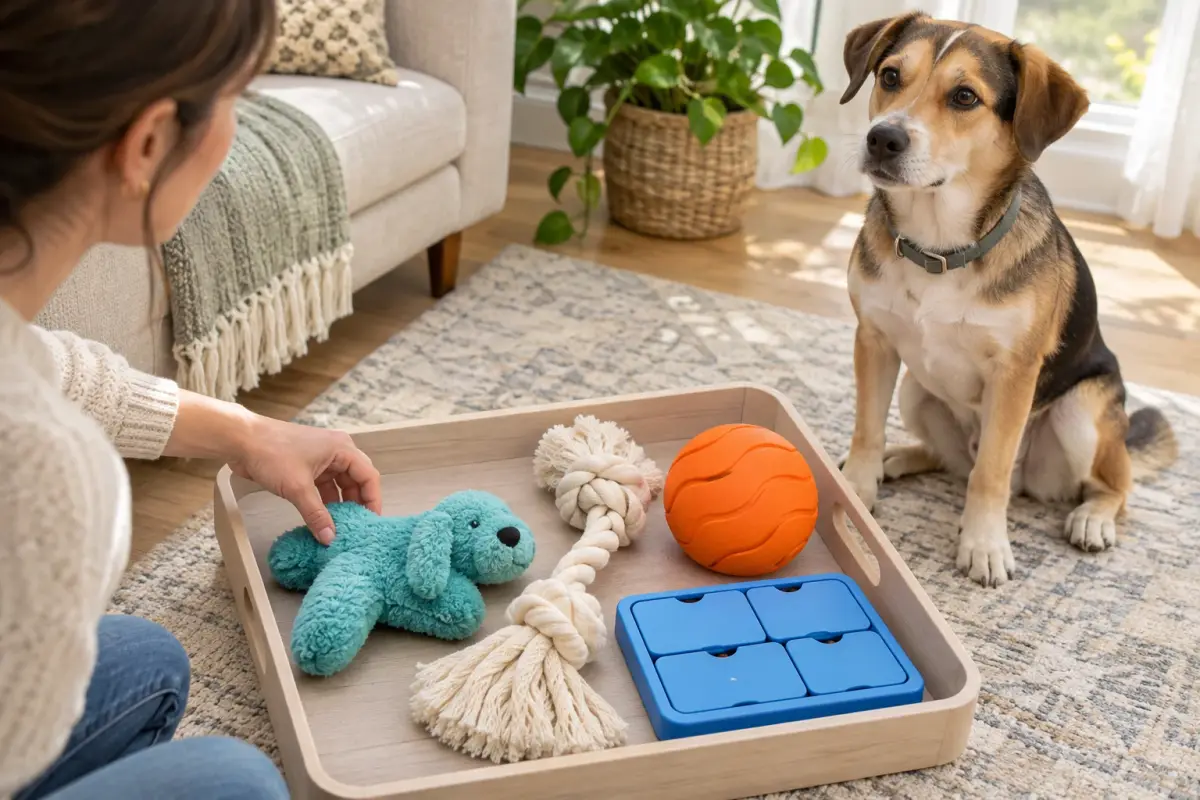
Always supervise chewing, as VCA Hospitals recommends, and take a toy away if your dog is biting off chunks. Holidays mean visitors, noise and distractions, so play in a calm room and give your dog a quiet space away from the crowd. Do not let guests feed toys or scraps without asking you first.
Check toys every few days. VCA says that if stuffing is showing, rope is frayed or rubber is broken, it is time to retire it. Rotating a few toys, rather than leaving a heap on the floor, keeps them interesting, which the AKC also suggests. Our dog Christmas toys collection gives you festive options to rotate through the season.
What to avoid
Avoid toys with small attached decorations, bells, ribbons or glued-on eyes, thin plastic that can crack, and anything a dog could swallow whole. Avoid very hard items too, since VCA lists bones, hooves and hard rawhides as able to chip or fracture teeth. Do not give dogs human Christmas decorations, candles or edible ornaments as toys.
If your dog vomits, strains, stops eating or seems painful after chewing a toy or decoration, call your vet the same day, and treat any suspected blockage as urgent. For a first festive toy, choose a simple, sturdy design in the right size and go from there.
Common questions
Are Christmas dog toys safe?
They are as safe as any other toy of the same size and build. Check that the toy is too big to swallow, has no loose decorations or removable parts, and suits how your dog chews, then supervise play.
What should I avoid putting under the tree for my dog?
Avoid toys with small removable parts, very hard chews and anything your dog could swallow whole. Also keep tinsel, glass ornaments, cords and batteries away from your dog, as the ASPCA warns.
Are plush toys okay for dogs at Christmas?
Plush toys suit dogs that carry and cuddle rather than destroy. Check seams and stuffing regularly, and retire the toy once stuffing shows, as VCA Hospitals advises, especially if your dog tears things apart.
Can puppies play with Christmas toys?
Yes, if the toy is made for puppies and sized so it cannot be swallowed. The AKC says puppies need toys made specifically for them, so supervise play and check for damage often.
What if my dog swallows part of a toy or decoration?
Call your vet or an emergency vet right away, and do not wait for symptoms. For possible poisoning, the ASPCA Animal Poison Control Center is at (888) 426-4435, and a fee may apply.
Sources we checked
This guide is general information, not veterinary advice. If your pet is unwell or injured, contact your veterinarian.