






Buying guides
Best Dog Water Dispenser: How to Choose an Automatic Water Bowl
A good automatic dog water dispenser holds at least a day's water for your dog, refills the bowl reliably, will not tip, and comes apart for cleaning. The AKC's guideline is roughly one ounce of water per pound of body weight per day, so a 60 lb dog drinks around half a gallon. Gravity dispensers are simple, fountains filter and circulate, and faucet-fed bowls suit yards.
By Matt GarnettUpdated November 14, 20263 min read2 sources
What matters most: capacity and reliability
Work out daily intake first. The AKC says dogs need roughly one ounce of water per pound of body weight each day, more in heat or with exercise. A 20 lb dog needs about 20 ounces, a 60 lb dog about 60 ounces. Choose a dispenser holding at least that, plus a margin for spills and hot days.
Reliability matters next. A dispenser must refill the bowl every time and never run dry unnoticed. Clear reservoirs show the level at a glance. Heavy, wide bases or non-slip feet stop big dogs from knocking them over.
The main types compared
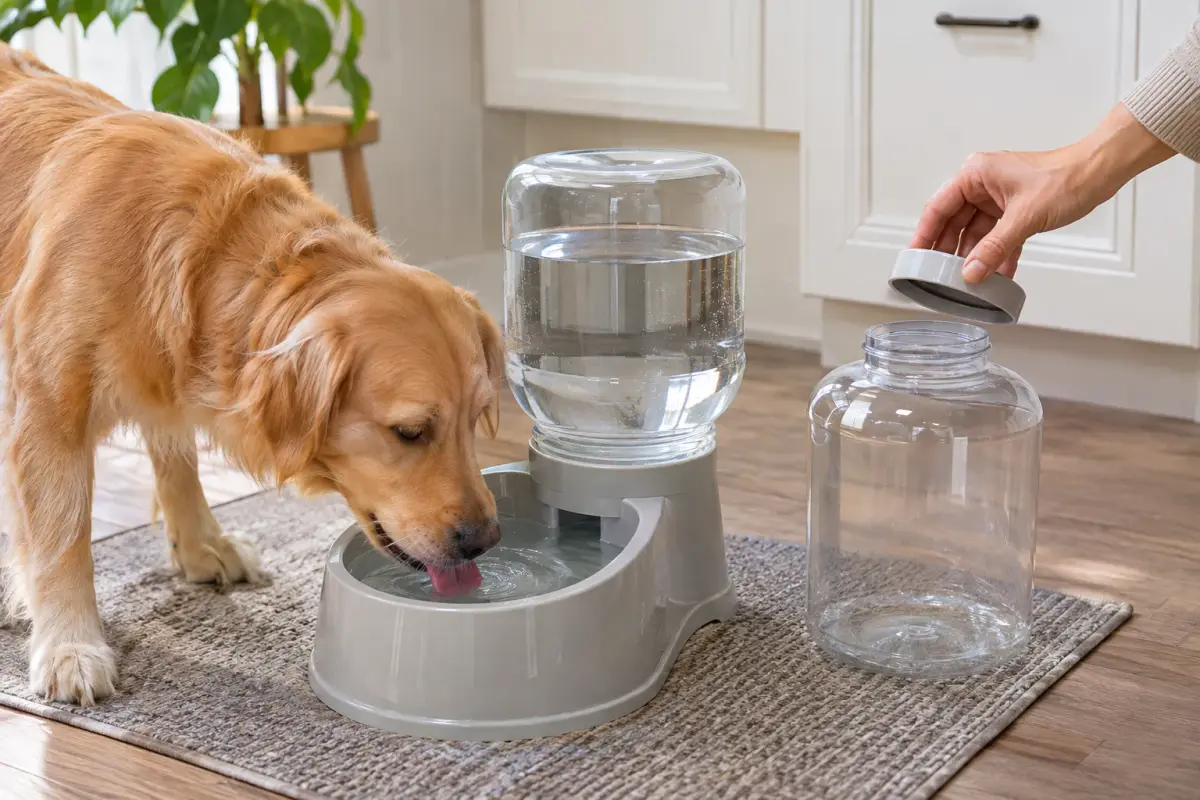
Gravity dispensers, such as the Automatic Gravity-Flow Pet Waterer, use an upturned bottle or tank that refills the bowl as the dog drinks. They are cheap, silent and need no power, but the water is still and needs changing often. Fountains pump and filter water, keeping it moving, which some dogs prefer; they need power and regular filter changes.
Faucet-fed and float-valve bowls connect to a hose or outdoor faucet and refill automatically, suiting yards, kennels and multi-dog homes. Heated bowls keep outdoor water from freezing in winter. Motion-activated and smart dispensers exist but add complexity.
Best type for each situation
For a small dog indoors, a small gravity pet water dispenser or fountain. For a large dog, a large-capacity gravity tank or a big fountain with a heavy base. For outdoors in summer, a faucet-fed bowl in shade; for winter, a heated bowl with a chew-protected cord.
For multi-dog homes, a faucet-fed bowl or several dispensers in different spots. For messy drinkers, a no-spill bowl or a mat underneath. For dogs left alone all day, two water sources in case one fails; an automatic drinking and feeding bowl can be one of them.
What to avoid
Avoid lightweight dispensers a big dog can tip, tanks that are hard to clean inside, and fountains with exposed cords near chewers. Avoid leaving still water in direct sun, where it warms and grows algae.
Avoid assuming a dispenser means you can stop checking. The AKC lists dehydration signs including lethargy, dry sticky gums, sunken eyes and thick saliva, and a dog that suddenly drinks much more or much less than usual should see a vet.
Cleaning and hygiene
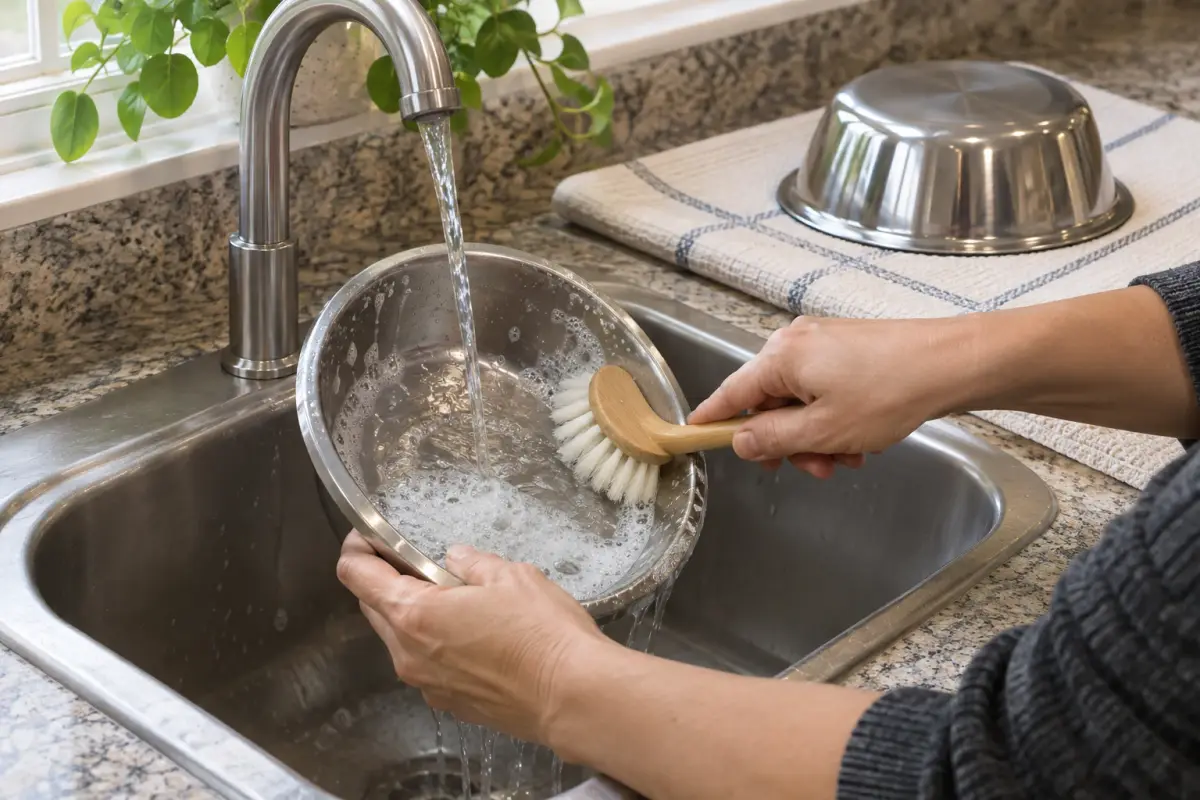
Wash the bowl daily and the reservoir at least weekly with hot soapy water, rinsing well, because a slimy film is bacteria. Replace fountain filters on schedule and clean the pump every few weeks.
Empty and refill rather than topping up old water. Wash your hands after cleaning bowls, as the CDC advises after handling pet food, bowls or supplies.
Check the dispenser's seals and valves at the same time, because a slow leak can soak a floor or quietly empty the reservoir while you are out.
Lifespan
Gravity dispensers last until the plastic cracks or clouds; replace them then. Fountain pumps typically need replacing every year or two depending on use and cleaning.
Inspect seals, valves and cords regularly, and keep a plain bowl as a backup. When a unit wears out, compare automatic dog water dispensers again.
If you travel or work long hours, set out a second plain bowl as well, so a stuck valve or tipped tank never leaves your dog without water for the day.
This page is general information, not veterinary advice, and it cannot replace an examination by the vet who knows your pet.
Water refill mechanisms
| Format | How water arrives | Exact-model checks |
|---|---|---|
| Gravity | A reservoir releases water into a basin | Reservoir cleaning and opening |
| Fountain | A pump circulates water through its listed path | Pump input,filter and cleaning access |
| Faucet or float valve | A water connection refills the bowl | Connection,pressure and installation instructions |
| Heated bowl | An electrical element adds heat to a bowl | US electrical details and placement instructions |
| Sensor or smart control | A control changes dispensing | Actual trigger,app and power source |
Common questions
How much water does my dog need a day?
The AKC's guideline is roughly one ounce per pound of body weight per day, more in heat or with exercise. Choose a dispenser that holds at least that amount.
Are gravity water dispensers good for dogs?
Yes, for many dogs. They are simple, quiet and need no power. Change the water and clean the bowl often, since still water collects debris and bacteria.
What is the best automatic water bowl for outdoors?
A faucet-fed or float-valve bowl in the shade for warm months, and a heated bowl with a protected cord in freezing weather. Use a heavy base so it cannot tip.
How often should I clean a dog water dispenser?
Wash the bowl daily and the reservoir at least weekly, and replace fountain filters on schedule. A slimy film inside means it is overdue. Clean more often in hot weather.
Sources we checked
This guide is general information, not veterinary advice. If your pet is unwell or injured, contact your veterinarian.


