






Breeds
Samoyed vs American Eskimo Dog
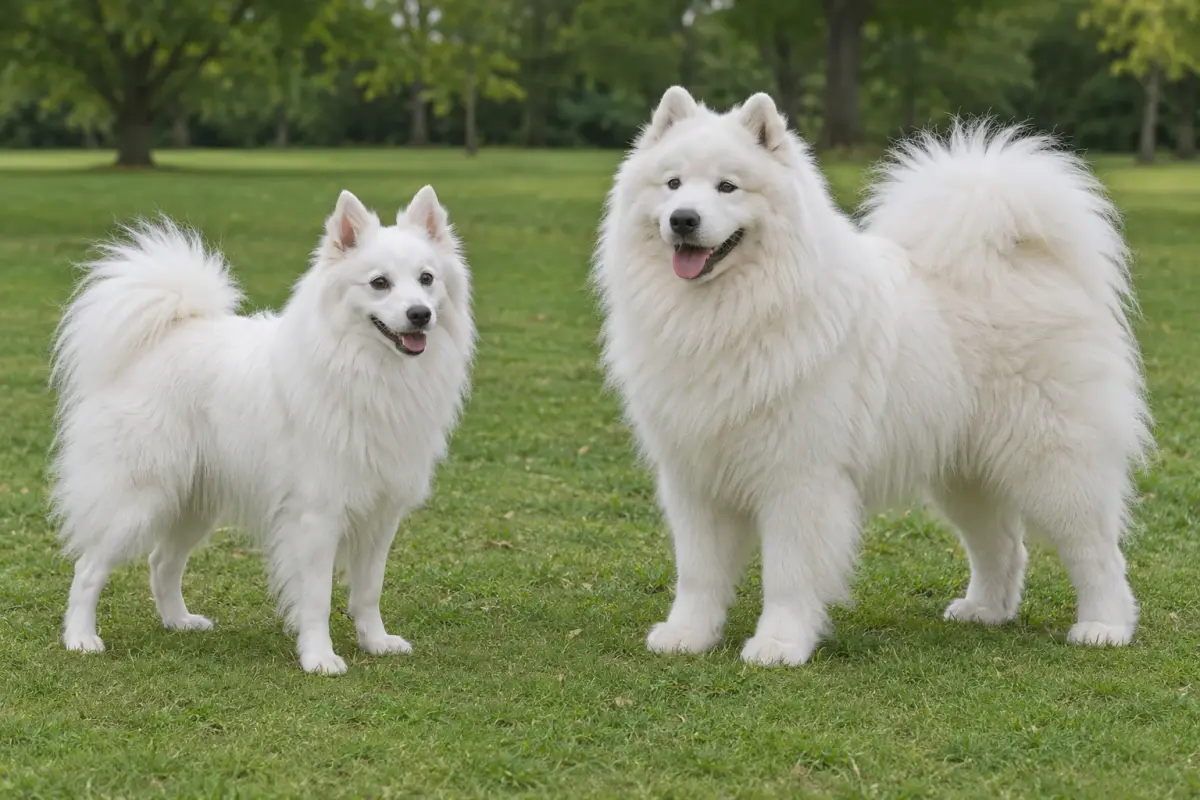
The Samoyed is generally the larger working dog, while the American Eskimo Dog offers smaller size varieties and a lively, alert personality. Both have substantial coats and need companionship, activity, and training. Their similar white appearance can hide important differences in size and social style, so compare the individual dog and your daily routine before choosing.
By Matt GarnettUpdated November 14, 20263 min read4 sources
The main differences in one place
AKC describes the American Eskimo Dog in toy, miniature, and standard sizes, spanning roughly 9–19 inches at the shoulder. Its Samoyed description gives about 19–23 inches. VCA lists a Samoyed weight guide of 35–65 pounds. Ask which Eskie variety you are considering before making a practical size comparison.
VCA’s lifespan guides are 12–16 years for the American Eskimo and 12–14 for the Samoyed. Both need coat maintenance and daily engagement. The Eskie may be more reserved with unfamiliar people, while the Samoyed is often socially outgoing. These are starting points for questions about an individual, not promises about its behavior.
Consider the dog behind the white coat
AKC calls the American Eskimo clever, alert, and friendly, while noting some reserve when making new friends. A prospective owner should ask how the actual dog responds to visitors and unfamiliar places. A smaller companion can still require thoughtful guidance and an owner who enjoys teaching.
AKC emphasizes the Samoyed’s strength and endurance, qualities that matter when you imagine sharing walks or handling an enthusiastic greeting. Meet an adult if you can. Consider your comfort with the dog’s movement, handling, and attention rather than deciding that a smiling expression establishes an easy household match.
Either white double coat needs regular brushing down to the skin, and a slicker brush is the usual tool for the job.
Decide how companionship fits your schedule
VCA describes the Samoyed as a social dog that thrives when included in family life. That calls for an honest look at your schedule. Who spends time with the dog, provides activity, and manages care when work or travel changes your usual routine?
For an Eskie, ask about comfort with strangers and other pets, as well as its familiar household. Neither breed should be selected solely on an assumption that it will entertain itself. Ask for a clear account of time alone, settling habits, and what the individual dog needs to feel comfortable in a new environment.
Expect training, activity, and regular grooming
VCA recommends reward-based training for Eskies and notes that games and tricks provide mental engagement. With either dog, choose activities you can maintain rather than an ambitious schedule that disappears after the first week. Ask what the dog enjoys and how it responds when learning something unfamiliar.
Their coats need regular attention; the Samoyed’s undercoat can require particularly frequent brushing during shedding. Ask for a grooming demonstration before committing. Think about whether the dog accepts brushing comfortably and where you will do routine care. Size, coat access, and handling tolerance can matter as much as how attractive the coat looks.
Match the individual to your home and care plans
An Eskie may appeal if you want a smaller, clever companion and can manage an alert personality. A Samoyed may appeal if you enjoy a larger, active dog and sustained social involvement. Neither choice removes the need for suitable training, supervision, and care.
Review available health records with your veterinarian and discuss appropriate activity for the individual dog’s age and condition. Ask about changes in comfort, skin, coat, movement, or behavior rather than attributing every difficulty to breed character. Long-term fit includes the care you can provide as the dog gets older.
This page is general information, not veterinary advice, and it cannot replace an examination by the vet who knows your pet.
Common questions
Is an American Eskimo Dog a small Samoyed?
No. They are separate breeds. American Eskimo Dogs have toy, miniature, and standard varieties, while Samoyeds are larger working dogs. Similar coat color does not make their histories or daily needs interchangeable.
Which breed needs more grooming?
Both require regular coat care. The Samoyed’s thick undercoat can need frequent brushing during shedding, but an Eskie also needs attention. Ask to see the individual dog’s grooming routine before deciding.
Can a smaller American Eskimo Dog skip outdoor activity?
Small size does not remove the need for engagement. VCA notes that even toy Eskies benefit from the mental stimulation of outdoor walks and sniffing, alongside play suited to the individual dog.
Sources we checked
This guide is general information, not veterinary advice. If your pet is unwell or injured, contact your veterinarian.