






Breeds
Japanese Akita vs American Akita
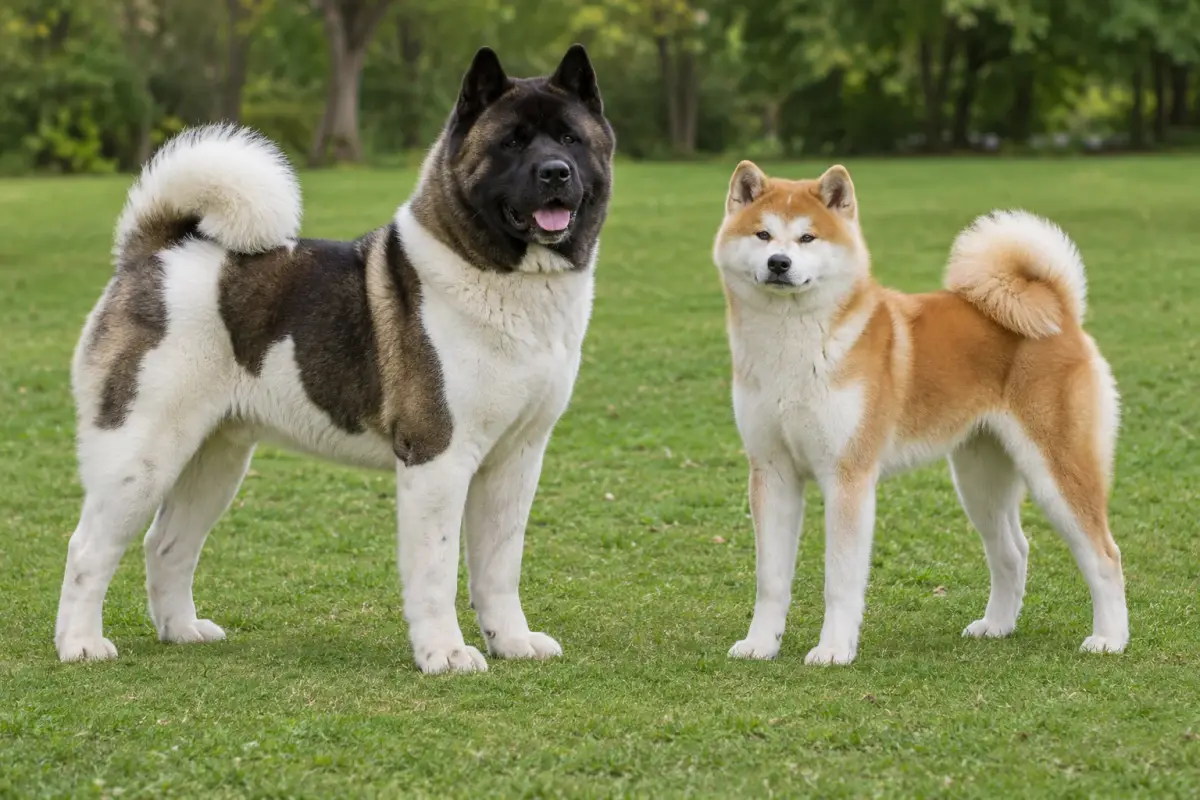
The American Akita generally has the heavier build, while the Japanese Akitainu has a smaller weight guide and a more restricted set of standard colors. Both are substantial, independent dogs that need thoughtful training and management around other animals. Check which breed a listing describes, then compare the individual’s behavior and care needs rather than treating the names as interchangeable.
By Matt GarnettUpdated November 14, 20263 min read4 sources
Compare the separate size and lifespan guides
For the Akita commonly called American Akita, AKC lists males at 100–130 pounds and females at 70–100. Its Japanese Akitainu guide lists males at 65–75 pounds and females at 55–65. These are broad breed guides; actual adults and individual handling needs still vary.
AKC lists a 10–14-year lifespan guide for Akitas and 10–12 for Japanese Akitainu. Those ranges cannot predict an individual outcome. Both need regular movement and mental engagement, coat care, and consistent teaching. When size affects your plans, meet adults and discuss practical care rather than deciding from a puppy photograph or a single measurement.
Understand coat differences without choosing by color alone
AKC describes the Akita’s thick double coat, while the Japanese Akitainu standard describes a layered coat with coarse guard hair. The Japanese standard specifies red, brindle, or white, whereas AKC’s Akita description includes a broader range of colors. Both require attention to coat maintenance.
AKC describes substantial seasonal undercoat shedding for both. Ask the caregiver or groomer to demonstrate care for the actual dog and explain the work during shedding periods. Consider whether the dog is comfortable with handling as well as whether you like the appearance. A preferred color does not establish an easier temperament, better health, or a suitable home match.
Both have thick double coats that shed heavily in season, when an undercoat rake or other deshedding tool saves a lot of vacuuming.
Consider other animals and visitors carefully
The Japanese Akitainu standard describes independence and possible intolerance of other dogs, particularly those of the same sex. AKC also flags dog-interaction concerns and independent thinking in the Akita. These are meaningful points to discuss before choosing either, especially in a household with existing animals.
Ask for specific observations about the individual rather than assuming one type is automatically friendlier. Describe your pets, visitors, and normal walking environment. Seek qualified advice about compatibility and management when needed. Do not arrange a risky introduction simply to test a general claim about the breed, and avoid expecting a confident appearance to tell you how a dog will respond.
Plan humane teaching and realistic daily engagement
AKC recommends positive methods and short, varied sessions for Japanese Akitainu, alongside daily mental engagement. Its Akita guidance emphasizes early, consistent teaching and socialization. Ask how the individual learns and what support you will need for ordinary routines, including walks, care, and visitors.
Make the plan concrete before deciding. Who will handle the dog, how will necessary care be practiced, and what help is available if behavior becomes difficult? VCA’s selection guidance emphasizes matching activity and training needs to available time and resources. Regular movement matters, but so does the ability to support safe, understandable daily routines in your actual home.
Choose by the individual and your long-term capacity
The American Akita may appeal if you prefer the heavier build and can manage its handling and care. The Japanese Akitainu may appeal if its size and coat characteristics fit your preferences. Neither is universally easier or an assured match for a family simply because it has a loyal reputation.
Review available medical and behavior records with the caregiver and your veterinarian. Clarify the exact breed, meet suitable adults, and discuss any uncertainty about other animals or handling. Choose the individual whose needs fit your practical support, household, and routine, with room to adjust care over time rather than relying on a winner in a comparison.
This page is general information, not veterinary advice, and it cannot replace an examination by the vet who knows your pet.
Common questions
Is Japanese Akitainu just another name for American Akita?
They have separate AKC guides and different standards. Clarify which dog a listing describes before applying size, coat, or care information, especially when a general Akita label is used.
Which is usually heavier?
AKC’s Akita weight guides are higher: 100–130 pounds for males and 70–100 for females, compared with Japanese Akitainu guides of 65–75 and 55–65 pounds. Individuals still vary.
Is either an automatic fit with another dog?
No. Both descriptions raise dog-interaction concerns. Ask about the individual’s history and your existing dog, and seek qualified guidance about compatibility and management before deciding on a new household member.
Sources we checked
This guide is general information, not veterinary advice. If your pet is unwell or injured, contact your veterinarian.