






Care & how-to
Why Do Dogs Pant? Normal Panting vs. a Warning Sign
Dogs pant mainly to cool down. They sweat only a little, through their paw pads, so they release heat by breathing quickly through an open mouth, letting moisture evaporate from the tongue and airways. Panting after exercise, play, excitement, or on a warm day is normal and should ease within about 30 minutes of rest. Panting at rest, in cool conditions, or with other signs is not.
By Matt GarnettUpdated November 14, 20263 min read3 sources
Normal reasons dogs pant
Exercise and heat are the big two. A dog who has been running, playing fetch, or out on a hot or humid day will pant hard, often with the tongue hanging out wide, and slow down gradually once in the shade with water. Excitement does it too: many dogs pant when visitors arrive, at the start of a walk, or during a game.
Flat-faced breeds such as Bulldogs, Pugs, French Bulldogs, and Boston Terriers pant more and cool themselves less efficiently, because their airways are narrow. Thick-coated breeds and overweight dogs also overheat faster. These dogs need extra care in warm weather and should never be pushed to exercise in the heat.
Panting from stress and fear
Dogs often pant when they are anxious, even when it is cool. Look for other signs of stress at the same time: yawning, lip licking, ears pulled back, a tucked tail, pacing, trembling, or hiding. Thunderstorms, fireworks, car rides, and vet visits are common triggers.
If stress panting is frequent, help your dog with a quiet retreat, gradual training to get used to the trigger, and advice from your vet or a qualified behavior professional. Your vet can also talk you through options for dogs whose fear is severe.
Medical reasons for heavy panting
Pain is a common hidden cause. Dogs with sore joints, an injured back, or belly pain often pant at rest, along with restlessness or reluctance to lie down. Fever, nausea, and some medicines, especially steroids, can increase panting as well.
Long-term conditions can also cause it. Cushing's disease, an overactive adrenal gland common in middle-aged and older dogs, often causes heavy panting, a pot belly, thinning hair, and more thirst. Heart disease, lung disease, anemia, and laryngeal paralysis, which gives a raspy sound in older large dogs, are other causes your vet will consider.
Heat stroke: when panting is an emergency
Dogs can overheat quickly in parked cars, on hot sidewalks, and during exercise on warm days. Warning signs include frantic panting that does not ease with rest, thick drool, bright red or dark gums, wobbliness, vomiting, diarrhea, and collapse. A body temperature of 104.5°F or higher is dangerous.
Move your dog to shade or air conditioning, wet them with cool, not ice-cold, water, put a fan on them, and drive to the nearest vet or emergency vet straight away. Even if your dog seems to recover, heat stroke can damage organs, so they still need to be checked.
When to call your vet
Call your vet if your dog pants heavily at rest or in cool conditions, if panting does not settle within about 30 minutes after exercise, or if it comes with restlessness, coughing, weakness, vomiting, or a change in thirst or appetite. Count your dog's breaths while they are asleep: a resting rate that stays above about 30 a minute is worth a call.
Go to an emergency vet now if your dog's gums or tongue look pale, blue, gray, or purple, if they are struggling to breathe, or if they collapse.
How to help a panting dog
Offer fresh water, move your dog into the shade or a cool room, and let them rest. Walk in the early morning and evening during hot weather, test the sidewalk with the back of your hand, and never leave a dog in a parked car, even with the windows cracked.
Keep your dog at a healthy weight, which makes a big difference to how well they cope with heat and exercise. If your dog pants with fear, give them a quiet den and stay calm with them, rather than forcing them to face the trigger.
This page is general information, not veterinary advice, and it cannot replace an examination by the vet who knows your pet.
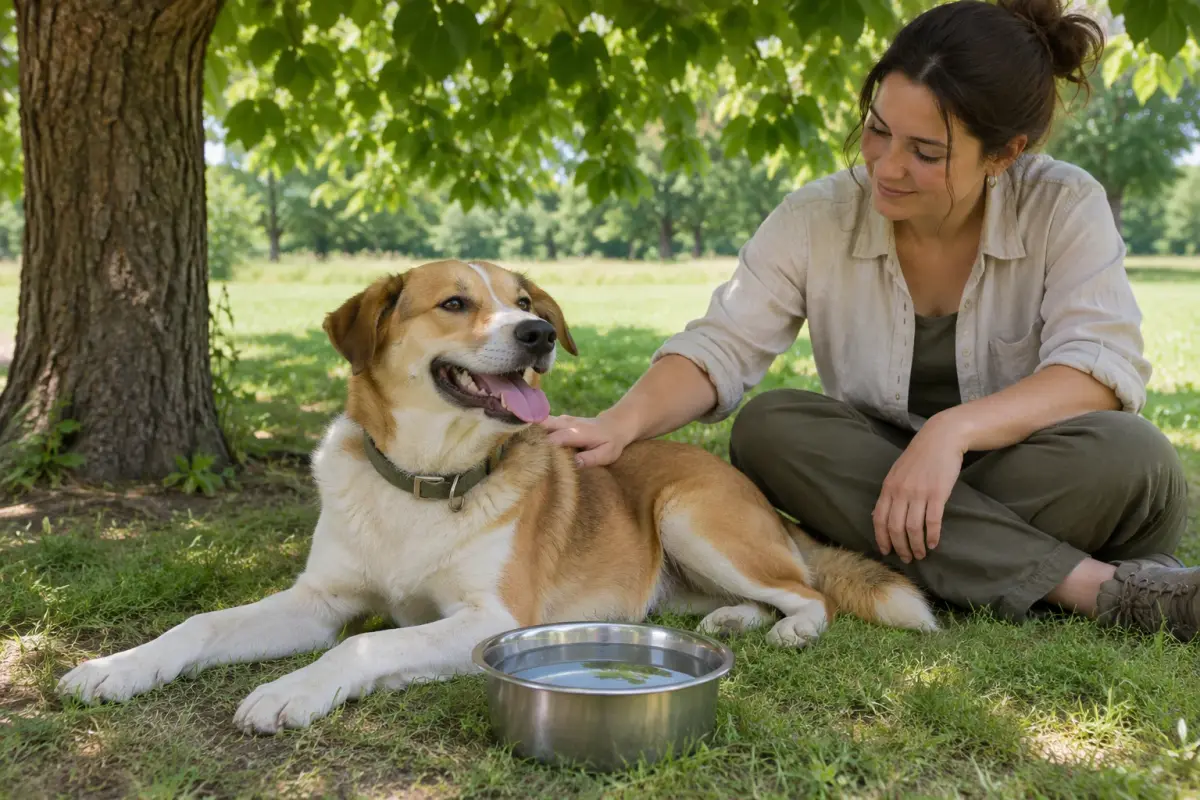
On hot days, give your dog shade, fresh water and a cool surface such as a cooling mat to lie on, and keep exercise for the cooler parts of the day.
Common questions
Why is my dog panting at night?
Nighttime panting can mean your dog is too warm, anxious, in pain, or unwell, and in older dogs it can be linked to Cushing's disease or heart problems. If it is new or regular, call your vet.
Why is my dog panting while resting?
Panting at rest in a cool room is not normal for most dogs and can point to pain, stress, fever, or an underlying condition. Count the resting breathing rate and call your vet if it stays high.
Do dogs pant when they are happy?
Yes. Many dogs pant with excitement, during play, or when greeting people, often with a relaxed, open mouth and soft eyes. This kind of panting settles quickly once the excitement passes.
Sources we checked
This guide is general information, not veterinary advice. If your pet is unwell or injured, contact your veterinarian.