






Care & how-to
Why Do Dogs Have Whiskers?
Dogs have whiskers because they work as touch sensors. Whiskers, properly called vibrissae, are thick, stiff hairs set deep in the skin with many nerve endings at the base. They pick up tiny changes in air currents and contact with nearby objects, helping dogs sense what is around their face, especially in dim light, and triggering a protective blink when something comes close to the eyes.
By Matt GarnettUpdated November 14, 20263 min read2 sources
Where dogs have whiskers
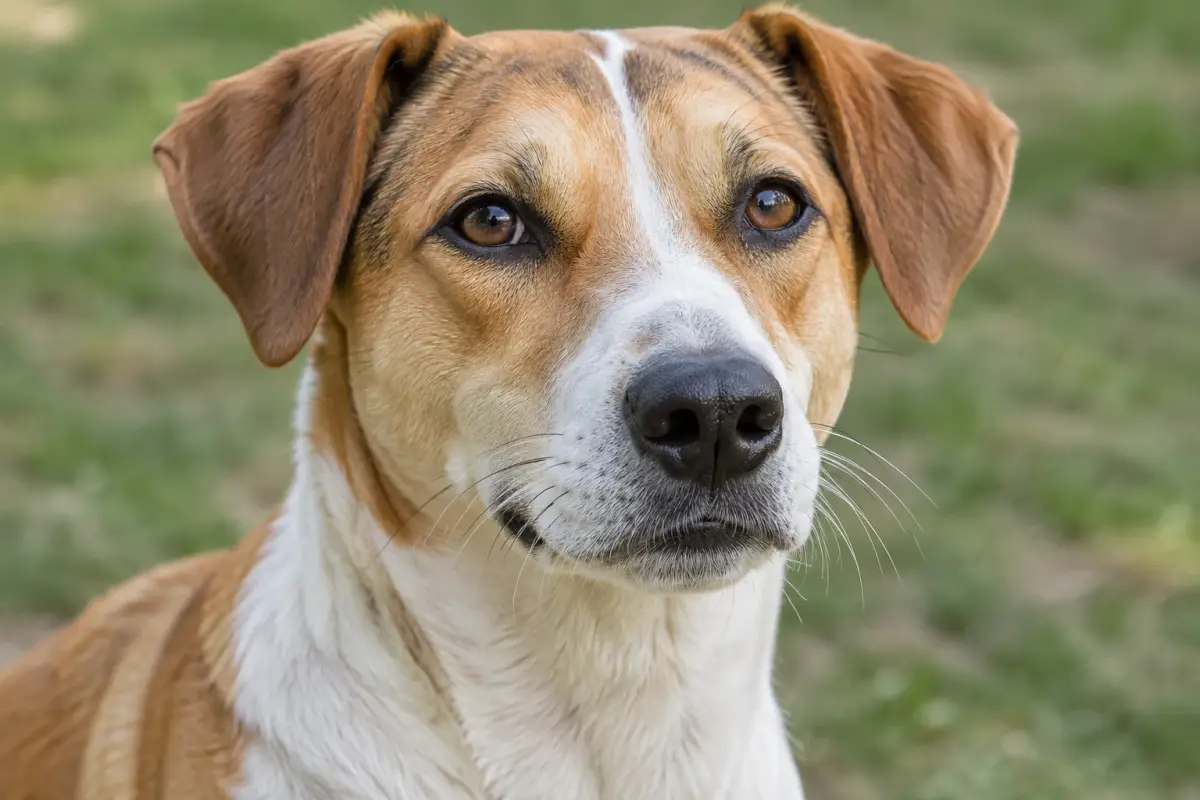
Most people notice the whiskers on the muzzle, on either side of the nose and upper lip. Dogs also have them above the eyes, on the cheeks, and under the chin, where a small tuft sits on a little bump. Each group helps sense a different area around the head.
Whiskers are thicker, stiffer, and rooted more deeply than ordinary coat hair, and each follicle is surrounded by blood vessels and nerves. That is why touching or pulling a whisker can feel uncomfortable to a dog, and why many dogs pull their head back when their whiskers are brushed.
What whiskers do
When a whisker bends, the nerves at its base send a signal to the brain. This lets a dog sense objects close to the face before touching them, judge narrow gaps, and notice movement in the air around them. Dogs see quite poorly up close, so this close-range sense is useful when sniffing, eating, or exploring in the dark.
The whiskers above the eyes and on the cheeks act like an early warning system: a touch triggers a blink that helps protect the eyes from twigs, grass, and dust. Chin whiskers help a dog sense what is directly below the mouth, such as food in a bowl or something on the ground.
Do whiskers help with emotion and communication?
Whisker position can change slightly with a dog's mood as the facial muscles move, much like the ears and lips. A relaxed dog's whiskers sit naturally, while a tense or alert dog may push them forward. These changes are subtle and best read alongside the rest of the body.
Look at the whole dog when reading body language: ears, eyes, mouth, tail, and posture. Lip licking, yawning, and showing the whites of the eyes are clearer stress signals than whiskers alone.
Should you trim a dog's whiskers?
It is best not to. Trimming does not hurt, because the hair itself has no nerves, but it takes away a useful sense, and some dogs seem less confident moving in dim light or tight spaces without them. Some show grooming styles trim them, but there is no health reason to do so.
If you take your dog to a groomer, ask them to leave the whiskers alone. Whiskers that are trimmed grow back over time, but never pull them out, which is painful and can damage the follicle.
Whisker loss and when to see a vet
Dogs shed whiskers now and then, just as they shed other hair, and a new one grows in its place. That is normal. Patchy loss of whiskers with hair loss on the face, redness, crusts, or itching is different, and can be caused by mites, skin infection, allergies, or other skin conditions.
Book a vet visit if your dog is losing hair around the muzzle or eyes, rubbing the face, or has bumps or sores where the whiskers grow. Your vet can take simple skin samples to find the cause and treat it.
Caring for your dog's face
Choose a wide or shallow food and water bowl for dogs who seem bothered by their whiskers touching the sides, and keep bowls clean, as food buildup can irritate the chin. Wipe the muzzle gently after messy meals, especially in breeds with long facial hair.
Handle the face gently during grooming and teeth brushing, and reward your dog for letting you touch around the muzzle. A dog who is comfortable having their face handled is much easier to care for at the vet and the groomer.
This page is general information, not veterinary advice, and it cannot replace an examination by the vet who knows your pet.
Common questions
Do dog whiskers grow back if cut?
Yes. Whiskers grow back after being trimmed, though it can take a few weeks to months. Avoid trimming them in the first place, because they help your dog sense their surroundings.
Does it hurt a dog to touch their whiskers?
Gentle touching does not hurt, but whiskers are very sensitive, so many dogs dislike having them stroked or pulled. Pulling a whisker out is painful and should be avoided.
Why does my dog have whiskers above the eyes?
The whiskers above the eyes help protect them. When something touches those whiskers, your dog blinks reflexively, which helps keep debris and branches away from the eyes.
Sources we checked
This guide is general information, not veterinary advice. If your pet is unwell or injured, contact your veterinarian.