






Care & how-to
Why Do Dogs Bury Things? Bones, Toys and Treats
Dogs hide bones, treats, and toys in the ground because of an instinct inherited from wild ancestors, who cached spare food underground to keep it safe from scavengers and come back to it later. In pet dogs, burying often happens when they have more than they want right now, when they want to protect something they value, or when they are bored. It is normal and usually harmless.
By Matt GarnettUpdated November 14, 20263 min read2 sources
Caching: an ancient instinct
Wild canines did not know when their next meal would come, so when food was plentiful they buried the extras. Cool soil kept it fresher and hid it from other animals. Many pet dogs still feel that pull, especially with high-value items like chews and bones.
You may see your dog nudge a treat into the sofa cushions, push blankets over it with their nose, or carry it to a corner of the yard and dig. Some dogs dig it back up hours or days later, while others forget all about it.
Why some dogs dig and hide more than others
Breeds developed for hunting and digging, such as terriers, Dachshunds, and some hounds, often dig and hide more, while others rarely do it at all. A dog who has more toys or treats than they can use at once may hide the extras, which is why burying often increases after a holiday or birthday.
Living with other pets can also play a part. A dog may hide a prized chew to keep it away from a housemate, which is a mild form of protecting resources. Boredom matters too: burying and digging can simply be something interesting to do.
Burying and resource guarding
Hiding a valued item is not a problem in itself. It becomes a concern if your dog stiffens, stares, growls, or snaps when people or other pets go near their stash or try to take an item. That is resource guarding, and it can lead to bites.
Do not punish guarding or take items away by force, which teaches the dog that people really are a threat to their things. Instead, trade for something even better, and get help early from a qualified trainer or veterinary behaviorist, especially if there are children in the home.
Managing burying at home
Give one chew or toy at a time, in an amount your dog can finish, and pick up extras. If your dog likes to dig and hide things outdoors, a sandbox or a designated digging spot where you hide toys for them to dig up can save the flower beds.
Check couch cushions, beds, and laundry piles now and then, because hidden food can go moldy, and moldy food can make dogs sick. Plenty of exercise and puzzle feeders can reduce burying that is driven by boredom.
Safety and when to call your vet
Buried items can become a hazard. Old bones, spoiled food, and garden soil can carry bacteria and mold, and dogs who dig up and eat old caches can get stomach upsets. Moldy food can contain toxins that cause tremors, so call your vet or ASPCA Animal Poison Control at (888) 426-4435 if your dog eats moldy food and seems unwell; a fee may apply.
Book a vet visit if burying and digging suddenly increase, especially with restlessness or nesting behavior in an unspayed female dog, which can come with a false pregnancy. Also call if your dog vomits or has diarrhea after eating something they dug up.
Making it a game
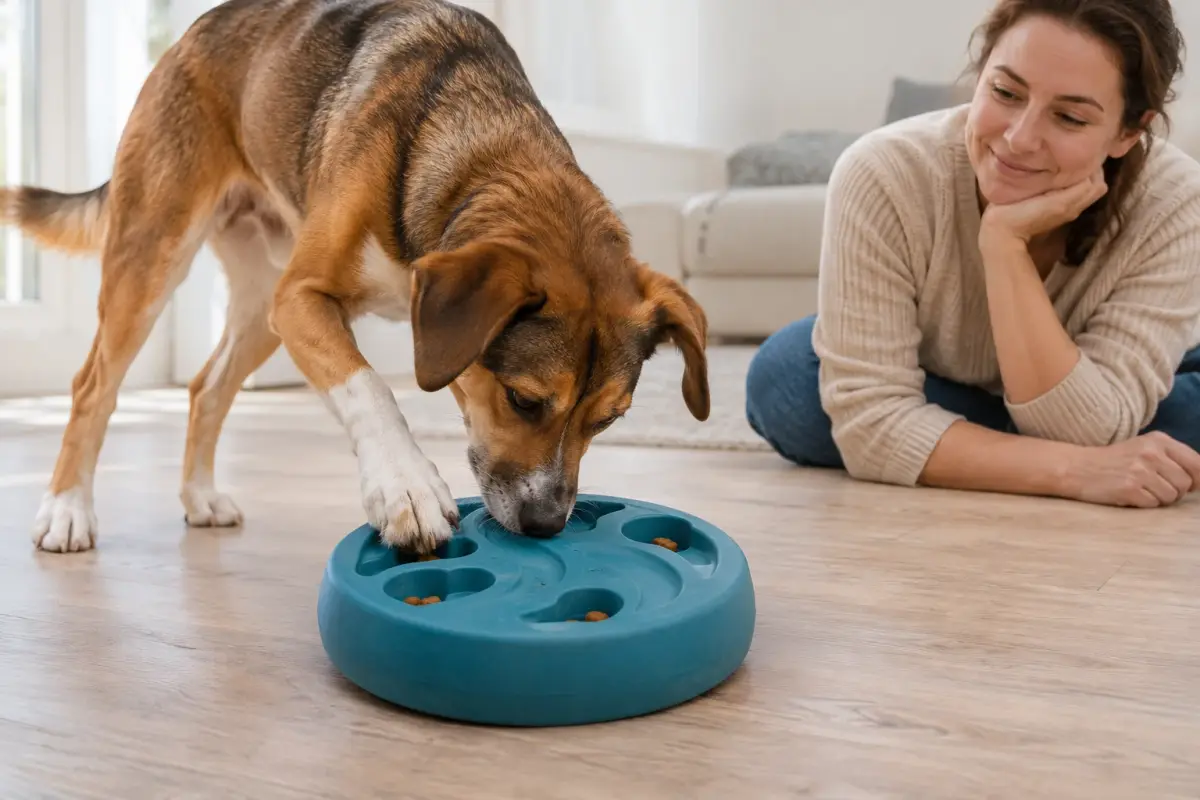
Burying instincts can be channeled into fun. Hide a few treats under a blanket or in a snuffle mat and let your dog sniff them out, or hide a favorite toy in a sandbox for them to find. These games use your dog's nose and natural behaviors, and they tire dogs out mentally.
Keep the rules simple and consistent: burying is fine in the sandbox or play area, and you reward your dog for using it. Most dogs adapt quickly when they have a better place to do what comes naturally.
This page is general information, not veterinary advice, and it cannot replace an examination by the vet who knows your pet.
Common questions
Why does my dog keep burying his food?
Burying food usually means your dog has more than they want right now and is saving it for later, an inherited caching instinct. Try smaller meals, and pick up food your dog does not finish.
Why does my dog hide toys in the couch?
Pushing toys into cushions or blankets is an indoor version of burying. It is normal and often shows the toy is valued. Rotating toys and giving fewer at once can reduce it.
Do dogs remember where they buried things?
Dogs often find buried items again by smell, sometimes days later, but they may forget others entirely. Check hiding spots regularly so old food does not go moldy.
Sources we checked
This guide is general information, not veterinary advice. If your pet is unwell or injured, contact your veterinarian.