






Care & how-to
Why Do Cats Wag Their Tails?
When a cat wags, swishes, thumps or lashes its tail, it is usually feeling irritated, overstimulated or agitated, the opposite of a dog's happy wag. VCA says a wagging, swishing or thrashing tail usually means a cat is annoyed or angry, perhaps done with being petted or played with. Other tail movements, such as a quiver or a twitching tip, mean excitement or focus.
By Matt GarnettUpdated November 14, 20264 min read3 sources
Swishing, thumping and lashing
A tail that swings side to side, thumps against the floor or lashes back and forth is a sign of rising tension. VCA describes wagging, swishing, thumping or thrashing as usually meaning irritation or anger: your cat may not like how it is being petted, or may have had enough of a game. The faster and bigger the movement, the stronger the feeling.
This is one of the most useful signals to learn, because it often comes before a swat or bite. The ASPCA lists tail twitching or flipping as an early warning sign of petting-induced aggression. If your cat's tail starts moving while you stroke them, stop, take your hand away and let them choose whether to stay.
The twitching tip and hunting focus
A small, rapid twitch at just the tip of the tail usually means a cat is focused. VCA links it to hunting instinct and play: you will often see it when a cat is watching a bird through the window, stalking a toy or crouching to pounce. A slow, gentle sway of the whole tail during play can mean the same.
A twitching tip can also mean mild irritation, for example when a sleeping cat is disturbed. Read it with the rest of the body. Wide eyes and a low crouch with the back end wiggling mean play is about to happen; flattened ears and a tense body mean annoyance.
You can watch that focused tail twitch during play with a wand toy, which lets your cat stalk and pounce without targeting your hands.
Other tail positions
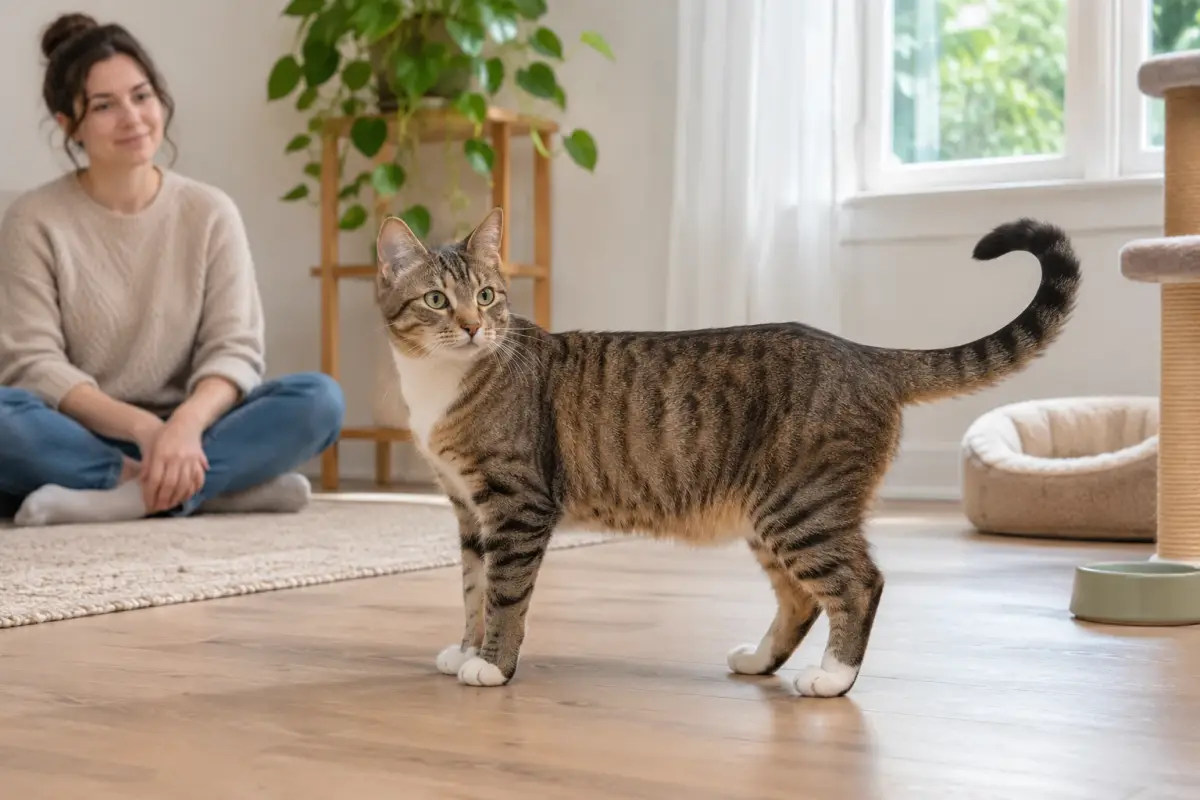
A tail held straight up, often with a slight curve or hook at the tip, is a friendly greeting. VCA describes it as a sign of a confident, relaxed cat happy to see you. A tail that wraps around your leg or arm as your cat greets you is a sign of affection, and a gentle quiver of an upright tail often means excitement at seeing you.
A puffed-up, bottle-brush tail means a cat feels threatened and is trying to look bigger; give it space. A tail held low or tucked between the legs can mean fear, anxiety or pain. VCA notes that a cat often wrapping its tail tightly around its body may be defensive or unwell, and suggests contacting your vet if you cannot find a reason.
Quivering against a wall
A cat backing up to a vertical surface, such as a wall, curtain or furniture leg, with the tail upright and quivering, is likely spraying urine to mark territory, as VCA and the ASPCA both describe. It is different from the happy quiver of greeting, because the cat's back end is aimed at an object.
Marking is most common in unneutered males, but neutered cats can mark when stressed or when they see other cats outside. If this is new, contact your vet to rule out a urinary problem first, then look at stress, litter boxes and outdoor cat sightings. Clean marked spots with an enzymatic cleaner.
When the tail points to a health problem
Biting or chewing at the tail, or the base of the tail, often means itching or pain. VCA lists fleas, allergies and wounds as common causes. Cats are often bitten by fleas around the tail head, so check there first. A cat that suddenly chases or attacks its own tail repeatedly may be anxious or under-stimulated.
A limp tail that hangs down, a tail your cat will not move, or pain when the tail is touched can follow an injury, such as a tail caught in a door, and may involve nerve damage affecting bladder and bowel control. Have your cat seen promptly if the tail is limp, swollen or painful, or if your cat has trouble using the litter box.
This page is general information, not veterinary advice, and it cannot replace an examination by the vet who knows your pet.
Common questions
Is a cat wagging its tail happy?
Usually not. Unlike dogs, a cat swishing or thumping its tail is usually irritated or overstimulated. A happy, friendly cat more often holds the tail straight up with a slight curve at the tip, sometimes with a gentle quiver.
Why does my cat wag its tail while lying down?
A relaxed cat lying down may flick the tail slightly while dozing or when it hears you. A stronger swish or thump while you pet it means it is getting annoyed. Watch the ears and body for more clues.
Why does my cat wag its tail when I pet it?
It often means your cat is becoming overstimulated or would like you to stop. The ASPCA lists tail twitching during petting as an early warning before a bite. Pause and let your cat decide whether to stay.
What does a puffed-up cat tail mean?
A bottle-brush tail means your cat is frightened or feels threatened and is trying to look bigger. Give it space, keep calm, and do not try to pick it up until it has settled.
Sources we checked
This guide is general information, not veterinary advice. If your pet is unwell or injured, contact your veterinarian.