






Care & how-to
Why Do Cats Knead? What Making Biscuits Means
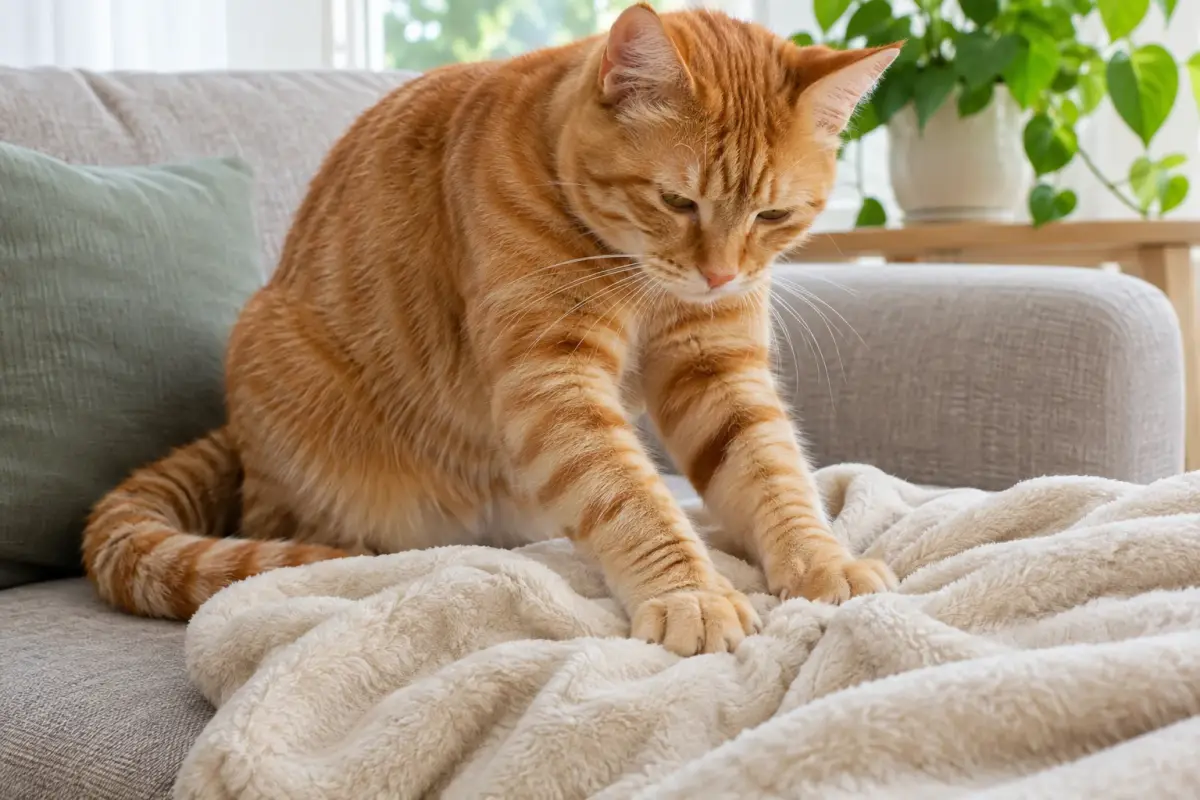
Cats knead, pushing their front paws in and out against a soft surface, because it is a comforting habit left over from nursing. Kittens knead their mother to help the milk flow, and many adults keep doing it when they feel relaxed and safe. VCA lists comfort, affection, scent marking and preparing a bed among the reasons. It is normal and usually a compliment.
By Matt GarnettUpdated November 14, 20263 min read3 sources
It starts at the milk bar
Newborn kittens knead their mother's belly while nursing, which stimulates milk flow. The action becomes linked with warmth, food and safety, and VCA says many cats seem to carry the behavior into adulthood to recreate those comforting feelings. That is why adult kneading so often comes with purring, half-closed eyes and sometimes drooling.
Cats that were weaned early are sometimes said to knead more, and some adults also suckle on blankets or clothing while they knead. Gentle suckling is usually harmless, but if your cat chews and swallows fabric, talk to your vet, because eaten cloth can cause a dangerous blockage.
Other reasons cats knead
Kneading may also be an inherited bed-making habit. VCA suggests wild ancestors patted down grass and leaves to make a soft, safe place to rest, and many cats knead a blanket or cushion for a minute before curling up on it.
Cats also have scent glands in the pads of their paws, so kneading leaves their scent behind, gently marking a favorite bed, blanket or person as part of their territory. VCA notes that cats usually knead only people and animals they like and feel relaxed around, so being kneaded is a sign of trust, even when it is a little prickly.
When the claws come out
Many cats extend their claws as they knead, which can hurt on bare skin and snag clothes and furniture. Never punish a cat for kneading; it is a contented behavior, and scolding can make your cat wary of you. Instead, keep a thick folded blanket or towel on your lap and let your cat knead that.
VCA recommends keeping your cat's claws trimmed short to prevent injury and damage. You can also gently redirect kneading to a designated soft spot by rewarding your cat with treats or attention when they use it. If nail trimming is difficult, ask your vet team to show you how or to do it for you.
Regular trims with cat nail clippers and a thick blanket or soft cat bed to knead on make the habit much more comfortable for you.
Do all cats knead?
No. Some cats knead every day, some only occasionally, and some never do it at all. A cat that does not knead is not unhappy or less attached; it is simply individual preference, the same way some cats are lap cats and others prefer to sit nearby.
Some cats knead with only their front paws, others with all four, and a few knead the air while lying on their back. Some cats only knead one person in the household. All of these are normal variations and nothing to worry about in a healthy cat.
When kneading might be a concern
Kneading itself is not a sign of illness. However, VCA notes that cats who feel unwell may purr and knead to soothe themselves. Kneading in unusual places, such as hidden under a bed, or much more often than normal, may be worth noticing.
If changes in kneading come with hiding, a change in appetite, weight loss, lethargy or reluctance to jump, contact your vet to rule out pain or illness. Female cats in heat may also knead and roll more, along with yowling and restlessness, which is one more reason to discuss spaying with your vet.
This page is general information, not veterinary advice, and it cannot replace an examination by the vet who knows your pet.
Common questions
Why does my cat knead me?
Kneading you is usually a sign of comfort and trust. It may recreate the feeling of nursing, and the scent glands in your cat's paws leave a mark that says you belong to them. A blanket on your lap protects your skin from claws.
Why does my cat knead and bite the blanket?
Many cats knead and suckle or mouth a blanket at the same time, a leftover from nursing. Gentle suckling is usually harmless. If your cat chews holes or swallows fabric, talk to your vet, as eaten cloth can block the intestines.
Should I stop my cat from kneading?
There is no need to stop a natural, contented behavior. If it hurts, trim the claws, use a thick blanket, or gently redirect your cat to a favorite cushion with a treat. Never punish kneading.
Why do cats knead before lying down?
Kneading may be an inherited habit of flattening and softening a resting spot, as wild ancestors did with grass and leaves. It also leaves scent from the paw pads, marking the bed as a safe, familiar place.
Sources we checked
This guide is general information, not veterinary advice. If your pet is unwell or injured, contact your veterinarian.