






Care & how-to
Why Do Cats Get the Zoomies?
Cats get the zoomies to burn off pent-up energy. A sudden sprint around the house, often at dusk, at night or after using the litter box, is normal, especially in young indoor cats that sleep most of the day. Zoomies are rarely a problem. If they keep you awake, schedule an energetic play session and a meal just before bedtime.
By Matt GarnettUpdated November 14, 20263 min read3 sources
What the zoomies are
The zoomies are short bursts of frantic activity: racing from room to room, bouncing off furniture, leaping at nothing, skidding around corners, often with a puffed tail and wide eyes. They usually last a few minutes and end as suddenly as they start, sometimes with a casual bath as if nothing happened.
VCA describes overexuberant play in which cats tear around the household, and notes that cats naturally play in short, intense bursts followed by rest. Zoomies are an extreme version of that pattern.
Why cats get them
The main reason is stored energy. Cats are built for short, explosive hunts, and an indoor cat may spend much of the day asleep with nothing to chase. VCA links under-stimulation and excess unused energy to wild play, especially in young cats with no feline companion.
Zoomies are most common in kittens and young adults and tend to fade with age. They can also follow a stressful moment, a bath or a vet visit, as a way of releasing tension, and some cats seem to zoom simply because it is fun.
Why cat zoomies happen at night
Cats are crepuscular, most active at dawn and dusk. VCA notes that predatory activity peaks at those times, which is why many cats burst into life just as you settle on the sofa in the evening or again around 4 or 5 a.m.
If your cat sleeps all day while you are at work, it has a full tank by evening. VCA also describes cats that swat and pounce on owners through the night, a sign that the cat needs more play earlier.
Zoomies after the litter box
Many owners notice their cat sprinting away from the litter box. Common explanations include relief after passing stool, a burst of energy from the body's nerve response to it, or an instinct to move away from scent that might attract predators.
Occasional post-toilet zoomies are normal. If they come with straining, crying, blood, diarrhea or frequent small trips to the box, your cat may be uncomfortable, and that needs a vet visit.
How to calm night-time zoomies
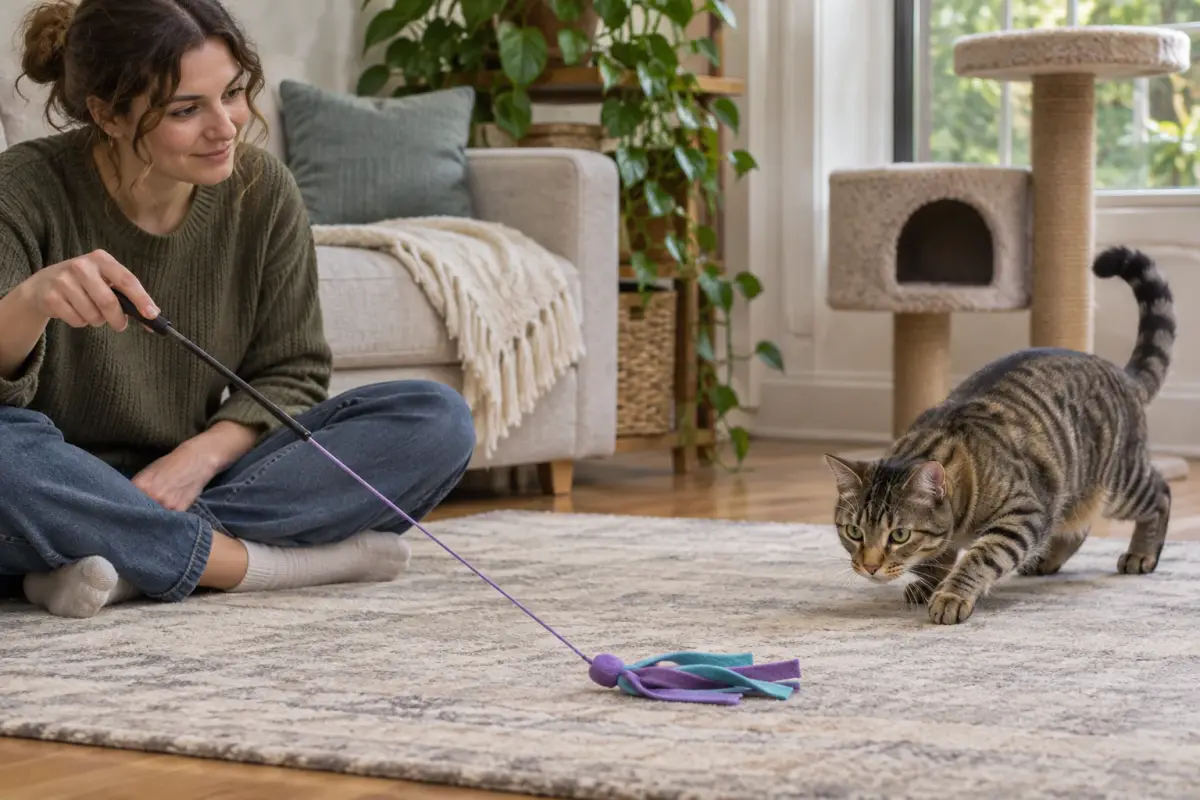
Step 1: Keep a short diary of when your cat is most wild. Step 2: Schedule an energetic play session with a wand toy just before that time. VCA calls this beating the cat to the punch. Step 3: Let your cat catch the toy, then feed a meal straight after, since the hunt, eat, groom and sleep sequence settles most cats.
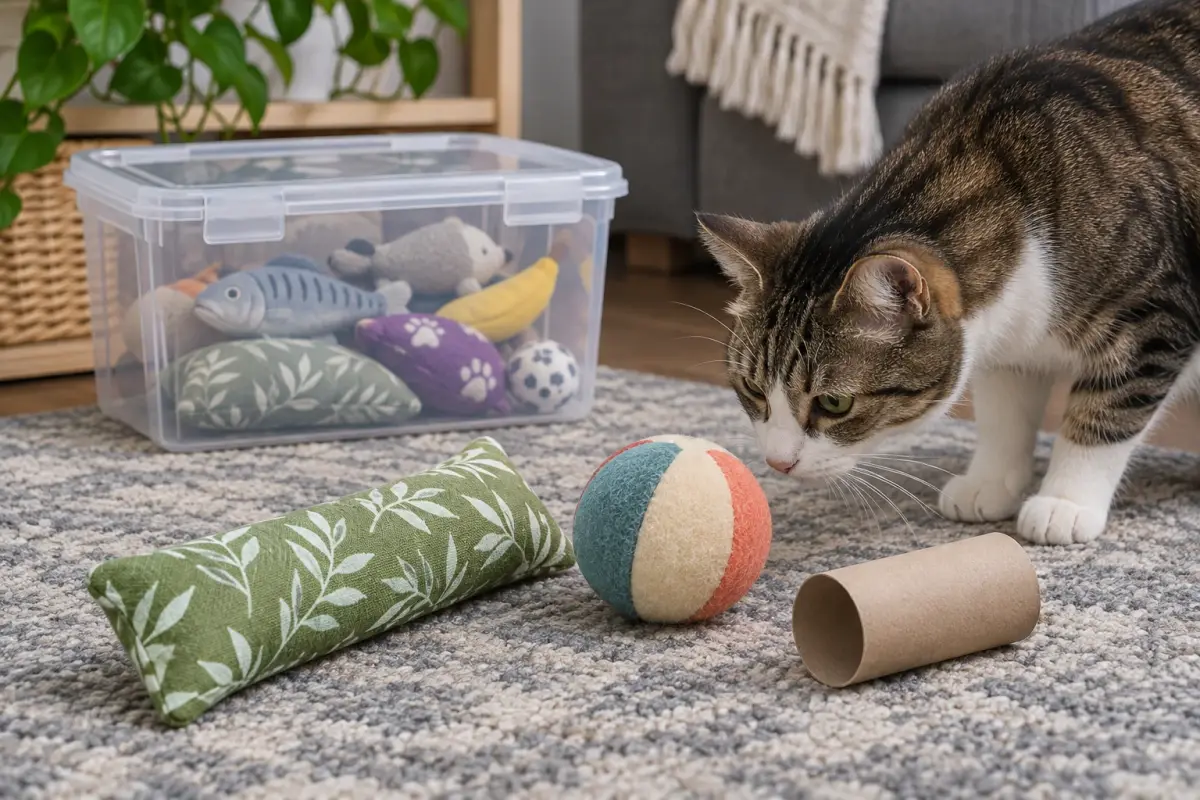
Step 4: Add daytime enrichment, such as food puzzles, window perches and rotated toys, so your cat is not saving all its energy for evening. Step 5: Do not reward 3 a.m. antics with food or attention; VCA suggests ignoring or calmly interrupting cat-initiated sessions.
When zoomies are a concern
Watch for zoomies that seem frantic rather than playful, come with skin rippling along the back, tail chasing, biting at the flanks or tail, yowling or apparent pain, or start suddenly in an older cat. In older cats, new restlessness, night crying and increased appetite can go with an overactive thyroid.
Call your vet if you see any of these, if your cat hurts itself, or if racing is paired with changes in eating, drinking or litter habits.
This page is general information, not veterinary advice, and it cannot replace an examination by the vet who knows your pet.
Common questions
Are zoomies normal for cats?
Yes. Short bursts of racing around are normal, especially in kittens and young indoor cats. They are a healthy way to use up energy and usually last only a few minutes.
Should I stop my cat from getting the zoomies?
There is no need to stop them, but make sure the area is safe, with nothing breakable on shelves. If they disturb your sleep, add play and a meal before bedtime.
Do cats grow out of the zoomies?
Most cats zoom less as they mature past a few years old, though many keep the habit at a lower level. A sudden increase in an older cat is worth mentioning to your vet.
Sources we checked
This guide is general information, not veterinary advice. If your pet is unwell or injured, contact your veterinarian.