






Care & how-to
Why Do Cats Eat Grass? Is It Safe for Your Cat?
Eating grass is very common in cats, and in most cats it is normal behavior rather than a sign of illness. A 2021 study in the journal Animals found about two-thirds of cats ate plants weekly, and few seemed unwell beforehand. Nobody knows exactly why they do it. Plain grass is generally harmless, but many houseplants are not, and true lilies can be deadly to cats.
By Matt GarnettUpdated November 14, 20264 min read4 sources
What the research says
In owner surveys published in Animals in 2021, plant eating was common: around 65 percent of cats in one group and 71 percent in another were seen eating plants regularly. Only a small minority, under 10 percent, appeared ill beforehand, which argues against the idea that cats eat grass mainly because they feel sick. Younger cats ate plants more often than older ones.
About a quarter to a third of cats in those surveys vomited fairly often after eating plants, and vomiting became more common with age. The researchers also found short-haired cats ate plants as often as long-haired cats, which does not support the popular idea that grass eating is mainly about bringing up hairballs.
Leading theories
One idea is that it is an inherited behavior. The same researchers suggested wild cats may eat plant material to help clear intestinal parasites, and that domestic cats keep the instinct even when they have no worms. VCA lists other possibilities: cats may like the texture, may be seeking something missing from the diet, or may chew plants out of stress or boredom.
Cornell notes that mostly indoor cats with little access to greenery are the ones most likely to chew houseplants, often out of curiosity and play. Whatever the reason, a healthy cat nibbling a little grass and carrying on normally is not a cause for concern.
Dangerous plants to keep away
The biggest risk is not grass but toxic plants. The ASPCA says all parts of true lilies (Lilium species, including Easter, tiger, Asiatic, Stargazer and Oriental lilies) and daylilies (Hemerocallis) are toxic to cats, and even pollen groomed off the fur or water from the vase can cause kidney injury. It warns this is often fatal if treatment is delayed longer than 18 hours.
Cornell's list of other toxic plants includes dumb cane, English ivy, mistletoe, oleander, philodendron and caladium, and VCA adds foxglove, lily of the valley, kalanchoe and Japanese yew. If your cat has chewed a lily or any plant you are unsure about, call your vet now, or ASPCA Animal Poison Control at (888) 426-4435 or the Pet Poison Helpline at (855) 764-7661 (a fee may apply).
Safer ways to let your cat graze
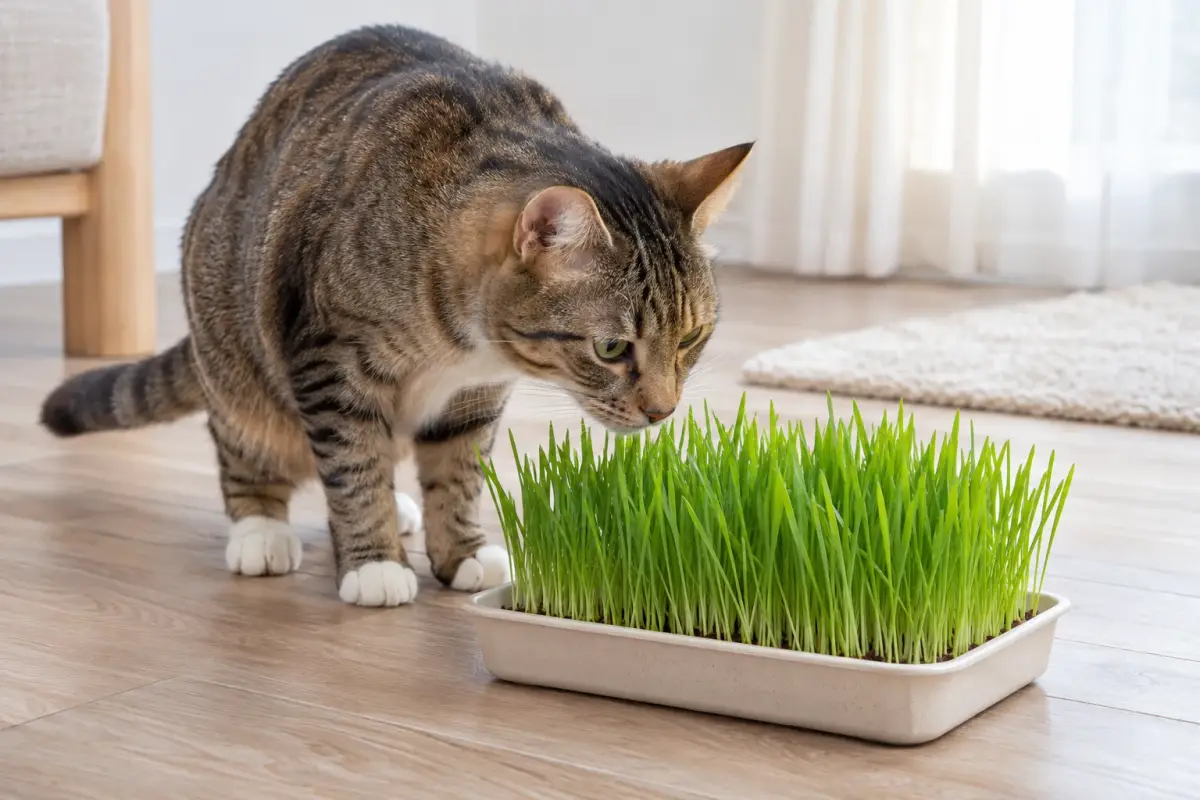
If your cat enjoys greens, grow a pot of cat grass, usually oat, wheat or barley grass, from seed indoors. Cornell suggests oat grass, catnip and catmint as safe alternatives to tempt cats away from houseplants. Place it where your cat already likes to chew, and replace it when it gets tired.
Avoid outdoor grass and garden plants treated with fertilizer, weed killer or insecticide, and keep cats off lawns soon after treatment. Remove or rehome toxic houseplants rather than relying on deterrents, and check the ASPCA's plant list before bringing new plants or bouquets home. Ornamental grasses with sharp seed heads can also lodge in the throat or nose.
For an indoor cat that wants outdoor time, a catio or a window perch offers fresh air and things to watch without access to treated lawns or toxic garden plants.
When grass eating is a concern
Talk to your vet if your cat seems fixated on eating plants, eats a large amount at once, or has started eating grass much more than usual. VCA advises a checkup for cats that are obsessed with plants to rule out an underlying problem. Eating non-food items such as fabric, plastic or litter is different again and needs a vet visit.
Call your vet promptly if your cat vomits repeatedly, retches with nothing coming up, stops eating, has diarrhea, or seems lethargic after eating plants. A long blade of grass can occasionally get stuck at the back of the throat or in the nose, causing gagging or sudden sneezing that does not settle.
This page is general information, not veterinary advice, and it cannot replace an examination by the vet who knows your pet.
Common questions
Is it okay for cats to eat grass?
Small amounts of untreated grass are generally harmless for healthy cats and may be a normal instinct. Avoid lawns treated with chemicals, and offer indoor cat grass instead. Call your vet if grass eating comes with repeated vomiting.
Why does my cat eat grass and then throw up?
Cats cannot digest grass well, so it sometimes comes back up soon after. Occasional vomiting after grass is common. If your cat vomits often, retches without producing anything, or seems unwell, see your vet.
What is cat grass?
Cat grass is usually oat, wheat, barley or rye grass grown from seed in a pot. It gives indoor cats a safe plant to chew and can help keep them away from houseplants. It is not the same as catnip.
Which plants are most dangerous for cats?
True lilies and daylilies are among the most dangerous, because any part can cause kidney failure. Others include oleander, lily of the valley, mistletoe and dieffenbachia. Check the ASPCA plant list before bringing plants home.
Sources we checked
This guide is general information, not veterinary advice. If your pet is unwell or injured, contact your veterinarian.