






Care & how-to
Why Do Cats Chirp, Trill and Chatter at Birds?
Cats chirp, a short, high, bird-like sound, mostly when they are happy, excited or want you to follow them somewhere. VCA says mother cats use it to get their kittens' attention, and many adults use it to greet their people or as they head to the food bowl. Chattering, the rapid teeth clicking at birds through a window, is different: it signals excitement and frustration at prey they cannot reach.
By Matt GarnettUpdated November 14, 20264 min read3 sources
The chirp and the trill
A chirp is a short, rising, almost bird-like sound, and a trill is a softer, rolling version that sounds like a question. Both are made with the mouth mostly closed. VCA describes chirping and trilling as friendly sounds, often used to greet you or when a cat approaches its food bowl, and says cats chirp when excited, happy or wanting to show you something.
The habit begins in kittenhood. VCA notes that mother cats chirp to get their kittens' attention and call them to follow, so an adult cat that chirps and then walks off, looking back at you, may be asking you to come along, often toward the food bowl, a door or a favorite toy.
Chattering at birds
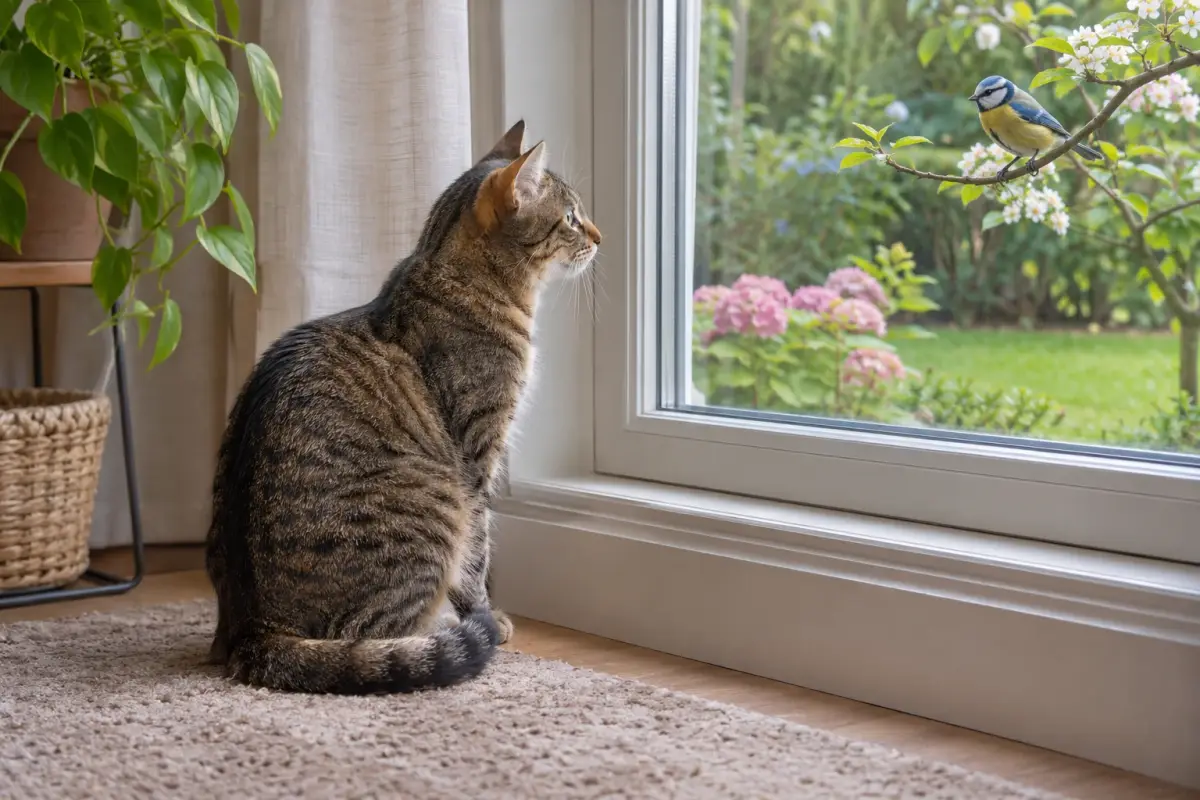
Chattering is the rapid clicking or stuttering sound a cat makes while staring at a bird, squirrel or insect on the other side of a window. The jaw quivers, the tail tip twitches and the body is low and focused. VCA links it to predatory instinct and describes it as excitement and probably frustration at being unable to reach the prey.
You may have read that cats chatter to imitate bird calls and lure prey closer. VCA notes that this idea is not backed by research. Whatever the exact reason, chattering is normal in a healthy cat and nothing to stop.
Giving a chatty cat an outlet
A cat that spends hours chattering at the window has a strong hunting drive. Give it a safe way to use it with daily interactive play: a feather wand moved like a bird, or a toy dragged along the floor like a mouse, ending with a catch. Food puzzles that make your cat work for treats also satisfy the urge to hunt.
A window perch or a bird feeder visible from indoors can be great entertainment, but if your cat becomes frantic or starts spraying or lashing out after watching outdoor animals, the view may be causing stress. Cornell describes redirected aggression, when a cat attacks a person or pet after being aroused by something it cannot reach, so reduce the view if that happens.
Other sounds cats make
The meow is mostly reserved for people; VCA says it is thought to be used almost exclusively with humans, to greet or ask for something. Purring usually signals contentment, though it can also accompany stress or pain. A hiss is a warning to back off, and a growl means a cat does not want to be bothered.
Yowling, a long, drawn-out cry, can mean distress, pain or illness, or a cat in heat looking for a mate. Learning your own cat's sounds, and what usually comes before and after them, is one of the easiest ways to understand what it wants and to notice early when something is wrong.
When cat sounds change
Each cat has its own voice, and some are naturally more talkative than others. What matters is change. A cat that suddenly becomes much more vocal or much quieter, yowls at night, or makes new sounds while using the litter box may be unwell. VCA notes yowling can reflect pain, illness or cognitive decline in older cats.
Contact your vet if your cat's voice sounds hoarse or lost, if vocalizing comes with weight loss, increased appetite or restlessness, or if your cat cries while urinating or straining. A male cat straining in the litter box with little urine is an emergency and needs to be seen right away.
This page is general information, not veterinary advice, and it cannot replace an examination by the vet who knows your pet.
Common questions
What does it mean when a cat chirps at you?
Usually it is a friendly greeting or an invitation to follow, often toward food or a door. Chirping is linked to excitement and happiness, and mother cats use it to call their kittens, so you are being treated as family.
Why does my cat chirp at birds?
Watching birds triggers hunting instinct, and the chirp or chatter reflects excitement and probably frustration at not being able to reach them. It is normal. Interactive play with bird-like toys gives that drive a healthy outlet.
Do all cats chirp?
No. Some cats chirp and trill all the time, others rarely or never. It depends on personality and breed, and talkative breeds such as Siamese tend to vocalize more. A cat that does not chirp is perfectly normal.
Why does my cat trill when I come home?
A trill is a friendly hello. Many cats greet their people with a trill, a raised tail and a rub against the legs, which together say your cat is happy to see you and feels relaxed and secure.
Sources we checked
This guide is general information, not veterinary advice. If your pet is unwell or injured, contact your veterinarian.