






Care & how-to
Why Do Cats Bring You Dead Animals?
Cats bring dead or live animals home because hunting is a deep instinct that has nothing to do with hunger, and home is where they feel safe. Well-fed cats still hunt. The popular idea that your cat is giving you a gift or teaching you to hunt is a nice story without much evidence. Never punish your cat for it; reduce hunting with play, timing and keeping your cat indoors at key times.

By Matt GarnettUpdated November 14, 20264 min read3 sources
Hunting is instinct, not hunger
Cats are natural predators, and stalking, chasing and catching small animals are hard-wired. Even a cat with a full bowl will hunt when it sees or hears something small moving, because the urge to hunt runs separately from the urge to eat. Merck describes how kittens move from play fighting to predatory play, stalking and pouncing, at around 12 to 14 weeks of age.
Cats are also most active at dawn and dusk. VCA explains that this crepuscular rhythm matches the times their prey is most active, which is why so many cats come home with a mouse, bird or lizard early in the morning or in the evening.
Why bring it home?
Nobody knows for certain, but the most likely explanation is simple: home is your cat's safe base. A wild cat often carries a catch back to a secure place to eat in peace, away from competitors. A pet cat does the same, then may lose interest because it is not hungry, and leaves the prey where you will find it.
Some people believe cats bring prey to their owners as a gift, or to teach them to hunt the way a mother teaches kittens. Mother cats do bring prey to their litters, but there is little evidence that pet cats are deliberately sharing with people. Either way, your cat is behaving normally, not trying to upset you.
What to do when it happens
Stay calm and do not scold or punish your cat. Punishment does not stop an instinct and can damage your cat's trust in you. Distract your cat with a toy or treat, then remove the animal using gloves or a plastic bag, and wash your hands afterward. If the animal is still alive and injured, contact a local wildlife rehabilitator.
Prey animals can carry parasites, fleas and infections. Keep your cat on a parasite prevention and deworming plan your vet recommends, especially if it hunts often. Talk to your vet if your cat vomits, has diarrhea or seems unwell after eating prey, or if you see worms in the stool or around the tail.
Indoor cats and hunting
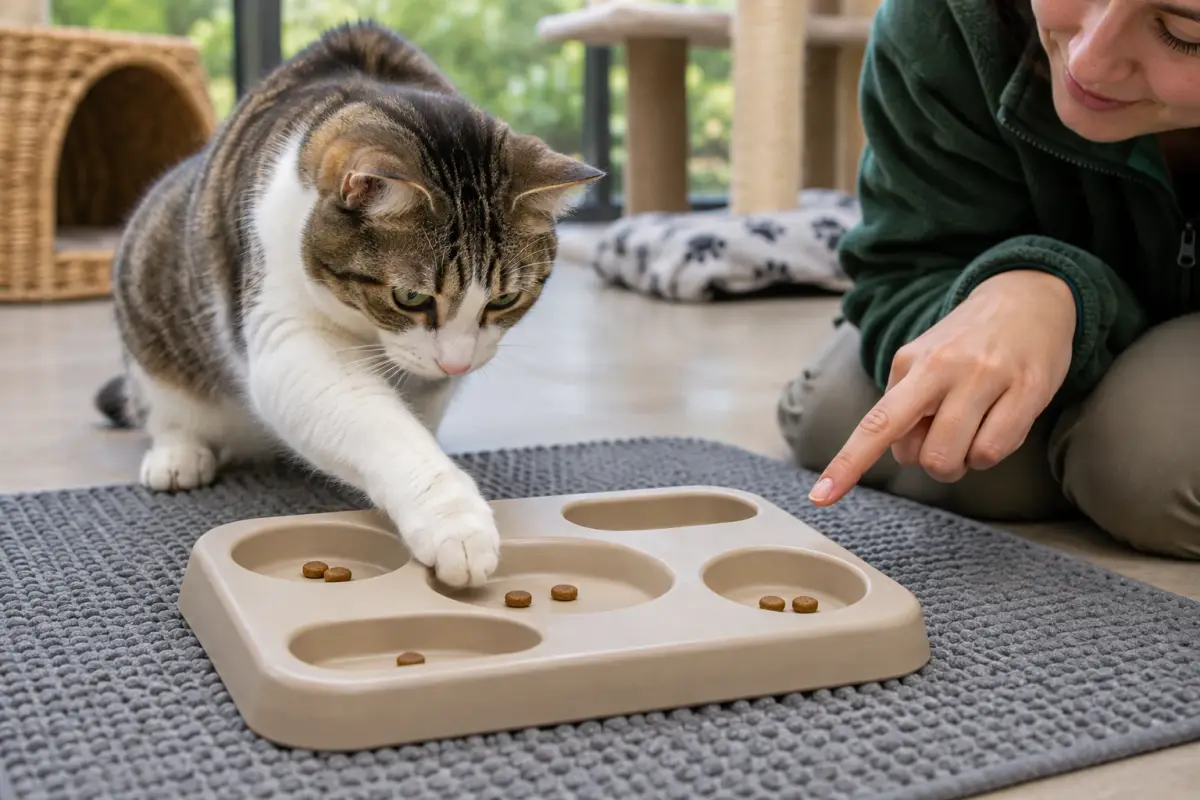
Indoor cats hunt too, just smaller targets: flies, moths, spiders and the occasional mouse that gets in. This is normal and a sign the instinct is healthy. Watch for anything toxic, though: insecticides, rodent bait and poisoned rodents are dangerous to cats, so use pet-safe pest control and keep baits completely out of reach.
If your indoor cat seems restless, chatters constantly at the window or stalks household members' ankles, it may need more outlets. VCA links play-related aggression to under-stimulation and excess energy. More daily play, climbing spaces and puzzle feeders usually help an indoor hunter settle.
How to reduce hunting
Interactive play gives the hunting drive somewhere else to go. VCA recommends moving toys that can be stalked, chased and pounced on, such as wands, dangling toys and thrown balls, and rotating toys so they stay interesting. Two or three short sessions a day, ending with a meal, follow a natural hunt, catch, eat, sleep sequence.
Keeping your cat indoors at dawn and dusk, when prey is most active, helps a lot, as does an enclosed outdoor space such as a catio. A bell on a breakaway collar may warn some birds, though it is not reliable on its own. Food puzzles that make your cat work for meals provide a similar mental challenge to hunting.
This page is general information, not veterinary advice, and it cannot replace an examination by the vet who knows your pet.
Common questions
Why does my cat bring me live animals?
Cats may bring prey home alive simply because they have not finished the hunt or are not hungry. Calmly distract your cat with a toy, then contain the animal with a towel or box. Contact a wildlife rehabilitator if it is injured.
Should I punish my cat for bringing home dead animals?
No. Hunting is instinct, and punishment will not stop it but can make your cat fearful of you. Focus on prevention instead: more play, keeping your cat in at dawn and dusk, and an enclosed outdoor space if possible.
Is it dangerous if my cat eats what it catches?
It can be. Prey can carry parasites and infections, and rodents may have eaten poison. Keep your cat on a parasite plan from your vet and call your vet if your cat seems unwell after eating prey, or if you suspect a poisoned rodent.
Do well-fed cats still hunt?
Yes. The drive to hunt is separate from hunger, so even a well-fed cat will stalk and catch small animals given the chance. Feeding more does not stop hunting, but play and keeping cats in at peak times reduces it.
Sources we checked
This guide is general information, not veterinary advice. If your pet is unwell or injured, contact your veterinarian.