






Care & how-to
What Thanksgiving Food Can Dogs Eat?
Dogs can share a little plain Thanksgiving food: skinless, boneless, fully cooked turkey, plain sweet potato or potato, plain green beans, peas and pure pumpkin, set aside before anything is added. Keep them away from bones, turkey skin, gravy, stuffing, casseroles, pie, rolls and raw dough, plus anything with onion, garlic, grapes, chocolate, xylitol or alcohol.
By Matt GarnettUpdated November 14, 20264 min read2 sources
Thanksgiving foods dogs can eat
The safest share is plain white or dark turkey meat with the skin, fat and every bone removed, cooked through and unseasoned. The ASPCA notes that raw or undercooked turkey can carry salmonella. Plain baked or boiled sweet potato and potato, plain steamed green beans and peas, and pure canned or fresh pumpkin are also fine in small amounts, as are a few slices of apple with the core and seeds removed.
The trick is timing. Most of these foods become unsafe once they are buttered, creamed, salted or mixed with onion and garlic, so set a small plain portion aside while you cook. The ASPCA suggests mixing a spoonful of plain turkey, sweet potato or green beans into your dog's regular dinner, or stuffing a puzzle toy, rather than feeding from the table.
Foods to keep off your dog's plate
Cooked turkey bones splinter and can cause choking or injure the gut, and the AKC points out that turkey skin is fatty and often coated in butter or oil, which raises the risk of pancreatitis. Gravy, stuffing and most casseroles contain butter, onions, garlic and rich seasoning. Onions, garlic, leeks, scallions and chives can damage red blood cells, and bouillon is very salty.
Desserts are no better. Pie, cookies and cake are high in sugar and fat, sugar-free desserts may contain xylitol, and chocolate is toxic. Grapes and raisins, sometimes found in stuffing and salads, can cause kidney failure. Raw yeast dough can expand in the stomach and produce alcohol, and drinks left on a coffee table are a real risk for small dogs. Ham and fatty leftovers can upset the stomach.
How much is too much
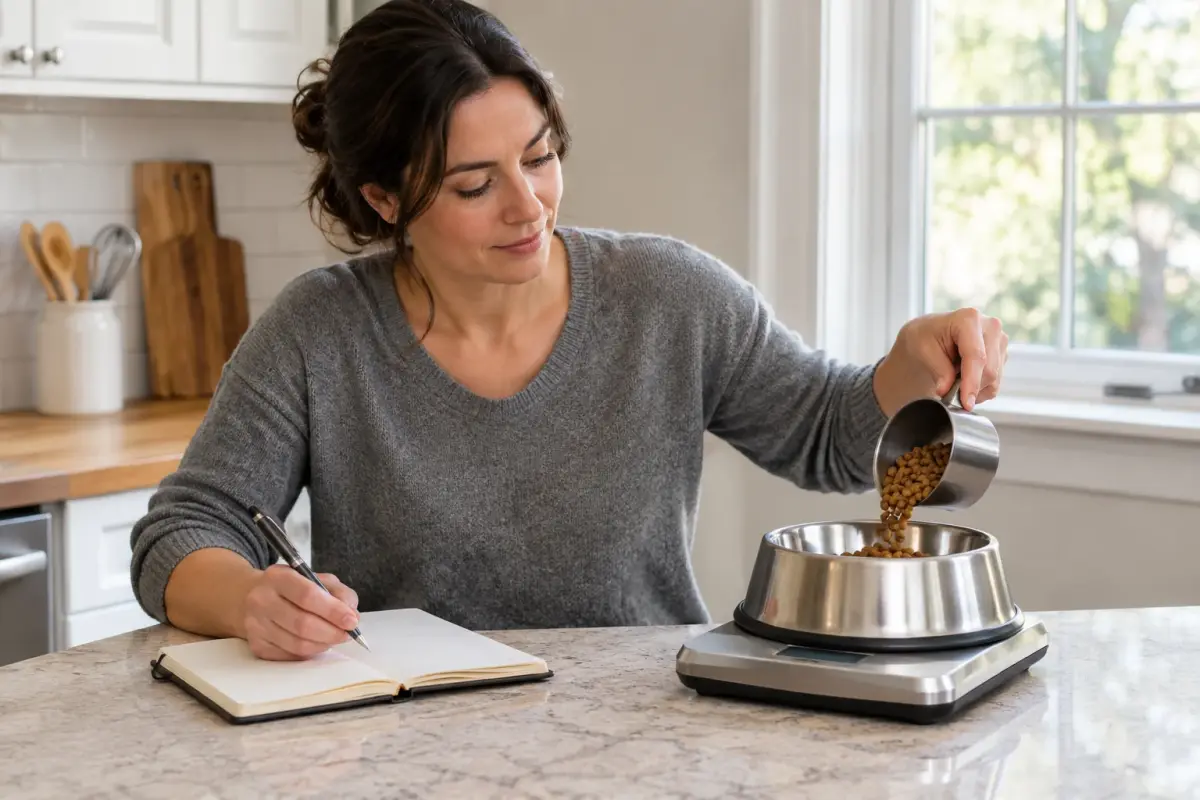
Even safe foods are extra calories, and a big change from the usual diet is what causes most holiday stomach upsets. Keep any share to a few small bites: roughly a tablespoon for a dog under 20 lb, two or three tablespoons for a dog of 20 to 50 lb, and a small handful for a dog over 50 lb, mixed into their normal meal rather than added on top of a full bowl.
Dogs with pancreatitis, diabetes, kidney disease, food allergies or a sensitive stomach may be better off with no table food at all, so ask your vet first. Puppies need their usual complete food, and a sudden rich meal can give them diarrhea quickly, so keep their share to a nibble of plain turkey.
Keeping your dog safe on the day
The kitchen is the danger zone. Keep counters clear, push roasting pans back from the edge, and do not leave the turkey resting where a tall dog can reach it. Once dinner is over, put leftovers straight into the fridge and take the trash, with its bones, strings and foil, outside to a lidded bin. The ASPCA highlights trash raids as one of the most common Thanksgiving problems.
Guests change the house rules. Ask visitors not to slip your dog scraps, keep their bags and medications off the floor, and give your dog a quiet room with water, a bed and a chew if the noise is too much. Watch the front door so no one leaves it open for a dog to slip out.
Signs your dog ate something they shouldn't
Mild stomach upset after a holiday treat usually shows as one or two bouts of vomiting or loose stool. Call your vet if vomiting repeats, if your dog has a painful or swollen belly, hunches over, will not eat or seems lethargic, which can be signs of pancreatitis or a blockage, often a day or two after the meal.
Call your vet or an emergency vet right away, without waiting for signs, if your dog ate turkey bones, a string or foil from the roast, chocolate, grapes or raisins, xylitol, onion or garlic dishes, raw dough or alcohol. ASPCA Animal Poison Control is (888) 426-4435 and Pet Poison Helpline is (855) 764-7661; a fee may apply.
This page is general information, not veterinary advice, and it cannot replace an examination by the vet who knows your pet.
Common questions
Can dogs eat turkey on Thanksgiving?
Yes, a little plain, skinless, boneless and fully cooked turkey is fine for most dogs. Avoid the skin, fat, gravy and bones, and do not give raw or undercooked turkey, which can carry salmonella.
Can dogs eat stuffing?
It is best not to. Stuffing usually contains onions, garlic, butter and herbs, and sometimes raisins or nuts, all of which can upset or harm dogs. Offer a little plain turkey or sweet potato instead.
Can dogs eat mashed potatoes?
Plain mashed potato without butter, milk, cheese, salt, garlic or chives is fine in small amounts. Most holiday mashed potatoes contain several of those, so set a plain portion aside before mixing.
What should I do if my dog ate a turkey bone?
Do not make your dog vomit. Call your vet for advice, and watch for gagging, vomiting, belly pain, straining or blood in the stool. Go to a vet straight away if any of those signs appear.
Sources we checked
This guide is general information, not veterinary advice. If your pet is unwell or injured, contact your veterinarian.