






Care & how-to
Guinea Fowl: A Practical Guide to Raising Guineas
Guinea fowl are hardy, active birds from Africa that forage for insects, sound the alarm at any intruder, and need far less feed than chickens once grown. They are also loud, flighty and only half tame, so they suit rural properties better than suburban lots. Raise keets warm and on a high-protein starter, house them securely at night, and do not count on them to clear your yard of ticks.
By Matt GarnettUpdated November 14, 20264 min read2 sources
What guinea fowl are like to keep
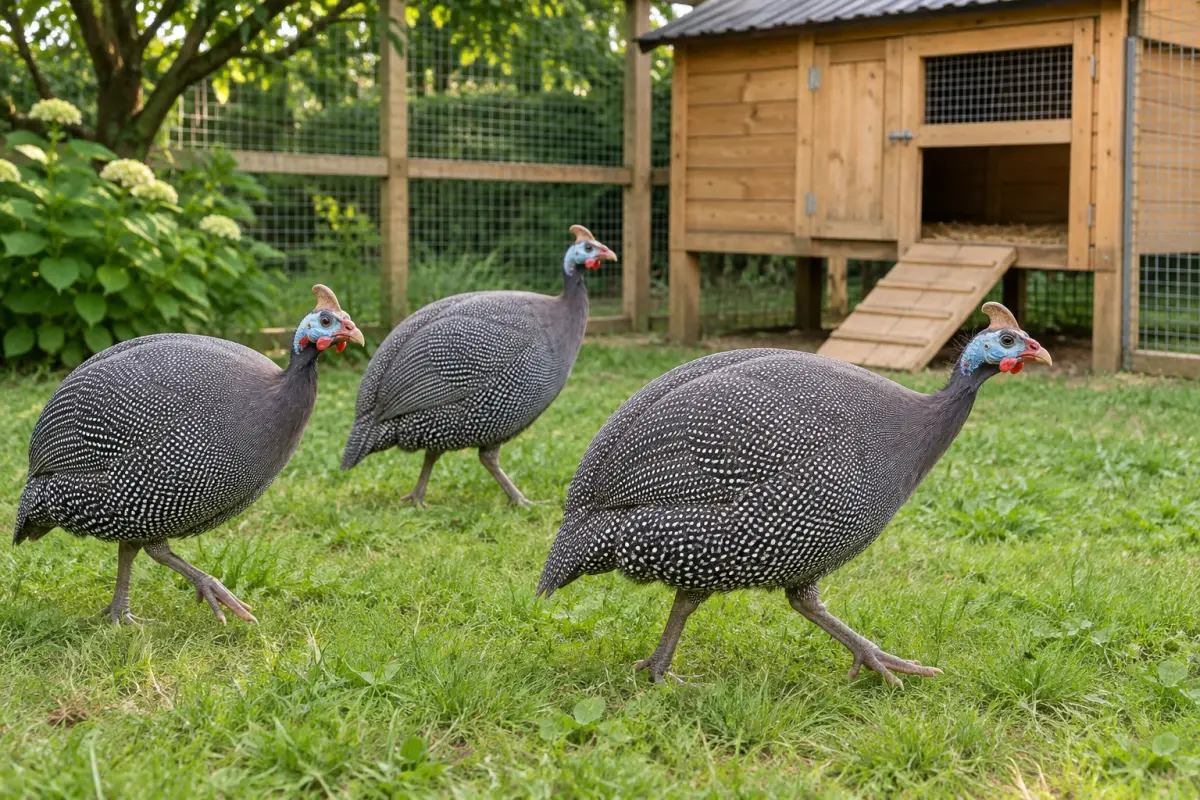
Guinea fowl are native to Africa and, according to the poultry extension service, are vigorous, hardy and largely free of disease. The three main varieties in the US are pearl, the most popular, plus white and lavender. They have a bare head with a bony helmet and small wattles, a rounded body and spotted feathers, and they move around in a tight, purposeful group.
Their personality is the deciding factor for most people. Guineas keep much of their wild behavior, are not easily tamed and are much more active than chickens. They raise a loud alarm when anything unusual happens, from a hawk overhead to a delivery truck, which makes them excellent watchdogs and difficult neighbors. If you live close to others, talk to them before you buy keets.
Housing, roaming and flight
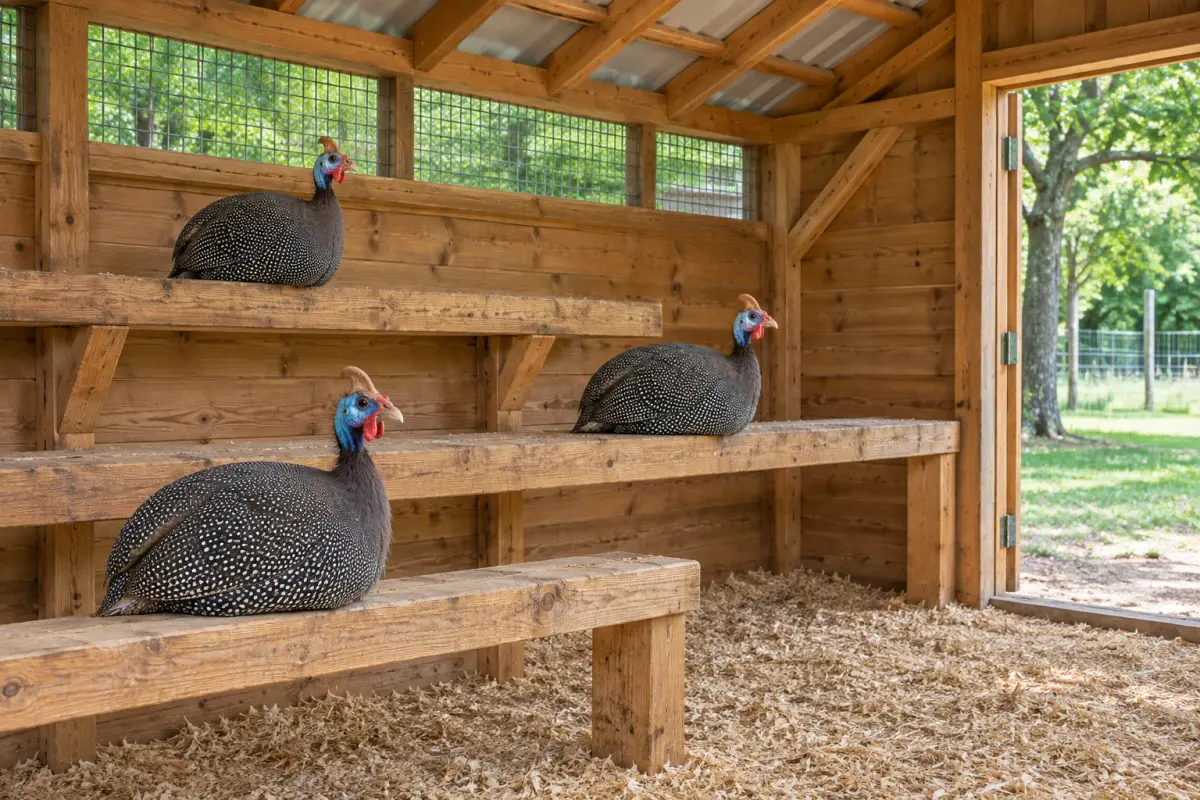
Guineas can fly early and well, covering 400 to 500 feet at a time, though they prefer to run. Without a covered pen they will wander well beyond the boundaries of a small lot. Most keepers let them range by day and train them to come home to a secure building at night, often by keeping young birds confined for several weeks and feeding them in the shelter each evening.
Give confined birds 2 to 3 square feet each, absorbent bedding and perches, since guineas prefer to roost high. The shelter should block wind, rain, sun and predators but stay well ventilated; the extension service warns against insulating an unheated building, because trapped moisture causes breathing problems. Our chicken coops and runs collections include covered options that work for guineas too.
Raising keets
Baby guinea fowl are called keets. Start them in a brooder at 95°F for the first two weeks, then lower the temperature by about 5°F each week. Hang a heat lamp with its bottom 18 to 24 inches above the litter, and secure it firmly, since lamps are a common cause of coop fires. Keets spread evenly across the brooder when the temperature is right, pile together when cold and move away from the lamp when hot.
Keets need more protein than chicks: a 24 to 26% protein starter at first, 18 to 20% from about weeks five to eight, and a 16% layer ration after eight weeks. Use mash or crumbles rather than pellets, and provide clean water in a shallow waterer with marbles or pebbles in it so tiny keets cannot drown. Keep the floor non-slippery to prevent leg problems.
Eggs, breeding and hatching
Guinea hens are seasonal layers, usually from March or April until about October. In a carefully managed flock a hen may lay 100 or more eggs a year, but in small flocks she typically lays around 30 before going broody. The eggs are small, with very hard, often speckled shells, and they taste much like chicken eggs. Guineas often hide their nests in long grass, so you may need to search.
Guinea eggs take 26 to 28 days to hatch. Guinea hens often abandon nests or lead keets through wet grass, so many keepers let a broody chicken hatch them instead: a bantam can cover 12 to 15 eggs and a large hen 20 to 28. For breeding, keep about one male for every four or five females. Breeders lay well for two or three years and are often kept for four or five.
How to tell males from females
Young guineas are very hard to sex. The clearest sign appears as they mature: only hens make the two-syllable call that sounds like "buck-wheat, buck-wheat." Both sexes make the single-note alarm call. Males also tend to have larger helmets and wattles, and they often stand taller and carry themselves more upright.
If you plan to breed, wait until the birds are calling before choosing pairs, and mark birds with leg bands once you know. Guinea males can bully roosters, and the extension service advises against housing guinea males full-time with roosters, though mixed flocks that range by day and are shut in at night often get along.
Do guinea fowl control ticks?
Guineas are often sold as natural tick control, and they do eat ticks. Penn State Extension reviewed three North American studies: all found that guineas eat adult ticks, and two found adult tick numbers fell. But two found no reduction in nymphs, the tiny stage most likely to bite people unnoticed, and guineas can even act as hosts for nymphal ticks. The researchers concluded that guinea fowl are not effective at controlling ticks or reducing the risk of tick-borne disease.
Keep guineas for their alarm calls, insect foraging and character, not as a substitute for tick prevention. Landscape changes, keeping grass short and tick checks for people and pets work better. Call a vet who treats poultry if a guinea is lethargic, stops eating, limps or has trouble breathing.
This page is general information, not veterinary advice, and it cannot replace advice from a veterinarian who treats poultry.
Common questions
Are guinea fowl loud?
Yes. Guineas call loudly whenever something unusual happens, and hens make a repeated two-note call. That makes them good alarm birds but a poor choice for close neighbors or homeowner associations.
Can guinea fowl live with chickens?
Often, yes, especially if they free-range by day and roost together at night. Guinea males can bully roosters, so watch the flock and avoid keeping them confined together full-time.
How many eggs do guinea fowl lay?
Guinea hens lay seasonally, from spring to fall. In small flocks a hen typically lays about 30 eggs before going broody; in carefully managed flocks she may lay 100 or more a year.
How long do guinea eggs take to hatch?
Guinea eggs take 26 to 28 days to hatch, about a week longer than chicken eggs. A broody chicken hen often makes a more reliable mother for them than a guinea hen.
Sources we checked
This guide is general information, not veterinary advice. If your pet is unwell or injured, contact your veterinarian.