






Breeds
Miniature vs Standard Dachshund: What Size Means Day to Day
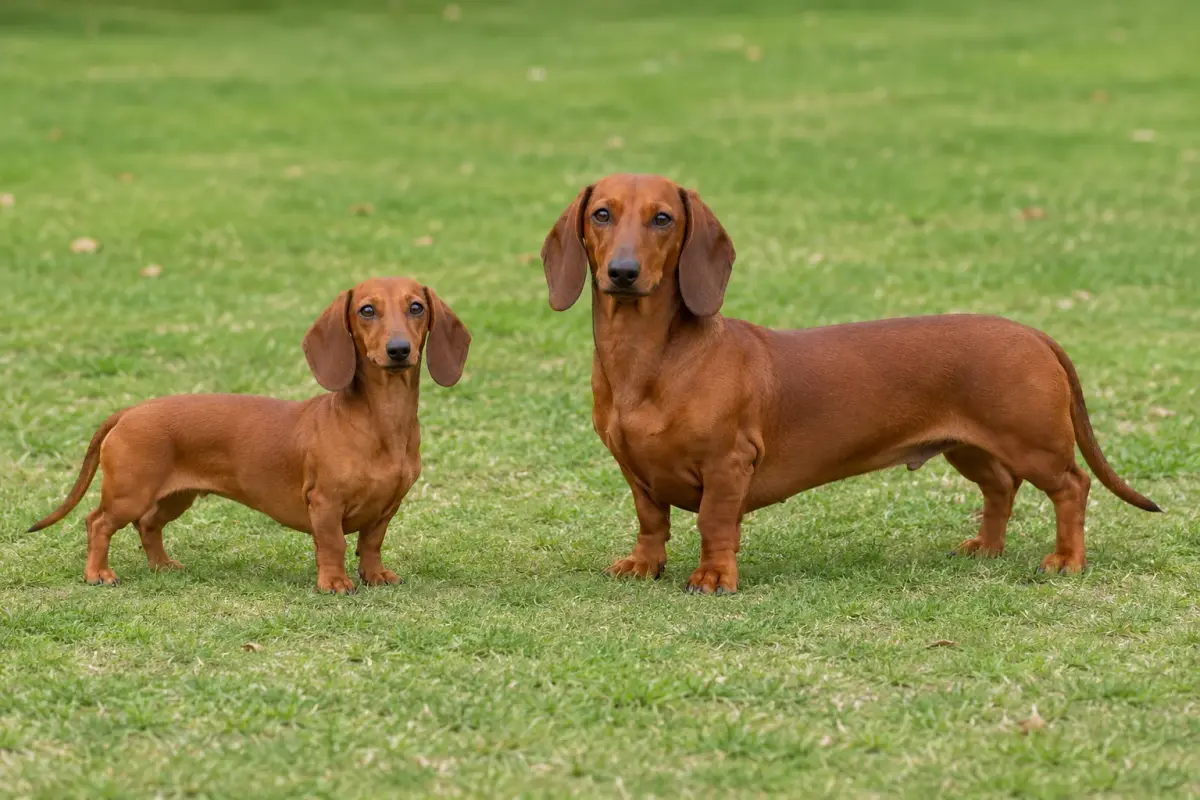
Miniature and Standard Dachshunds are the same breed in two sizes, not two breeds. The AKC lists Standards at 8 to 9 inches and 16 to 32 pounds, and Miniatures at 5 to 6 inches and 11 pounds or under. Both come in smooth, longhaired and wirehaired coats, share the same bold, curious personality and the same long back, so both need careful weight control and limited jumping. Size mostly changes how much dog you are lifting and walking.
By Matt GarnettUpdated November 14, 20264 min read4 sources
Side by side
Size: the AKC lists Standard Dachshunds at 8 to 9 inches and 16 to 32 pounds, and Miniatures at 5 to 6 inches and 11 pounds and under. Lifespan: 12 to 16 years for the breed, per the AKC. Popularity: the Dachshund is No. 5 on the AKC's 2025 list, counted as one breed. Coats: smooth, longhaired and wirehaired in both sizes. Temperament: the same in both, bold, curious and independent.
Exercise: VCA rates the breed moderate, with controlled exercise to protect the spine. Grooming: depends on coat, not size. Training: the AKC says the same rules and timelines apply to all Dachshunds; VCA notes they can be stubborn. Children: best with respectful handling. Best for: Miniatures suit apartments and people who want to lift their dog easily; Standards suit owners who want a sturdier dog for longer walks.
One breed, two sizes
The AKC describes the Dachshund as a superstar of the canine kingdom with a famously long, low silhouette, an ever-alert expression and a bold, vivacious personality, recognized in two sizes and three coat types. VCA explains that the breed was developed to pursue prey in tunnels and burrows, which is why it has a long spine, short legs, a deep chest and strong hunting instincts.
Because they are one breed, the difference is simply weight and height. The Miniature is a true small dog that can be carried easily, while the Standard is a solid hound that can top 30 pounds. Some dogs fall between the two sizes, so ask the breeder what adult weight to expect from a litter.
Temperament and training
VCA describes Dachshunds of both sizes as confident, curious and often independent, strongly bonded to their owners and sometimes favoring one person. A strong prey drive may lead them to chase small animals, and they can be stubborn, so short, engaging training sessions with rewards work best. The AKC calls them fast learners that respond well to positive lessons.
Recall deserves special attention. The AKC notes that coming when called is a top training priority because these hunting dogs will take off after a squirrel or rabbit. Housetraining needs patience and a consistent schedule from the first day. Neither size is more trainable than the other; consistency matters far more than inches.
Protecting the back
VCA calls spinal health the most important concern in Dachshunds and lists intervertebral disc disease first among the breed's conditions. Excess weight and high-impact activity raise the risk, so keep your dog lean, limit jumping on and off furniture, and restrict access to stairs, as VCA advises. Ramps or pet steps to the couch and bed help both sizes.
Support the whole body when you pick a Dachshund up, with one hand under the chest and one under the rear, never by the front legs alone. A lighter Miniature is easier to carry correctly, which can help with stairs and car rides. Call your vet promptly if your dog yelps when touched, hunches, drags its back legs or suddenly refuses to move.
Exercise and grooming
Both sizes need regular daily walks and play, but VCA says exercise should be controlled to protect the spine, with structured play rather than jumping. A Standard can usually manage longer walks than a Miniature, and both enjoy sniffing games and safe digging that use their hunting instincts. Keep them on leash outdoors because of their prey drive.
Grooming depends on coat. VCA says smooth coats need minimal brushing, while longhaired and wirehaired coats need more frequent grooming. Regular ear cleaning matters because of their ear shape, and routine nail trimming helps posture and movement. The AKC notes that Dachshunds tend to stay clean and do not smell, a plus for apartment living.
Which size to choose
Choose a Miniature if you live in an apartment, want a dog you can lift and carry with ease, or plan to travel with your dog. Choose a Standard if you want a sturdier dog for longer walks, have older children who want a more robust playmate, or prefer a little more dog in your lap.
Whatever the size, plan on ramps, a harness rather than a collar for walks, measured meals and early, gentle socialization. Ask breeders about back health in their lines, and book a vet visit soon after your puppy comes home so you can talk about weight targets and safe activity from the start.
This page is general information, not veterinary advice, and it cannot replace an examination by the vet who knows your pet.
Common questions
How big does a Miniature Dachshund get?
The AKC lists Miniature Dachshunds at 5 to 6 inches tall and 11 pounds or under as adults. Standards are 8 to 9 inches and 16 to 32 pounds. Some dogs fall between the two sizes.
Are Miniature Dachshunds more prone to back problems?
Both sizes share the long back that VCA says makes spinal health the breed's most important concern. Keeping either size lean and limiting jumping reduces the risk of disc disease.
Is a Miniature Dachshund a separate breed?
No. The AKC recognizes one Dachshund breed in two sizes, Standard and Miniature, and three coat types: smooth, longhaired and wirehaired. The same training rules apply to all of them.
Which is better with kids, a Miniature or Standard Dachshund?
A Standard is sturdier, which helps with children, but VCA says Dachshunds of any size do best with respectful handling. Teach kids to support the back and never let them pick the dog up unsupervised.
Sources we checked
This guide is general information, not veterinary advice. If your pet is unwell or injured, contact your veterinarian.