






Buying guides
How to Measure and Place a Backyard Birdhouse
Measure the box, its entrance and the space where it will hang as separate jobs. A house that fits your garden hook may still need different construction or mounting before it can serve as a nest box.
By Matt GarnettUpdated November 14, 20262 min read3 sources
Decide whether you want an ornament or a nest box
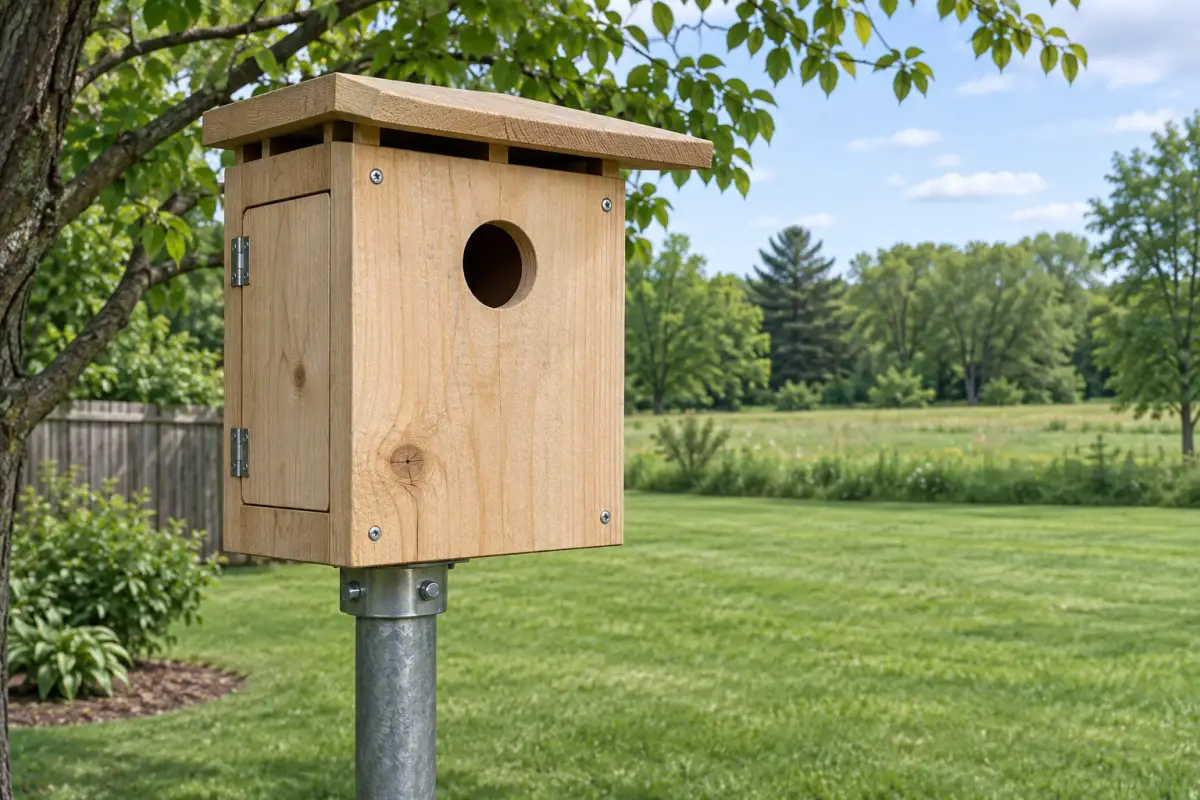
A decorative wooden house and a purpose-built nest box can look similar in a photograph. For nesting, check the entrance, inside floor, ventilation, drainage and access for inspection. A painted entrance trim or bark roof tells you about appearance; it does not establish those functional details.
Cornell Lab’s NestWatch birdhouse checklist includes drainage, ventilation, a serviceable access panel and sturdy construction. It also advises against outside perches. Compare those features before treating a decorative hanging house as nesting equipment.
Write down three sets of measurements
First, record the outside width, depth and height, including any roof overhang or projecting perch. Next, measure the entrance opening across its clear edge, without including decorative trim. Finally, record usable inside floor dimensions and the distance from the floor to the opening. Keep each measurement labeled rather than describing them all as the house size.
The hanging wooden bird house with bark roof and perch illustrates this distinction. Its diagram gives an outside width of 6.9 inches, depth of 6.3 inches and height of 5.9 inches (17.5 × 16 × 15 cm). Those dimensions describe the shell, not the entrance diameter or inside floor. The rope extends beyond that measured body.
Measure the location and attachment separately
For a decorative hanging display, measure down from the hook to the bottom of the house, including the suspension loop. Check the space around the roof and perch, the attachment condition and the support’s stated capacity. Leave access to lift the whole house down without reaching through branches or moving other hanging objects.
For a nesting installation, use a mounting design appropriate to the box rather than assuming a rope loop is sufficient. NestWatch’s placement guidance discusses secure installation and free-standing poles that can take predator guards. Habitat and mounting height depend on the intended birds; consult its species table instead of applying one height to every yard.
Plan access before putting the house up
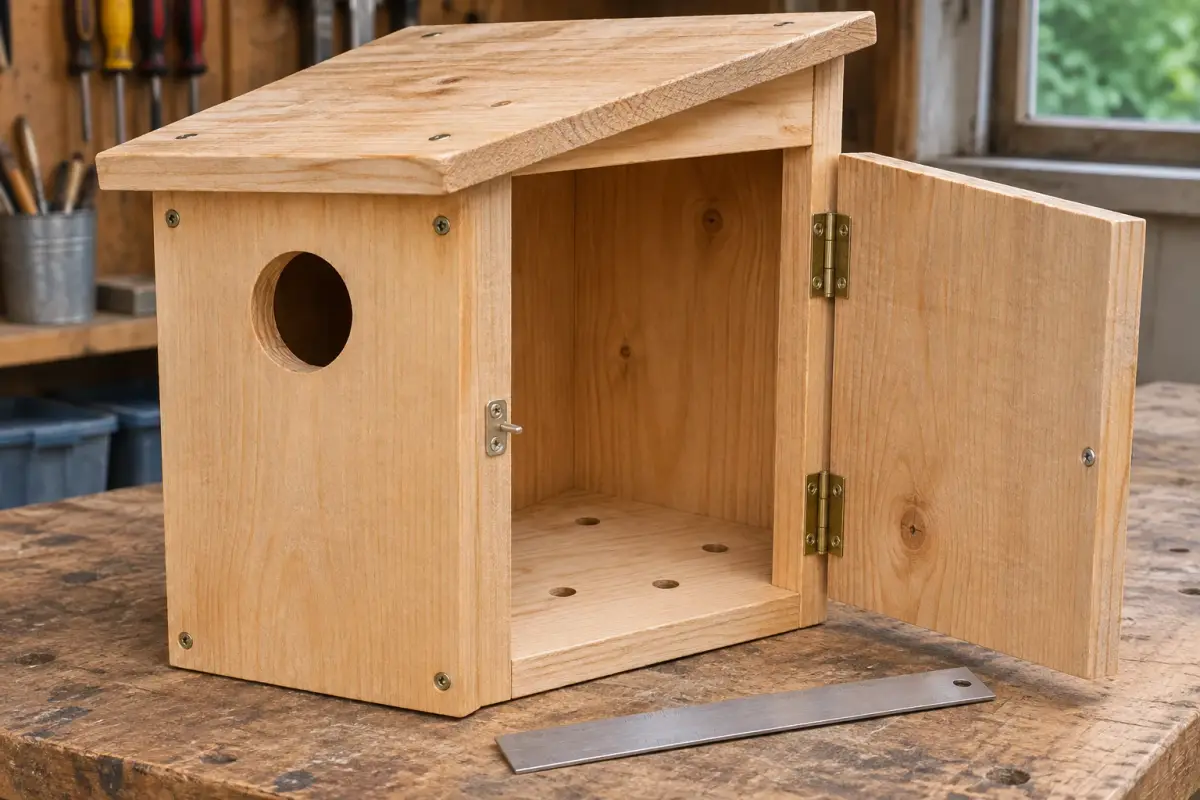
Find the actual opening panel or removable section before installation. Trace how you would reach the floor and corners without breaking a glued seam or removing the roof. Make sure the mounting position leaves that panel accessible. A round entrance alone does not demonstrate cleaning access.
Keep a short record of the box measurements, mounting hardware and inspection access. If entrance or interior dimensions are missing, get them before choosing a nesting use. Assess an empty box before installation; this measuring checklist is not an instruction to open or disturb an occupied nest.
Birdhouse measurements kept separate
| Measurement | What to record | What it does not establish |
|---|---|---|
| Outside shell | Width, depth and height, including projections | Usable floor space or nesting suitability |
| Entrance | Clear opening, excluding decorative trim | Inside room or suitable mounting |
| Interior | Usable floor and floor-to-entrance distance | Hanging clearance outside the box |
| Suspension | Hook-to-bottom distance including the loop | A secure nesting installation |
| Access panel | Opening direction and room to remove or open it | Permission to disturb an occupied nest |
Common questions
Can I choose a nest box from the outside dimensions alone?
Outside dimensions tell you where the shell fits. Entrance diameter, usable inside floor and construction need separate checks for nesting.
Does the hanging rope count toward the published height?
Check the diagram. If the height arrow measures the body, measure the suspension loop separately when planning hanging clearance.
Is a front perch a necessary nesting feature?
No. NestWatch advises against outside perches on nest boxes. A decorative perch is not proof of nesting suitability.
Sources we checked
This guide is general information, not veterinary advice. If your pet is unwell or injured, contact your veterinarian.


